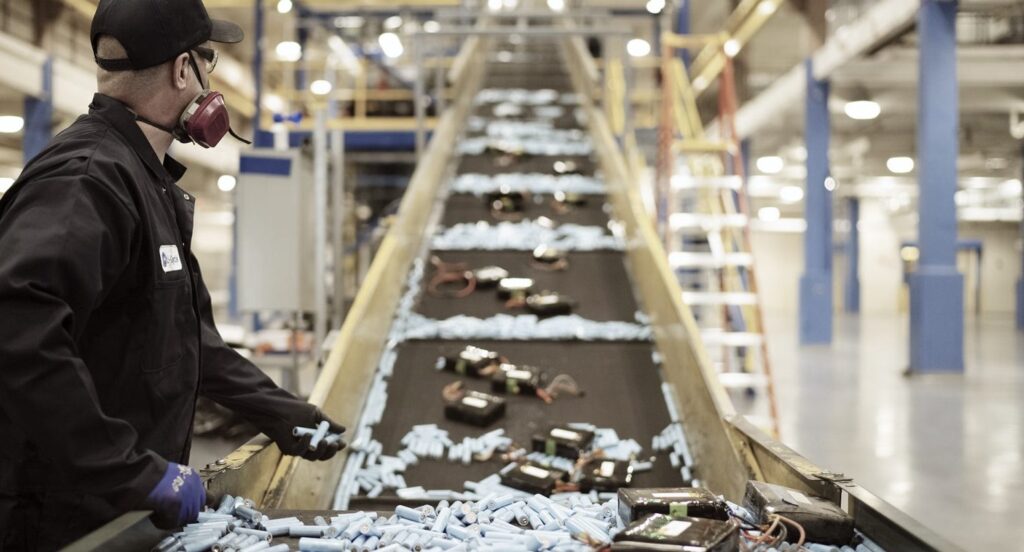
Battery recycling is no longer a niche activity. It is evolving into a highly technical, capital-intensive sector that combines advanced mechanical processing, chemical recovery, and increasingly, automation and digital monitoring. For recycling professionals, understanding the full process chain—from safe handling to material recovery—is essential for designing efficient, compliant, and profitable operations.
Battery Types: Li-ion, LFP, NMC, and Beyond
Lithium-ion batteries dominate the market, but they are far from uniform. The chemistry of a battery determines not only its performance but also how it should be processed and recycled.
The most common types include:
- NMC (Nickel Manganese Cobalt): Widely used in EVs, offering high energy density but containing valuable and sometimes volatile metals.
- LFP (Lithium Iron Phosphate): Increasingly popular due to safety and lower cost, but with reduced economic value in recycling due to the absence of cobalt and nickel.
- NCA (Nickel Cobalt Aluminum): Used in high-performance applications, similar to NMC.
- LCO (Lithium Cobalt Oxide): Common in consumer electronics, high cobalt content makes recycling economically attractive.
Each chemistry requires tailored recycling strategies. For instance, LFP batteries demand process efficiency rather than material value optimization, while NMC batteries justify more complex recovery processes due to their higher intrinsic value.
Discharging and Safety: The Critical First Step
Before any mechanical or chemical processing can begin, batteries must be safely discharged. Residual energy poses a significant risk, including thermal runaway, fire, and explosion.
Discharging systems typically involve:
- Controlled electrical discharge units
- Saltwater or chemical baths (less common in modern facilities)
- Automated discharge racks for large EV battery packs
In industrial environments, this step is increasingly automated and integrated into upstream logistics. Improper discharging remains one of the leading causes of incidents in battery recycling plants.
In addition to discharging, dismantling is also key, particularly for EV battery packs. Manual, semi-automated, or robotic systems are used to remove casings, wiring, and modules before further processing.
👉 Related
Mechanical Pre-Processing: Size Reduction and Separation
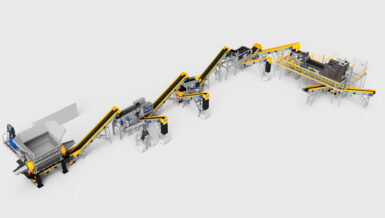
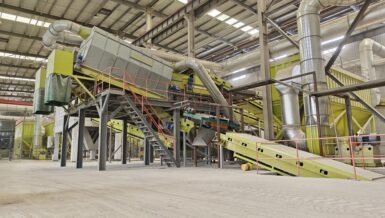
Once discharged and dismantled, batteries undergo mechanical processing. This stage prepares the material for downstream recovery and is one of the most equipment-intensive parts of the process.
Typical steps include:
- Crushing and shredding
- Screening
- Magnetic separation
- Air classification
- Density separation
A critical requirement at this stage is operating in a controlled atmosphere, often using nitrogen or CO₂ to prevent ignition. This has led to the development of inert shredding systems, which are now considered industry standard for lithium-ion battery processing.
The output of mechanical processing is typically divided into:
- Coarse fractions (metals, casings)
- Plastics
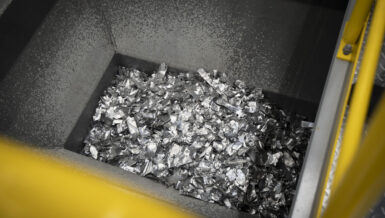
- Fine fraction known as black mass
Black Mass Recovery: The Core Value Stream
Black mass is the most valuable intermediate product in battery recycling. It contains a mixture of:
- Lithium compounds
- Cobalt
- Nickel
- Manganese
- Graphite
The quality and consistency of black mass directly impact downstream recovery efficiency and profitability. Contamination—such as copper, aluminum, or plastics—can significantly reduce its value.
Advanced facilities are increasingly focused on optimizing:
- Particle size distribution
- Purity levels
- Moisture control
This stage is where mechanical engineering meets chemical processing, and where process optimization can yield major financial gains.
👉 Related
Hydrometallurgy vs Pyrometallurgy: Competing Recovery Pathways
Once black mass is produced, the next step is material recovery. Two primary approaches dominate the industry: hydrometallurgy and pyrometallurgy.
Hydrometallurgy
This process uses aqueous chemistry to selectively recover metals.
Advantages:
- High recovery rates for lithium, cobalt, and nickel
- Lower energy consumption compared to thermal methods
- Greater flexibility for different chemistries
Challenges:
- Complex chemical management
- Wastewater treatment requirements
- Sensitivity to feedstock quality
Hydrometallurgy is increasingly favored in modern plants due to its efficiency and ability to recover lithium, which is often lost in thermal processes.
Pyrometallurgy
This process involves high-temperature smelting.
Advantages:
- Robust and tolerant to mixed feedstocks
- Simplified process flow
Challenges:
- High energy consumption
- Loss of lithium in slag
- Lower overall material recovery efficiency
Pyrometallurgy remains relevant, particularly in legacy systems and where feedstock variability is high, but it is gradually being complemented or replaced by hydrometallurgical approaches.
Critical Materials: Lithium, Cobalt, and Nickel
The economic driver behind battery recycling is the recovery of critical raw materials.
- Lithium: Essential for all Li-ion batteries, increasingly valuable due to supply constraints.
- Cobalt: High value but ethically and geopolitically sensitive.
- Nickel: Key for high-energy-density batteries.
The ability to recover these materials at high purity levels determines the viability of recycling operations. As battery chemistries evolve (e.g., shift toward LFP), recyclers must adapt their processes to maintain profitability.
Safety and Explosion Risks: A Persistent Challenge
Battery recycling is inherently hazardous. Key risks include:
- Thermal runaway
- Fire and explosion
- Toxic gas release (HF, VOCs)
- Dust explosions
To mitigate these risks, modern facilities implement:
- Inert processing environments
- Advanced fire suppression systems
- Continuous gas monitoring
- Explosion-proof equipment design
Safety is not just a regulatory requirement—it is a core design principle that influences every stage of the process.
Equipment Focus: From Shredders to Separation Systems
From a commercial and engineering perspective, battery recycling plants rely on a combination of specialized equipment:
Size Reduction
- Single- and dual-shaft shredders
- Hammer mills
- Granulators
Inert Processing Systems
- Nitrogen-based shredding chambers
- Gas-tight conveyors
- Pressure-controlled systems
Separation Technologies
- Magnetic separators
- Eddy current systems
- Air classifiers
- Fine particle separation systems
Selecting the right equipment depends on feedstock type, desired output quality, and downstream processing route.
Automation and Digitalization in Battery Recycling Plants
As the industry matures, automation is becoming a key differentiator. Modern plants are integrating:
- Robotic dismantling systems
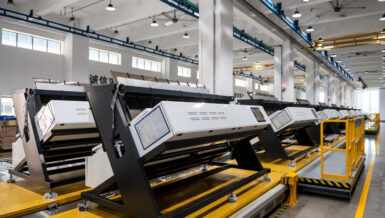
- Sensor-based sorting
- Real-time process monitoring
- AI-driven optimization
Automation improves not only efficiency but also safety, reducing human exposure to hazardous materials.
👉 Related
The Future of Battery Recycling
Battery recycling is transitioning from a fragmented, emerging industry to a cornerstone of the circular economy. As EV adoption continues to grow, recycling capacity must scale rapidly to keep pace.
Key trends shaping the future include:
- Localization of recycling facilities
- Integration with battery manufacturing (closed-loop systems)
- Increased regulatory pressure
- Innovation in direct recycling technologies
For recycling professionals, the challenge lies in balancing safety, efficiency, and economic viability in a rapidly evolving technological landscape.