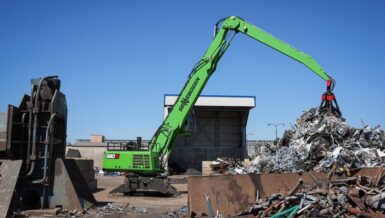
Today, circular mattress recycling is gaining momentum as part of the broader transition toward a circular economy. Driven by sustainability targets, regulatory pressure and growing demand for secondary raw materials, the industry is developing new ways to recover and reuse valuable mattress components at scale.
A growing waste stream with untapped value
Millions of mattresses are discarded each year worldwide, creating a bulky and resource-intensive waste stream. Yet these products contain significant amounts of recoverable materials. Steel springs are already efficiently recycled, while foams and textiles represent an increasingly valuable source of secondary polymers and fibres.
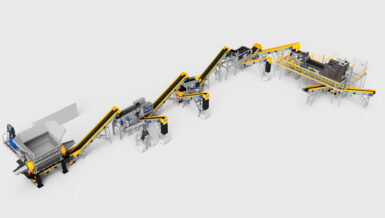
The challenge lies in separating these materials in a way that preserves quality and enables meaningful reuse. Manual disassembly remains common, but advanced mechanical processing and automated separation technologies are gradually improving efficiency and throughput.
Polyurethane foam: from waste to circular feedstock
Polyurethane (PU) foam is one of the most abundant materials in mattresses and one of the most difficult to recycle. Mechanical recycling allows PU foam to be shredded and reused in lower-grade applications such as carpet underlay or insulation. While effective, this approach offers limited circularity.
Chemical recycling technologies are changing this equation. By breaking polyurethane down into its original chemical building blocks, recyclers can create high-quality secondary raw materials suitable for use in new foam products. This enables true closed-loop recycling, reducing dependence on virgin fossil-based feedstocks and lowering the carbon footprint of mattress production.
Collaboration across the value chain
Achieving circularity in mattress recycling requires close cooperation between material suppliers, mattress manufacturers, recyclers and policymakers. Design-for-recycling principles, standardised material choices and improved collection systems are essential to make large-scale recycling economically viable.
Chemical companies such as BASF contribute by developing circular raw materials, scalable recycling technologies and cross-industry partnerships that support the transition from linear disposal models to circular material flows.
Mattress recycling as part of the green transformation
Circular mattress recycling illustrates how complex consumer products can be integrated into the circular economy through innovation, collaboration and system-level thinking. By combining mechanical and chemical recycling approaches, the industry can significantly reduce waste, conserve resources and cut greenhouse gas emissions.
As sustainability expectations continue to rise, mattress recycling is evolving from a niche activity into a strategic component of the global green transformation — demonstrating how even the most challenging products can be redesigned for circularity.