A Mountain of Textile Waste
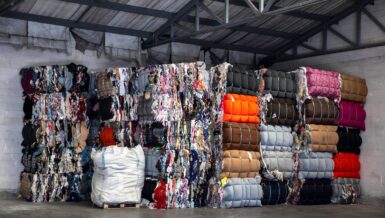
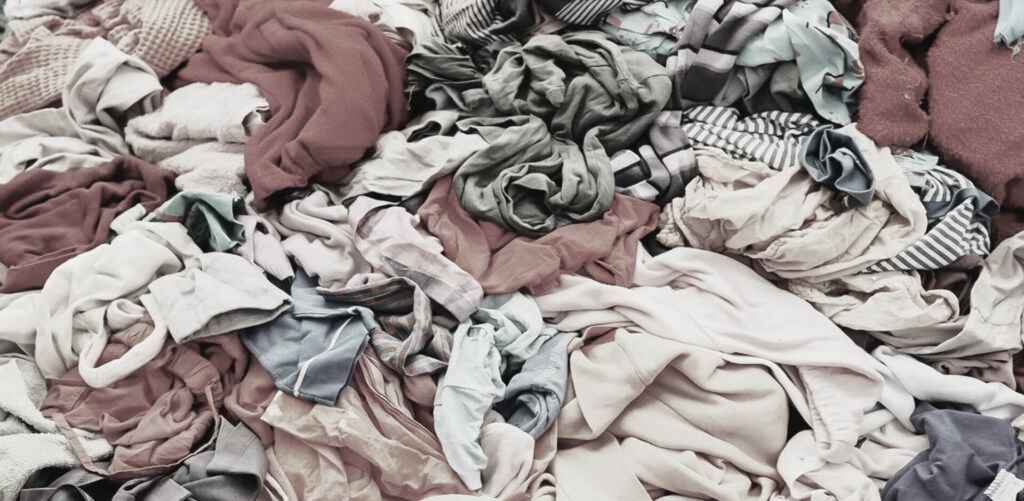
Every year, an estimated 100 million tonnes of textiles are discarded worldwide. In Europe alone, approximately 12.6 million tonnes of used textiles are generated annually. Germany accounts for roughly 1.3 million tonnes of this volume.
While collection systems in several EU countries are relatively advanced—Germany collects around two-thirds of its discarded textiles—the majority does not return to high-value recycling streams. Instead, large shares are exported for second-hand markets, processed into low-grade applications such as insulation and wiping cloths, or ultimately incinerated for energy recovery.
True fibre-to-fibre recycling—where old garments are transformed into new textiles of comparable quality—remains rare. Globally, less than 1% of textile waste is converted back into new clothing. This imbalance exposes both a structural weakness and a substantial industrial opportunity.
Lessons from Paper Recycling
The transformation of the paper industry offers a powerful comparison. Over the past decades, paper recycling rates in Europe have climbed to around 80%, supported by highly sophisticated sorting, pulping, and de-inking technologies developed by leading equipment manufacturers such as Andritz, Voith, and Valmet.
These companies turned regulatory pressure into technological leadership. Automated systems, optimized material separation, and energy-efficient processing chains made paper recycling both economically viable and technically mature.
Textile recycling now stands at a similar inflection point. The technological foundations are emerging—but large-scale implementation still lies ahead.
Regulatory Pressure Accelerates Change
European policymakers have begun reshaping the textile landscape. The EU Strategy for Sustainable and Circular Textiles outlines ambitious milestones:
- Mandatory separate collection of textiles across Member States
- Introduction of Extended Producer Responsibility (EPR) schemes
- Higher recycling targets by 2030
- Stricter controls on the export of unsorted textile waste
These measures will significantly increase feedstock availability for domestic recycling facilities. At the same time, they will force manufacturers to reconsider product design, durability, and recyclability.
For equipment suppliers, this means a rapidly expanding need for scalable, automated, and traceable processing solutions.
The Technology Building Blocks
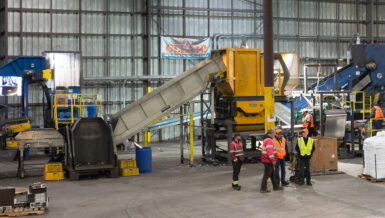
Textile recycling is fundamentally a process-engineering challenge. Like paper recycling, success depends on integrating multiple stages into a coherent, efficient value chain.
1. Advanced Sorting Systems
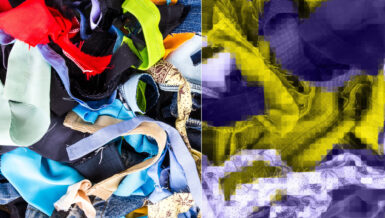
Automated sorting represents the gateway to high-quality recycling. Companies such as Tomra and Valvan have developed near-infrared (NIR) and AI-assisted systems capable of identifying fibre compositions, colours, and blends at high speed.
Modern installations can process up to two tonnes of textiles per hour. However, given the enormous global waste volumes, capacity expansion and standardization remain critical.
2. Mechanical Recycling
Mechanical processes reduce textiles into fibres through cutting, shredding, and carding. These fibres can then be reused in nonwovens, insulation products, or blended yarns.
German technology provider Trützschler has introduced integrated solutions enabling recycled fibre contents of up to 60% in certain applications. Mechanical recycling works particularly well for mono-material streams such as pure cotton or polyester—but mixed fabrics still pose limitations.
3. Chemical Recycling
Chemical recycling technologies aim to break down blended textiles—such as polycotton—into their molecular components. Start-ups including Infinited Fiber Company and Circ are developing processes to regenerate cellulose and separate synthetic fractions at fibre level.
Although many projects remain in pilot or early commercial phases, fibre-to-fibre chemical recycling could dramatically increase circularity rates once scaled.
A Market in Formation
Industry forecasts suggest that the global market for textile recycling machinery could reach multi-billion-euro volumes by the mid-2030s. In Europe alone, several billion euros are expected to be invested in fibre-to-fibre infrastructure before 2030.
The value locked in existing textile waste streams is substantial. If efficiently processed, Europe’s available post-consumer textile volumes could generate annual material markets worth €20–30 billion.
For plant manufacturers, component suppliers, automation specialists, and digital solution providers, this signals the emergence of a new industrial ecosystem.
Opportunities for Mechanical and Plant Engineering
The textile recycling sector demands solutions comparable in complexity to established industries such as pulp and paper or plastics processing. Key requirements include:
- Precise material separation
- High-throughput processing
- Energy-efficient operation
- Modular scalability
- Digital traceability and data integration
Engineering firms with cross-industry expertise—particularly those experienced in bulk material handling, shredding, classification, and process optimization—are well positioned to capture this market.
Moreover, niche innovators are contributing specialized solutions. Companies like Erema are adapting extrusion technologies for fibre applications, while hyperspectral imaging developers are pushing sorting precision even further.
Europe as an Innovation Hub
German-speaking countries and Scandinavia are emerging as global leaders in textile recycling technologies. From sensor-based sorting to mechanical fibre recovery and chemical regeneration, European players are setting technological benchmarks.
However, the next challenge lies in scaling these innovations economically. Demonstration plants must evolve into standardized industrial facilities capable of processing millions of tonnes annually.
This transition will require strong partnerships across the value chain—from fashion brands and waste collectors to technology suppliers and investors.
From Linear Waste to Circular Industry
Textile recycling is no longer a niche environmental topic; it is becoming a strategic industrial transformation. As regulatory frameworks tighten and public awareness grows, the shift from linear disposal to circular material flows will accelerate.
For mechanical and plant engineering companies, the message is clear: textile recycling could become what paper recycling already is today—a mature, high-tech industry built on process excellence.
Those who invest early in sorting intelligence, mechanical processing innovation, and scalable chemical solutions will help shape the next generation of circular manufacturing—and secure a strong position in a rapidly expanding global market.