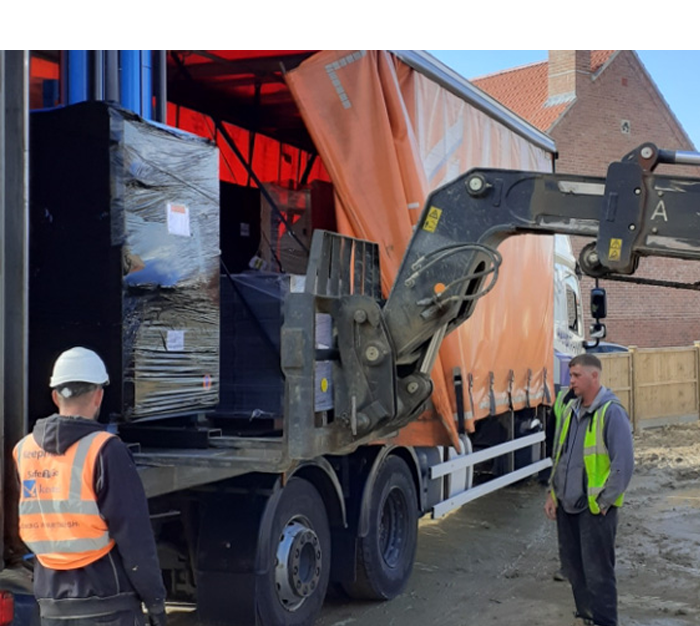
But in reality, companies are often paying to transport far more air than cardboard.
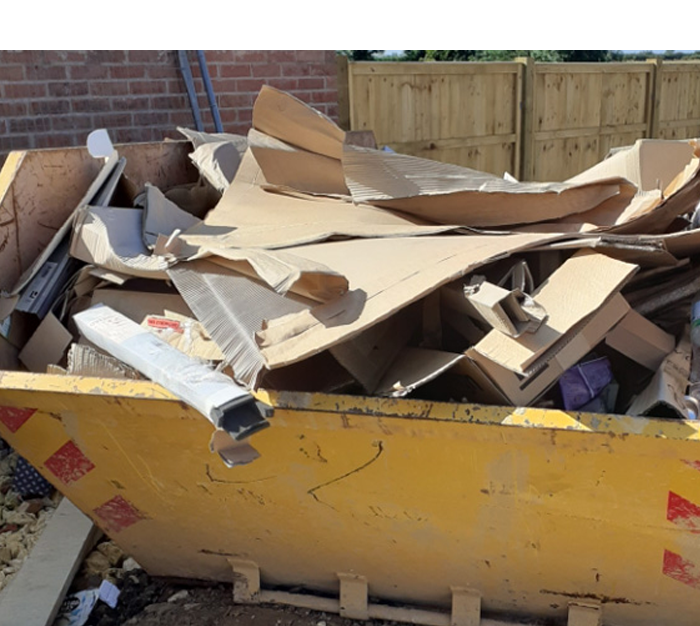
Uncompacted cardboard takes up an enormous amount of space. Even when containers appear “full,” the majority of the volume is frequently empty air trapped inside boxes and packaging material. This leads to unnecessary waste collections, increased transport costs, overflowing skips, and inefficient use of valuable workspace.
The hidden cost becomes especially significant in industries with high volumes of packaging waste:
- Construction
- Warehousing and logistics
- Retail
- Manufacturing
- Hospitality
In these sectors, cardboard waste can quickly dominate loading bays, storage rooms, and outdoor waste areas. Employees spend valuable time breaking down boxes, transporting waste internally, and managing overflowing containers instead of focusing on core operations.
Transporting loose cardboard also creates avoidable environmental impact. More collections mean more vehicle movements, more fuel consumption, and higher CO₂ emissions – all while moving largely uncompacted material.
This is why more companies are shifting toward on-site waste compaction solutions
By compacting cardboard at the point where waste is generated, businesses can dramatically reduce waste volume, streamline workflows, and lower collection frequency. Dense cardboard bales are easier to handle, easier to recycle, and often qualify for reduced collection costs or even rebate programs depending on local recycling markets.
Beyond the direct savings, compacting cardboard also improves operational efficiency:
- Cleaner and safer waste areas
- Reduced manual handling
- Better segregation for recycling
- Less internal transport of waste
- More usable floor space
Real-world results with Mil-tek: Truelove Properties reduces skips by 75%
A strong example comes from UK construction company Truelove Properties, which faced growing volumes of cardboard and plastic waste across its construction sites. During finishing phases, packaging from flooring, appliances, plumbing, and electrical materials created substantial waste management challenges.
After installing a Mil-tek A406 baler, the company cleared one site of cardboard and plastic within the first week and reduced skip usage by 75%. The compacted material became easier to separate, store, and recycle – particularly valuable on urban construction sites where space is limited.
According to co-owner Paul Truelove: “The cost and efficiency savings are a game changer for us.”
Following the results, the company decided to incorporate dedicated recycling and baling areas into future construction projects as part of its long-term waste handling strategy.