


AdvertiseSubscribe

Market

Textile Recycling

Textile recycling recovers fibres from post-consumer clothing and post-industrial textile waste for reuse or reprocessing into new yarns and products. It covers collection, sorting by fibre type and colour, and mechanical and chemical recycling — a growing stream as separate-collection rules for textiles take effect.

Latest in this market

Textile Recycling news and case studies

All articles in this market

Independent editorial selection — no sales pitches. Sponsored items are marked as such.

Submit your news

Promoted videos

Textile Recycling in action

All videos

Ask the Expert

Ask a textile recycling expert — free

View all experts

Engineers and product specialists who answer technical questions from readers. The answer comes back to you by e-mail; when we publish it, other readers benefit too.

Market & Technology Focus

Textile Recycling, in depth in your inbox

Every Thursday edition takes one market or technology in depth. These are the editions on this market — read them online or get the next one by e-mail.

Subscribe to our E-newsletters

Recycling technology worth your time: new equipment, plant case studies and the numbers behind them. Free, twice a week.

Questions and answers

Frequently asked about textile recycling

What happens to a garment once it enters the textile recycling stream?

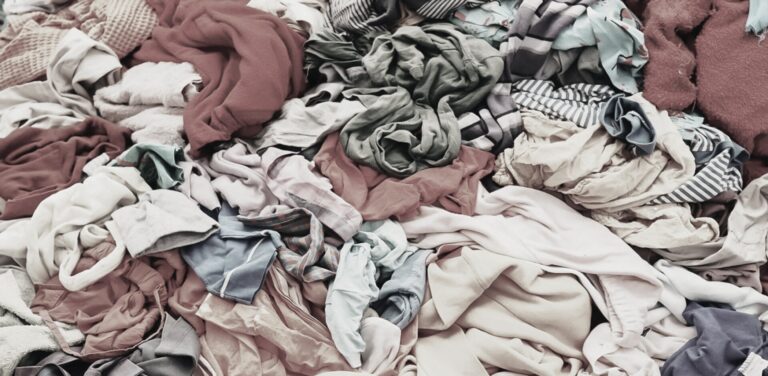
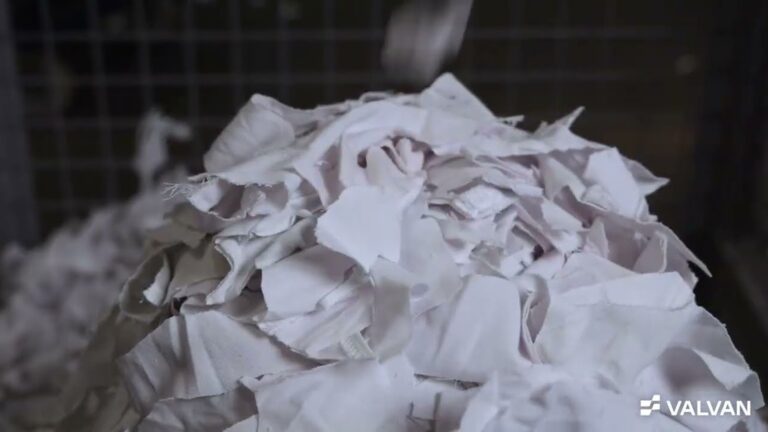
Collected textiles are first sorted for reuse: wearable items are graded and resold as second-hand clothing, which remains the highest-value outlet. What cannot be worn is sorted by fibre type and colour, stripped of buttons, zips and labels, and then cut, shredded and opened back into fibre. That recovered fibre goes into nonwovens, insulation, wiping cloths or, increasingly, new yarn for spinning.

Why is textile waste a growing recycling challenge?

Global fibre production has roughly doubled in two decades, while garments are worn for shorter periods and the share of synthetic fibres keeps rising. Most discarded textiles still end up in landfill or incineration. Separate collection of textiles is now mandatory across the EU, which is pushing large volumes of post-consumer material into a sorting and recycling infrastructure that is still being built.

What is the difference between mechanical and chemical textile recycling?

Mechanical recycling cuts and tears fabric into fibre using shredders, tearing lines and fibre-opening machines; it is proven and energy-efficient, but shortens the fibres, so the output is often downcycled or blended with virgin fibre. Chemical recycling dissolves or depolymerises the fibre - cellulose from cotton, or polyester back to its monomers - producing feedstock of near-virgin quality, at higher cost and with stricter input requirements.

Why are fibre blends so difficult to recycle?

Most garments are blends such as polycotton or contain elastane, and each fibre needs a different recycling route. Mechanical processes cannot separate blended fibres, and chemical processes typically need a pure input stream. Elastane content of just a few per cent can disqualify a garment from many recycling routes. This is why accurate fibre identification at the sorting stage is so critical for textile recyclers.

How are textiles sorted by fibre composition?

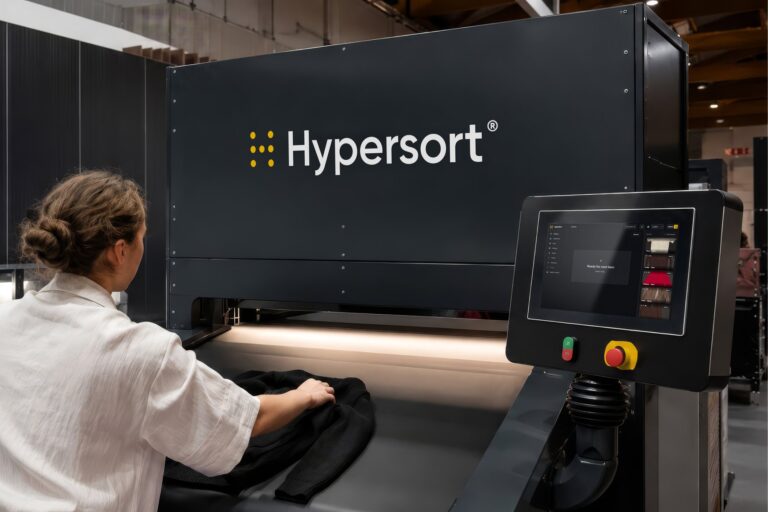
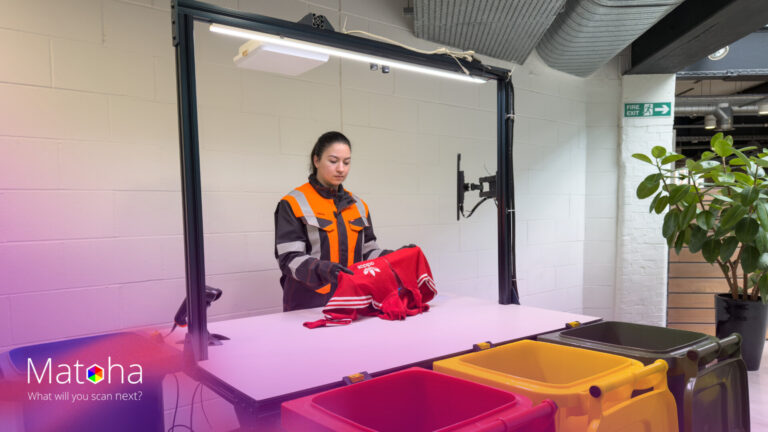
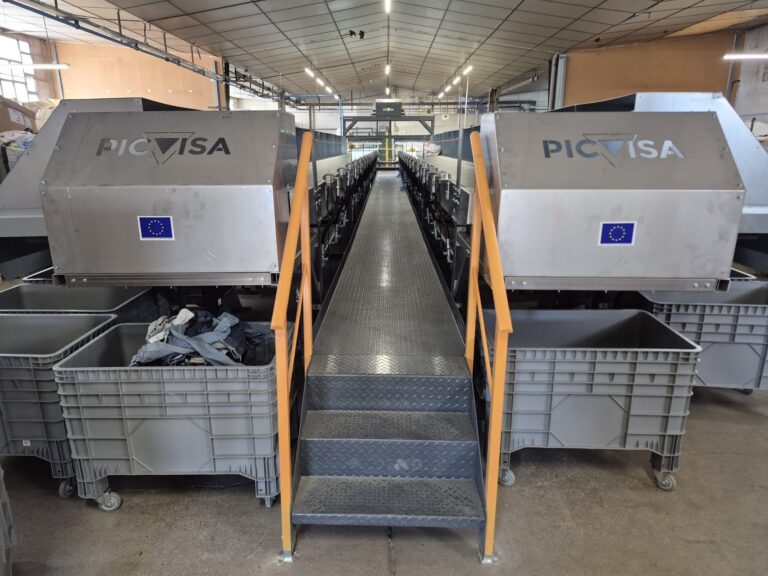
Manual sorting by trained graders still dominates, but automated lines using near-infrared (NIR) spectroscopy and camera-based identification are growing rapidly. NIR sensors read the chemical signature of the fabric to identify cotton, polyester, wool, viscose and blends in a fraction of a second, with air jets or robotics ejecting each item to the right fraction. Hard points such as zips and buttons are detected and removed separately.

What equipment is used in a textile recycling line?

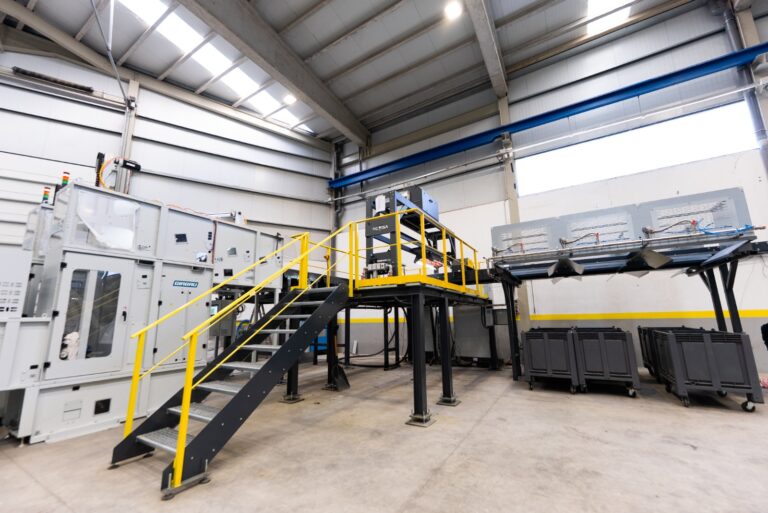
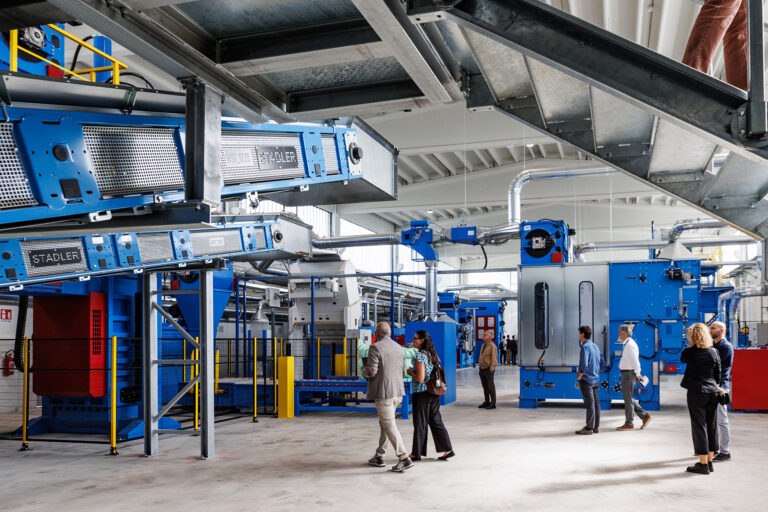
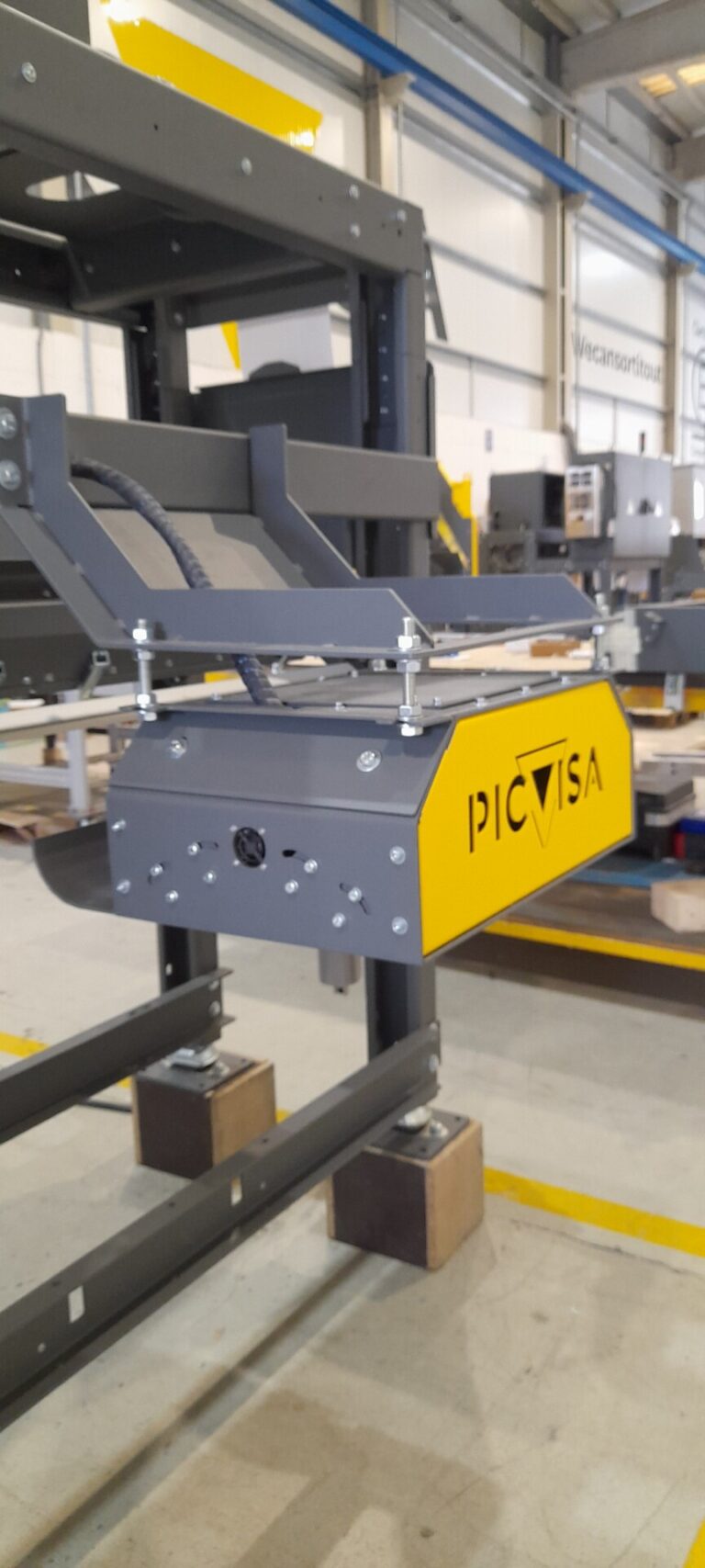
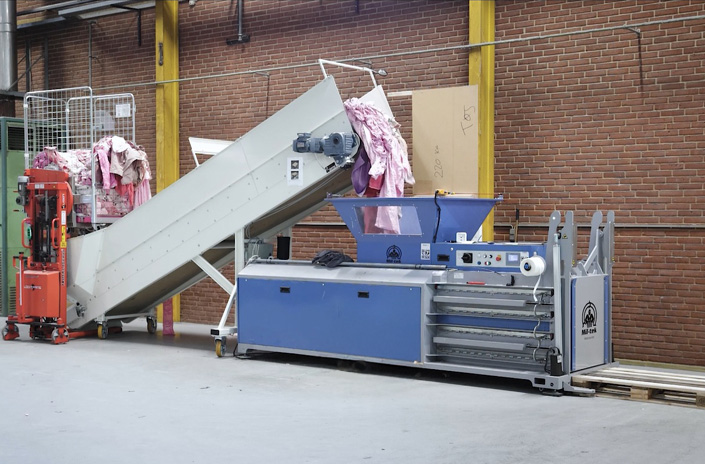
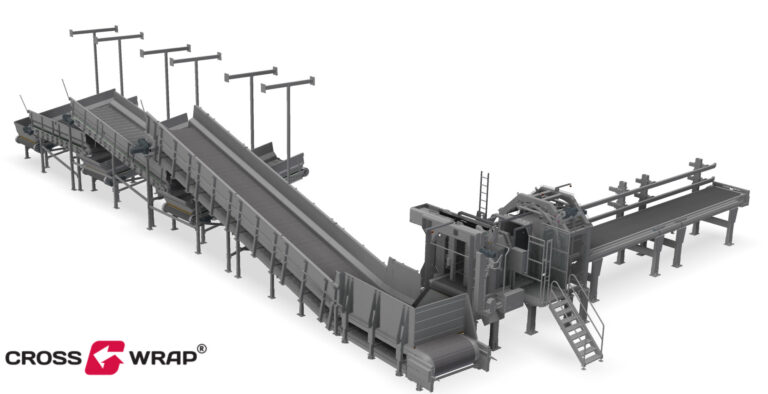
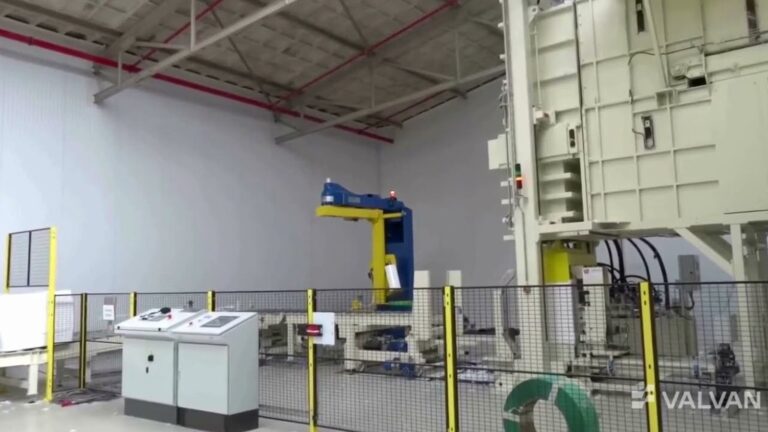
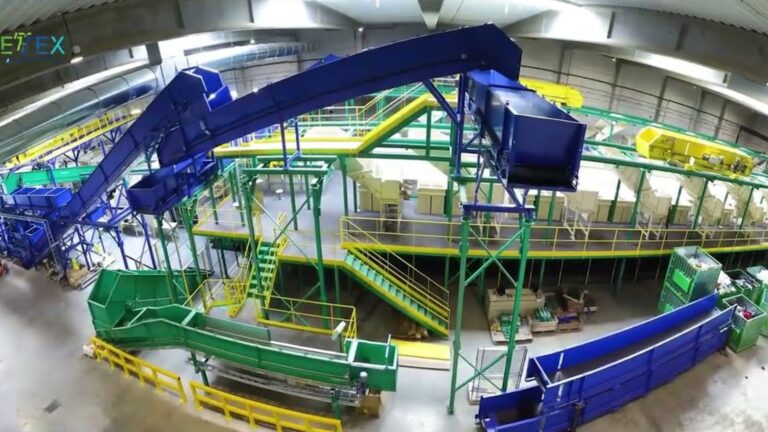
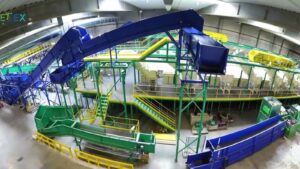
A typical line combines bale openers, sorting cabins or automated sorting systems, hard-point removal and cutting machines, multi-cylinder tearing or fibre-opening lines, dust extraction and baling presses. Downstream, fibre may go to carding and nonwoven lines or spinning preparation. Chemical recycling plants add shredding, dissolution or depolymerisation reactors, filtration and polymer or pulp recovery stages.

What products are made from recycled textile fibre?

Recovered fibre is used in nonwoven products such as thermal and acoustic insulation, automotive padding, mattress felts, carpet underlay and geotextiles, as well as industrial wiping cloths. Longer, cleaner fibres are spun into recycled yarns for new garments and home textiles, often blended with virgin fibre. Chemically recycled cellulose and polyester are turned into new filament and staple fibres of virgin-equivalent quality.

What regulations are driving textile recycling?

In the EU, member states must collect textiles separately since January 2025, and the Ecodesign for Sustainable Products Regulation and the revised Waste Framework Directive add extended producer responsibility (EPR) schemes, recycled-content requirements and a ban on destroying unsold textiles. Similar EPR laws are emerging in parts of the United States. These rules shift the cost of collection and recycling to brands and importers.

What are the main contaminants and quality issues in textile recycling?

Besides fibre blends, recyclers deal with hard points (zips, buttons, rivets), coatings and prints, dyes that limit colour sorting, moisture and mould from poorly stored collections, and non-textile items mixed into collection containers. Pre-consumer industrial waste such as cutting scraps is cleaner and more uniform, which is why many recyclers start with post-industrial streams before scaling up to post-consumer material.

What trends and technologies are shaping the textile recycling market?

Automated fibre sorting, fibre-to-fibre recycling at industrial scale, chemical recycling of polyester and polycotton, and digital product passports that record fibre composition are the key developments. Investment is moving from pilot plants to first commercial facilities in Europe, and brands are signing offtake agreements for recycled fibre to meet recycled-content targets. Collection capacity and sorting quality remain the main bottlenecks.

How do I find an equipment manufacturer for textile recycling?

Use the Manufacturers Directory A–Z or the Equipment Guide. Partner profiles carry direct contact details; other listings link to the company website.

Can I ask a technical question before I buy?

Yes. Ask the Expert puts your question to a field expert active in Textile Recycling. The answer comes back to you by e-mail; when we publish it, other readers benefit too.

Want to be the expert readers ask?

Field experts get a byline, a company profile and direct questions from readers. Partner packages add product visibility and a place in the Weekly E-Update.

Become an expert