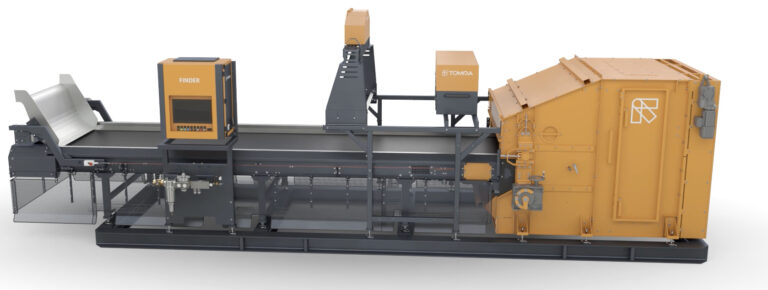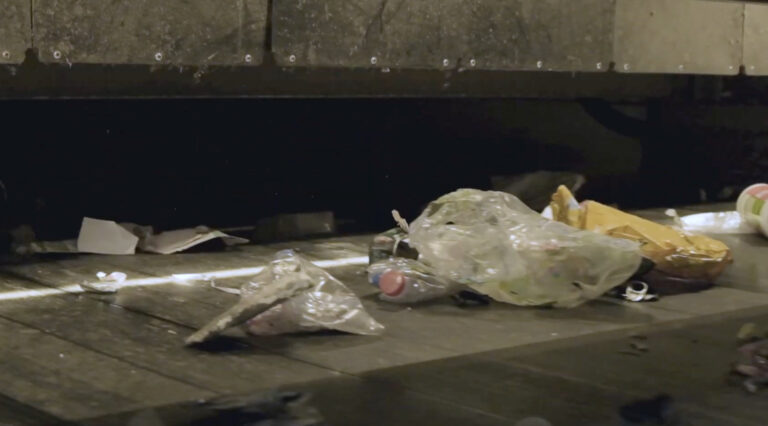
Bunting Magnetics Appoints Mobergs as Official Representative for Nordic and Baltic Region
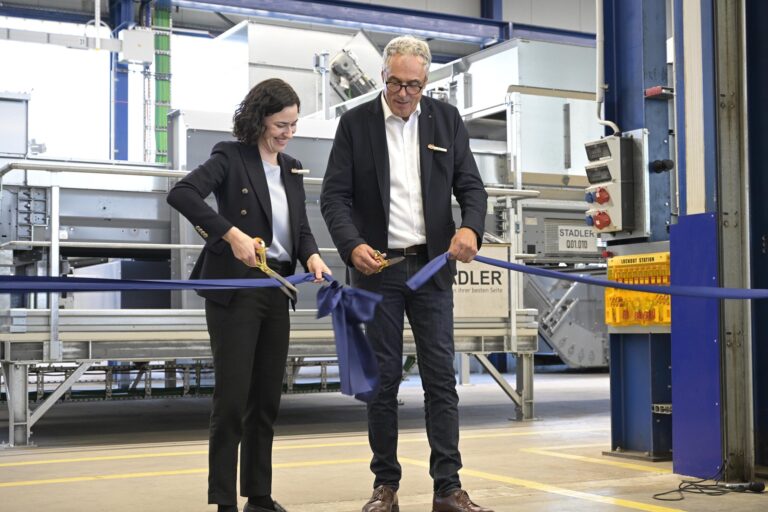
Bunting Magnetics has appointed Mobergs as its official representative for magnetic separation equipment across the Nordic and Baltic region.



Technology Zone
Separating mixed waste into clean, saleable streams is the hardest step in recycling. This zone covers magnetic, eddy-current and density separation, screens, and sensor-based sorting with NIR, X-ray, LIBS, AI and robotics — 24 equipment types, 229 manufacturers.
Latest in this zone
Bunting Magnetics has appointed Mobergs as its official representative for magnetic separation equipment across the Nordic and Baltic region.
Promoted videos
What this zone covers
Every separator exploits one physical difference between what you want and what you do not: size (screens), density and shape (air classifiers, ballistic separators, wet tables), magnetism (overband and drum magnets), electrical conductivity (eddy-current separators), colour, spectrum or shape (optical sorters with NIR, VIS, X-ray, LIBS or AI cameras). A sorting line is a sequence of such steps; the order matters as much as the machines, and the cheapest separation goes first.
Trommel, disc and vibrating screens split the stream by size and remove fines; ballistic separators split 2D (flat, light) from 3D (rigid) and fines in one pass; air classifiers, drum separators and windsifters pull light films and paper from heavy fractions. Mechanical steps are robust and cheap per tonne and set up every downstream sensor step by delivering a narrower, more uniform stream.
Overband, drum and pulley magnets remove ferrous metal early to protect equipment and produce a saleable scrap fraction. Eddy-current separators throw non-ferrous metals (aluminium, copper, brass) out of the stream by inducing currents in them; their performance depends on particle size, belt speed, rotor frequency and a thin, single-layer feed. Stainless steel needs a sensor sorter or a special high-gradient magnet.
An optical sorter scans a single layer of material on a fast belt, identifies each object by its near-infrared spectrum (polymer type), colour, X-ray transmission (density, halogens) or laser-induced spectrum (metal alloys), and ejects it with a timed air jet. Modern machines add AI object recognition for shapes and packaging types. Purity and recovery are traded against each other through the ejection settings; throughput per metre of belt width is the sizing number.
Purity is the share of the target material in the product; recovery is the share of the target material in the feed that ends up in the product. No separator gives 100 % of both, and the market sets the purity; recovery is what remains. Rescanning rejects, adding a quality-control sorter on the product and keeping the burden depth low on every belt are the usual routes to a better balance.
| Parameter | Typical range | Rule of thumb |
|---|---|---|
| Optical sorter belt speed | 2.5–4.5 m/s | Faster belts spread the material; single-layer presentation is the aim |
| Optical sorter throughput | 3–12 t/h per metre belt width depending on bulk density | Size on burden depth (one layer), not on the nameplate |
| Sorting purity / recovery | 95–99 % purity at 85–95 % recovery in one pass | Tighten purity and recovery drops; rescan the reject to recover it |
| Eddy-current particle size | 5–150 mm; best above 10 mm | Below 5 mm use high-frequency rotors or a fines eddy-current unit |
| Overband magnet suspension height | 300–500 mm above belt for 1,000–1,400 mm belts | Every centimetre of extra height costs field strength; keep burden depth low |
| Ballistic separator | Paddle inclination 15–25°; 10–40 t/h per unit | Steeper for more 3D in the heavy fraction, flatter for cleaner 2D |
| Trommel screen | 10–15 rpm; 40–60 % of critical speed | Hole size 2–3× the particle size you want to pass |
| Air classifier | Air speed 10–25 m/s at the separation zone | Adjust for the heaviest light fraction you want to lift, not the lightest |
| Symptom | Likely causes | What to do |
|---|---|---|
| Optical sorter purity drops | Burden too deep (objects overlap); dirty or misaligned lamp and sensor; wet or dusty material; ejection timing off | Reduce feed rate or widen belt, clean optics daily, dry or de-dust upstream, recalibrate ejection |
| Eddy-current recovery falls | Particle size too small; belt too fast or too slow; splitter position; ferrous contamination heating the rotor | Screen to size classes, tune belt speed and splitter, magnet upstream |
| Screen blinds | Wet, sticky or fibrous material; near-size particles; wrong aperture shape | Disc screen or flip-flow screen for sticky material, ball cleaning, coarser first cut |
| Film and paper in the heavy fraction | Air classifier air speed too low; ballistic paddle angle too flat; material clumps | Raise air speed, steeper paddles, bag opener upstream |
| Magnet misses ferrous | Suspension too high; burden too deep; belt too fast; magnet dirty | Lower the magnet, spread the burden, self-cleaning belt maintenance |
| Wrapping around shafts and screens | Wires, tapes, strapping, textiles | Pre-shredding, anti-wrap discs, regular cleaning stops, ballistic separator ahead of screens |
| Throughput below design | Uneven feed (surges); bottleneck at one machine; too much moisture | Metering drum or feeder at the head, balance the line, check moisture of incoming material |
Go deeper: news and case studies · frequently asked questions
Equipment Guide
 Eriez
Established in 1942, Eriez is a global leader in separation technologies. Eriez Recycling Products work successfully to separate and recover metals in a variety of applications - from municipal solid waste and shredded automobiles, plastics, electronic waste and foundry sand.
Eriez
Established in 1942, Eriez is a global leader in separation technologies. Eriez Recycling Products work successfully to separate and recover metals in a variety of applications - from municipal solid waste and shredded automobiles, plastics, electronic waste and foundry sand.
 Bollegraaf Group
 is a world-leading expert and innovator in the waste sorting and recycling sector. Furthermore, our reputation is based on the unique quality of equipment in terms of separation performance, robustness, and ease of maintenance. A premium quality complemented by our engineering expertise allows delivering the best solutions to the specific challenges of each of our customers.
Bollegraaf Group
Bollegraaf Group is a world-leading expert and innovator in the waste sorting and recycling sector. Furthermore, our reputation is based on the unique quality of equipment in terms of separation performance, robustness, and ease of maintenance. A premium quality complemented by our engineering expertise allows delivering the best solutions to the specific challenges of each of our customers.
 Pellenc ST
 is a global leader in intelligent waste sorting and recycling solutions. With advanced optical sorting, AI-driven systems, and decades of expertise, the company enables higher recovery rates, improved material purity, and a more circular economy worldwide.
Pellenc ST
Pellenc ST is a global leader in intelligent waste sorting and recycling solutions. With advanced optical sorting, AI-driven systems, and decades of expertise, the company enables higher recovery rates, improved material purity, and a more circular economy worldwide.
 Sense2Sort – Toratecnica
Sense2Sort Toratecnica is specialized in sensor-based sorting equipment for metal sorting applications in recycling. The company leads in automated spectroscopy sorting technologies, such as XRF (X-Ray Fluorescence) and LIBS (Laser-Induced Breakdown Spectroscopy), and offers all common sensor-based sorting technologies and consults on plant design.
Sense2Sort – Toratecnica
Sense2Sort Toratecnica is specialized in sensor-based sorting equipment for metal sorting applications in recycling. The company leads in automated spectroscopy sorting technologies, such as XRF (X-Ray Fluorescence) and LIBS (Laser-Induced Breakdown Spectroscopy), and offers all common sensor-based sorting technologies and consults on plant design.
 Cross Wrap Ltd.
Cross Wrap's speciality is in automated bale handling and material flow solutions for the global recycling, waste, and industrial sectors. It's known for its innovative Bale Wrapping and Bale Dewiring machines, designed to improve safety and efficiency in material processing.
Cross Wrap Ltd.
Cross Wrap's speciality is in automated bale handling and material flow solutions for the global recycling, waste, and industrial sectors. It's known for its innovative Bale Wrapping and Bale Dewiring machines, designed to improve safety and efficiency in material processing.
 Machinex Industries Inc.
Machinex Industries offers complete engineering design, manufacturing and installation of Material Recycling Facilities. As a leader in sorting technologies, Machinex Industries provides turnkey systems: Single-Stream, Mixed Waste Processing, Construction & Demolition, Commercial and Industrial Waste, front-end processing for Waste-to-Energy plant.
Machinex Industries Inc.
Machinex Industries offers complete engineering design, manufacturing and installation of Material Recycling Facilities. As a leader in sorting technologies, Machinex Industries provides turnkey systems: Single-Stream, Mixed Waste Processing, Construction & Demolition, Commercial and Industrial Waste, front-end processing for Waste-to-Energy plant.
 AIK Technik AG
 are a system supplier as a plant engineering for the treatment and recovery of residual materials. We are committed to reducing environmental impact for future generations and to achieving maximum sustainability using specialized processes and technologies.
AIK Technik AG
AIK Technik AG are a system supplier as a plant engineering for the treatment and recovery of residual materials. We are committed to reducing environmental impact for future generations and to achieving maximum sustainability using specialized processes and technologies.
 TOMRA Recycling
With 11,900 sorting systems installed in more than 100 countries, TOMRA Recycling is a global leader in sensor-based sorting solutions for the recycling and waste management industry. The company’s mission is clear: harness the latest sensor and AI technologies to help customers turn waste into value. Its product portfolio includes systems for resource recovery and material upgrading across a wide range of streams.
TOMRA Recycling
With 11,900 sorting systems installed in more than 100 countries, TOMRA Recycling is a global leader in sensor-based sorting solutions for the recycling and waste management industry. The company’s mission is clear: harness the latest sensor and AI technologies to help customers turn waste into value. Its product portfolio includes systems for resource recovery and material upgrading across a wide range of streams.
Ask the Expert
Engineers and product specialists who answer technical questions from readers. The answer comes back to you by e-mail; when we publish it, other readers benefit too.
 Charles Daridon
Bollegraaf Group
Charles Daridon
Bollegraaf Group
Charles Daridon is the Director Global Sales of the Bollegraaf Group. Charles was born in Bretagne but has been living in the…
Ask a question Laetitia Paveau
Pellenc ST
Laetitia Paveau
Pellenc ST
Laetitia is the Marketing and Communications Director at Pellenc ST. An engineer by training, she has spent over 20 years driving innovation…
Ask a question Eric van Looy
Sense2Sort – Toratecnica
Eric van Looy
Sense2Sort – Toratecnica
Eric van Looy has been active in the recycling industry for over three decades and is regarded as a pioneer in the…
Ask a question Xu Xifeng
Jiangsu Keson Environment Technology Co., Ltd.
Xu Xifeng
Jiangsu Keson Environment Technology Co., Ltd.
Xu Xifeng, the founder of Keson and vice president of Jiangsu Low Carbon Environment Design Institute of China. He has been engaged…
Ask a questionMarket & Technology Focus
Every Thursday edition takes one market or technology in depth. These are the editions on this zone — read them online or get the next one by e-mail.
Recycling technology worth your time: new equipment, plant case studies and the numbers behind them. Free, twice a week.
Questions and answers
Cheapest and most robust first: remove fines and oversize by screening, ferrous by magnet, light 2D by air or ballistic separation, then non-ferrous by eddy current and finally the expensive sensor-based sorters on a stream that is already narrow in size and composition. Every step upstream makes the next one cheaper and more accurate.
In one pass typically 95–99 % purity at 85–95 % recovery on a well-prepared single-layer feed. The final percentage points come from a quality-control sorter on the product or a rescan of the rejects, and from material preparation: dry, de-dusted, screened to a narrow size range.
NIR identifies polymer types and paper grades but cannot see black plastics; VIS colour cameras sort by colour; X-ray transmission separates by density (metals, halogenated plastics, inert material); X-ray fluorescence and LIBS identify metal alloys; AI object recognition classifies shapes and packaging that spectra cannot. Most modern sorters combine two or three.
The force on a particle scales with its size and conductivity, so small aluminium pieces are barely deflected at standard rotor speeds. Screen the feed into size classes, use a high-frequency (eccentric) rotor for fines, keep the belt at the right speed for the size class and set the splitter for that class alone.
Take them out before they reach rotating parts: a bag opener and a coarse pre-shredder cut long items, a ballistic separator removes many of them, and anti-wrap discs and shaft guards limit the damage. Schedule short cleaning stops rather than waiting for a jam.
It depends on burden depth, not tonnage: a sorter sees one layer, so throughput is belt width times speed times bulk density of a single layer — commonly 3–12 t/h per metre of belt width. A light, bulky stream such as film needs far more belt width per tonne than dense flakes.
Input composition (regular manual sampling), product purity and recovery per step, burden depth on the sensor belts, moisture of the incoming material, and the reject composition — that last one tells you where recoverable material is lost and which step to tune.
The zone is the editorial side: news, case studies, videos, newsletter editions and field experts. The Equipment Guide is the directory side: equipment types and the manufacturers that build them. This page links to its Equipment Guide category and back.
Open the Equipment Guide category for this zone, pick an equipment type and open a manufacturer profile. Partner profiles carry direct contact details; other listings link to the company website.
Yes. Ask the Expert puts your question to a field expert in this zone. The answer comes back to you by e-mail; when we publish it, other readers benefit too.