For recycling professionals, equipment manufacturers, and plant operators, the coming year presents both significant opportunities and technical complexity. Below are the key takeaways shaping wood recycling in 2026, along with the latest innovations redefining how post-consumer and post-industrial wood waste is managed.
1. Wood Recycling Is Now a Carbon Strategy
The push toward carbon neutrality has elevated wood waste from a disposal challenge to a strategic carbon asset.
Under EU Green Deal objectives and tightening ESG reporting frameworks, recycled wood is increasingly valued not only as a secondary raw material but also as a carbon storage mechanism. Engineered wood products and panelboard manufacturers are integrating higher percentages of recycled feedstock to reduce Scope 3 emissions.
In markets such as Germany, Austria, and the Nordics, recycled wood content in particleboard now routinely exceeds 60–70%, supported by advanced contamination control technologies.
Key shift for 2026:
Carbon accounting transparency will become as important as material recovery rates.
2. AI-Driven Sorting Is Becoming Standard
Advanced sensor-based sorting is no longer limited to plastics and metals. In 2026, AI-powered optical systems will be widely deployed in high-capacity wood recycling plants.
Leading suppliers such as TOMRA and STEINERT are integrating:
- Near-infrared (NIR) spectroscopy
- Deep-learning vision systems
- Real-time contamination detection
- Automated removal of treated or painted wood
This technology enables:
- Separation of A1–A4 wood fractions
- Identification of MDF vs. solid timber
- Detection of heavy metals or halogenated coatings
Why it matters:
Panelboard producers demand cleaner input streams. AI reduces manual sorting labor while increasing throughput and feedstock purity.
3. Treated Wood Recovery Is Expanding
Historically, treated wood (CCA-treated timber, painted construction wood, railway sleepers) was largely incinerated or landfilled due to contamination risks.
In 2026, new treatment pathways are emerging:
- Low-temperature pyrolysis for hazardous wood
- Solvent-based extraction of preservatives
- Advanced flue gas treatment systems
- Controlled thermal conversion with energy recovery
Research programs supported by EU innovation funding are scaling pilot systems capable of separating copper, chromium, and arsenic residues before material reuse or safe energy recovery.
Key takeaway:
The “difficult fractions” of wood waste are now becoming economically recoverable streams.
4. Mobile Processing Units Are Growing in Demand
On-site processing is increasingly attractive for:
- Construction & demolition (C&D) projects
- Disaster waste recovery
- Remote forestry operations
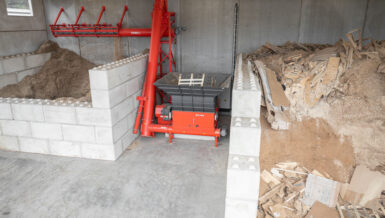
Manufacturers like WEIMA and UNTHA are delivering:
- High-torque mobile shredders
- Hybrid diesel-electric systems
- Integrated magnetic separation
- Low-noise urban-compatible solutions
By processing wood waste at source, contractors reduce transportation emissions and logistics costs.
Trend for 2026:
Compact, modular systems designed for rapid deployment and plug-and-play integration.
5. Cascading Use Principles Are Being Enforced
The EU’s cascading use principle—prioritizing material reuse over energy recovery—is reshaping plant configurations.
Instead of sending clean wood directly to biomass plants, operators are:
- Diverting reusable lumber
- Producing recycled panelboard feedstock
- Converting residual fines into bio-based products
- Using only contaminated fractions for energy
Countries tightening the enforcement of these principles are investing in improved grading infrastructure.
Operational impact:
More complex sorting lines and multi-stream output management.
6. Biomass Energy Faces Scrutiny
Biomass remains a significant outlet for recycled wood, but sustainability debates are intensifying.
Regulators are examining:
- Lifecycle emissions
- Feedstock origin
- Competition with material recycling
- Air quality impacts
In response, biomass facilities are upgrading:
- Emission control systems
- Continuous monitoring technology
- Feedstock verification tracking
The shift is clear: energy recovery must demonstrate environmental credibility.
7. Recycled Wood in High-Performance Materials
Innovation is expanding beyond particleboard.
Emerging applications include:
- Wood-plastic composites (WPC)
- Biochar for soil improvement
- Recycled wood fiber insulation
- Engineered composite construction panels
Several startups are exploring lignin extraction from recycled wood streams to produce bio-based adhesives and resins, reducing reliance on formaldehyde-based binders.
2026 outlook:
Material innovation will drive higher-value markets for recycled wood fibers.
8. Digital Traceability and Certification
Traceability systems are being integrated into large recycling plants to verify feedstock classification and compliance.
Blockchain-backed material tracking and digital product passports—especially under EU Circular Economy policies—are beginning to influence procurement requirements.
Plant operators are adopting:
- RFID tagging
- Digital weighbridge integration
- Automated reporting dashboards
- Quality verification software
The result is a more transparent secondary raw material market.
9. Automation Reduces Labor Dependency
Labor shortages across Europe and North America are accelerating the adoption of automation.
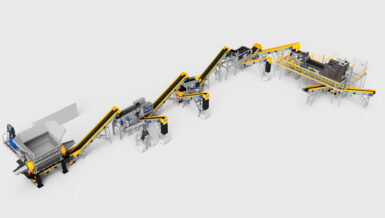
Wood recycling facilities now incorporate:
- Robotic picking arms
- Smart conveyors with load balancing
- Remote plant monitoring
- Predictive maintenance systems
Industrial IoT platforms allow operators to monitor wear on shredding knives and rotor components, optimizing uptime and reducing downtime.
10. The Circular Construction Boom
Perhaps the most significant driver for 2026 is circular construction.
Demolition waste is no longer considered rubble—it is a resource bank. Urban mining strategies emphasize selective dismantling to preserve wood components for reuse.
Prefabricated timber construction is increasing globally, and end-of-life management strategies are being developed during construction.
This systemic shift positions wood recycling not as waste management, but as circular resource engineering.
What This Means for Recycling Professionals in 2026
For plant operators and technology providers, the strategic priorities are clear:
- Invest in advanced sorting and AI.
- Upgrade contamination detection
- Diversify output streams
- Integrate digital traceability
- Align operations with carbon reporting frameworks.
Wood recycling is transitioning from a cost-based disposal industry to a performance-driven circular materials sector.
The competitive advantage in 2026 will belong to facilities that combine technological sophistication with environmental transparency.
Final Outlook
Wood recycling in 2026 is defined by:
- Higher purity requirements
- Greater regulatory oversight
- Stronger carbon integration
- Increased automation
- Expansion into value-added products
As circular-economy policies mature and raw-material prices fluctuate, recycled wood is becoming an increasingly strategic feedstock for construction, energy, and bio-based industries.
For the global recycling community, the message is clear:
Wood waste is no longer a byproduct—it is a core circular resource.