Individual Planning Starts with the Process
At ALLRECO, individual planning begins at an early stage of the project. The starting point is the customer’s specific requirements, along with an analysis of the respective operating conditions. These include, among other things, material composition, desired product qualities, throughput requirements, available space and existing infrastructure.
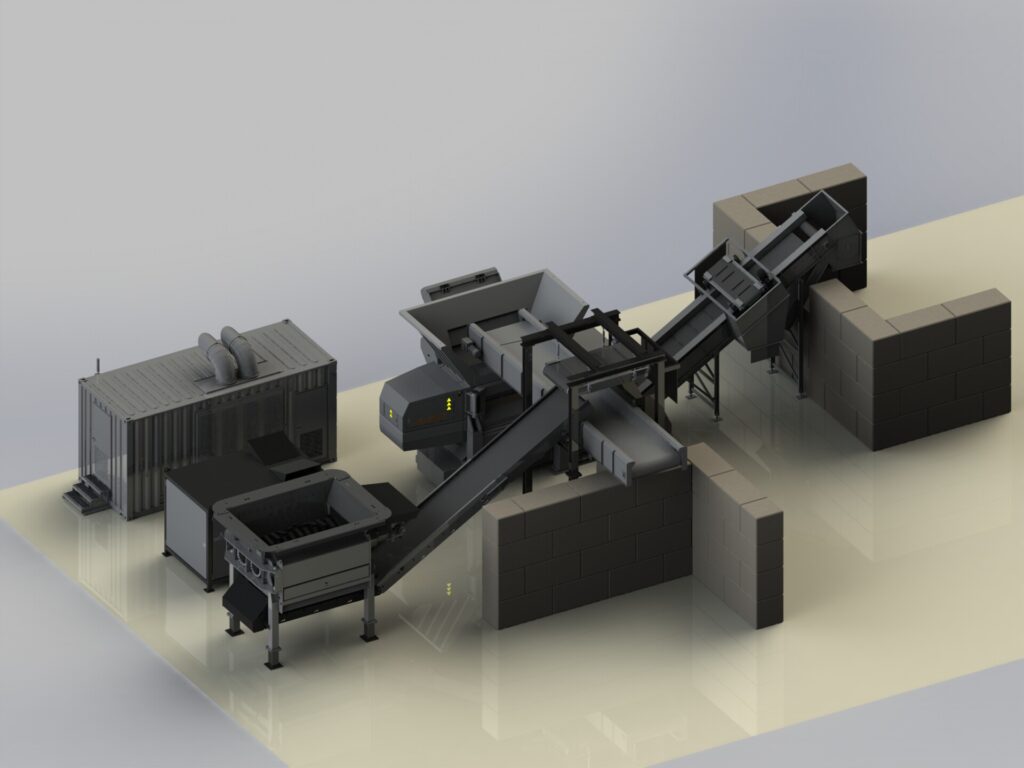
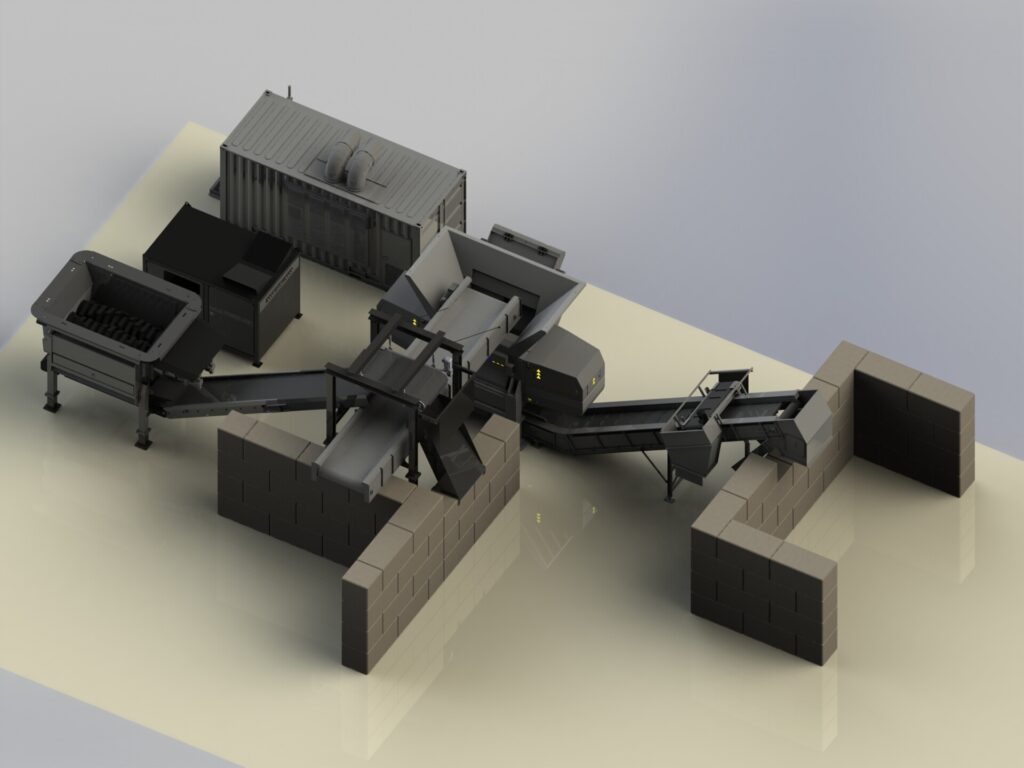
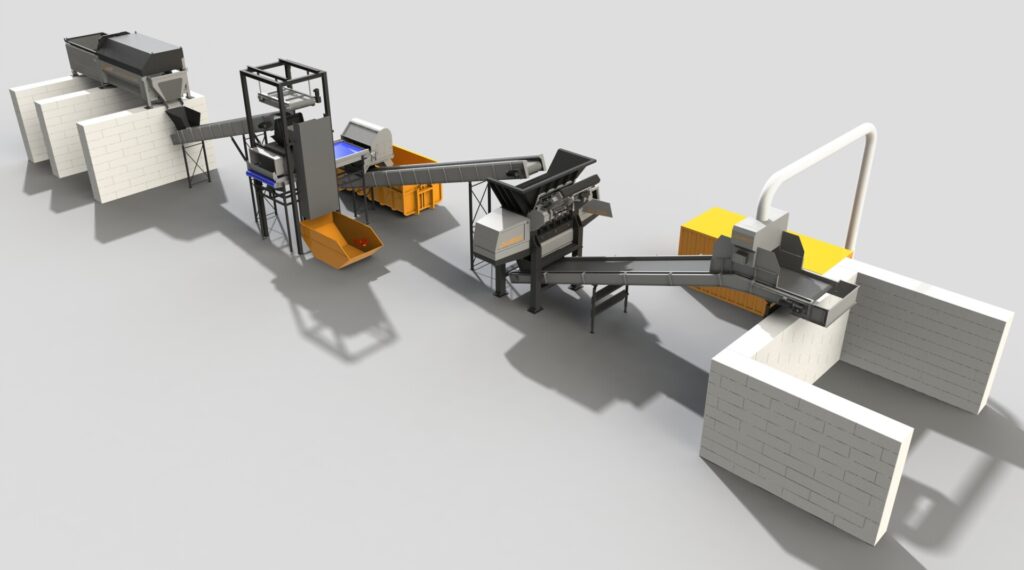
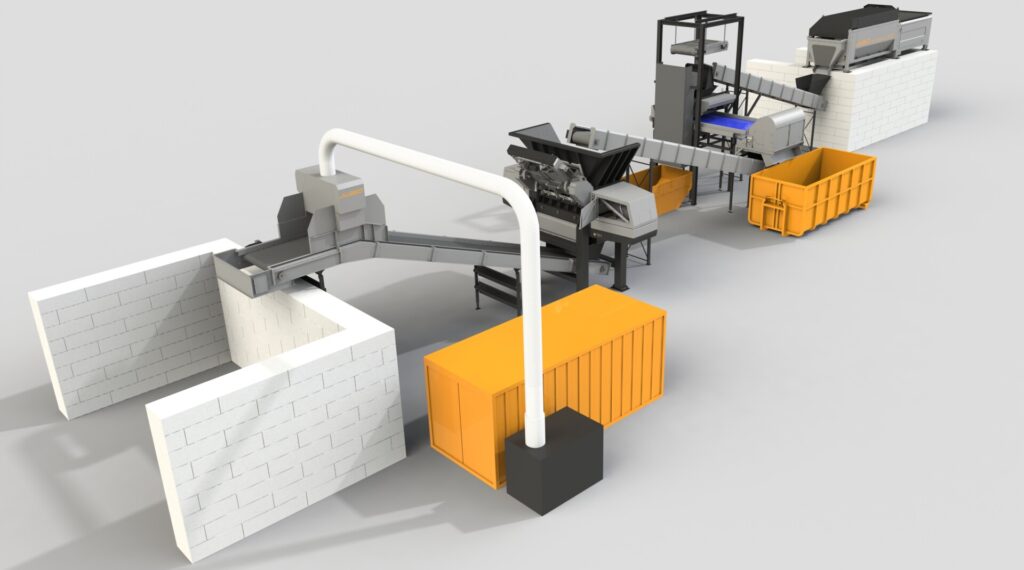
On this basis, a plant concept is developed using proven individual machines, but tailored specifically to the respective application. Customisation is achieved not only through the selection of individual components, but above all through their process integration, component sizing, as well as material flow, control systems and layout.
Process Engineering as the Foundation of the Plant Concept
The focus is not on selling individual machines, but on developing a fully functioning overall process. Process engineering consultancy therefore plays a central role.
As early as the concept phase, material properties, material flows and target products are analysed. At the same time, internal workflows, available resources and existing machinery are incorporated into the planning. Based on this, the required process steps are defined and suitable technologies are combined.
In practice, it often becomes evident that it is not a single machine that is decisive, but the optimal interaction of multiple process steps. This holistic approach forms the basis for robust and economically efficient plant concepts. It has proven particularly effective in projects involving complex material streams and demanding site conditions.
Custom Solutions with Measurable Results
In recent years, ALLRECO has implemented numerous projects in which individually planned plant solutions played a central role. Each plant was specifically tailored to material properties and site-specific conditions.
The results are reflected in stable process operation, high plant availability and clearly defined product qualities that can be reliably utilised by downstream users.
Examples can be found particularly in the processing of waste wood and biomass. Existing plants have been modernised, with large parts of the existing steel structures reused. At the same time, internal logistics were significantly improved.
Flexibility for Extensions and Modifications
The strengths of a modular and individually designed plant concept become particularly evident in plant expansions and modifications. In many projects, existing plants have been adapted to changing requirements or supplemented with additional process steps.
Typical measures include increasing plant capacity or adding further processing stages to improve product quality. In many cases, limited space and tight timeframes play a decisive role.
For operators, this flexibility ensures a high level of investment security, as plants can be adapted to new market requirements over the long term.
Service Throughout the Entire Lifecycle
At ALLRECO, plant engineering does not end with commissioning. From the planning phase onwards, the company supports its customers from initial process analysis through plant design to implementation and operator training.
During operation, maintenance concepts, spare parts supply and technical support help ensure high plant availability and minimise downtime. Continuous exchange with operators also provides valuable feedback from real-world operation, which is directly incorporated into the further development of plant concepts and machines.
Cost-Effectiveness at the Core of Modern Plant Concepts
Whereas maximum throughput used to be the primary focus, economic and operational factors are now taking centre stage. For operators, low operating costs, predictable maintenance intervals and high plant availability are often more important than theoretical maximum performance.
Accordingly, modern plant design focuses on robust technology, maintenance-friendly construction and energy-efficient operation. The goal is a plant that is not only powerful, but can be operated reliably and economically over many years. The emphasis is therefore not on maximum individual performance, but on a consistently reliable overall system in day-to-day operation.