


Per- and polyfluoroalkyl substances, or PFAS, comprise several thousand synthetic chemical compounds that have been used in industrial and everyday applications for decades. Due to their water-, grease- and dirt-repellent properties, they are found in products such as coatings, technical materials and firefighting foams.
At the same time, PFAS are exceptionally stable and highly resistant to natural breakdown in the environment. Once released, they can remain in soils, water bodies and sediments for decades and spread over large areas. Conventional treatment and disposal methods are therefore often insufficient to remove PFAS in a sustainable manner.
AIK Technik AG in Sursee/Switzerland is intensively working on the development of suitable treatment processes. Particular attention is given to PFOS and PFOA, two PFAS compounds that are increasingly regulated due to their persistence and environmental relevance. Various types of activated carbon, adsorption resins and filtration processes have been investigated and tested for their effectiveness in the company’s in-house laboratory.
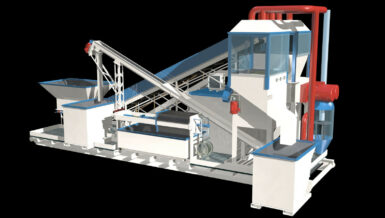
A key element of the treatment process is to first transfer PFAS from contaminated soils or mineral materials into the water phase. This can be achieved, for example, through soil washing. During this process, the contaminants are extracted from the solid material and subsequently concentrated in the process water.
In a further treatment stage, the PFAS are separated using specially selected activated carbons or adsorption resins, which selectively bind the contaminants and remove them from the water stream.
Following adsorption, the PFAS remain securely bound within the activated carbon or the resins used. The loaded adsorption materials are subsequently disposed of by means of high-temperature thermal treatment. Only under these conditions can the extremely stable carbon-fluorine bonds be fully destroyed, enabling the sustainable elimination of the contaminants.
The selection of the appropriate adsorption materials plays a decisive role in this process. Different PFAS compounds exhibit different characteristics; short-chain and long-chain PFAS in particular differ in terms of their mobility and adsorption behaviour. The activated carbons and resins used are therefore individually selected and adapted to the specific contamination profile and application.
The results of this research have already been successfully transferred into practical applications. In 2026, we installed a PFAS separation system at a major soil washing facility specifically designed to treat contaminated process water streams in Switzerland.