



For modern recycling facilities, the challenge is no longer simply to separate plastics from mixed waste. The greater challenge is to identify and separate different plastic streams according to their material characteristics, condition and end-use requirements, and then process them into consistent secondary raw materials with real market value.
This shift is placing greater emphasis on the overall engineering capability of recycling systems.
As an integrated solution provider for solid waste sorting and resource recovery, Keson develops complete systems covering process design, equipment manufacturing, system integration and project implementation. By combining sorting, size reduction, washing, dewatering, drying and downstream recycling processes according to specific feedstock and product requirements, Keson helps recycling operators build more efficient and integrated plastic recovery systems.
Plastic Recycling Starts with More Than Sorting
Different plastics require different processing strategies.
PET and HDPE, for example, are both widely recycled and commercially valuable polymers, but their ideal processing routes are not the same. A well-designed recycling system therefore needs to establish an effective material flow from the beginning and direct different plastic streams into processes suited to their specific characteristics.
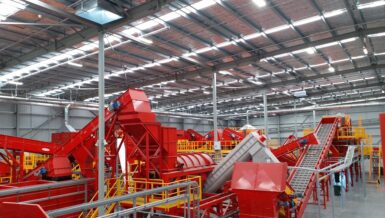
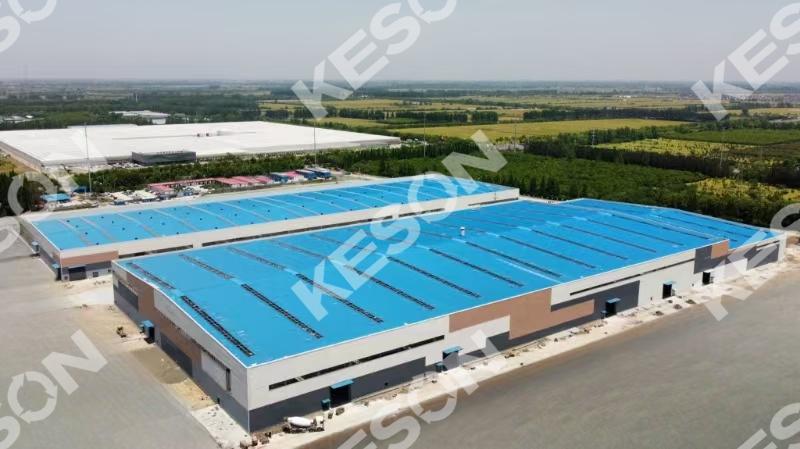
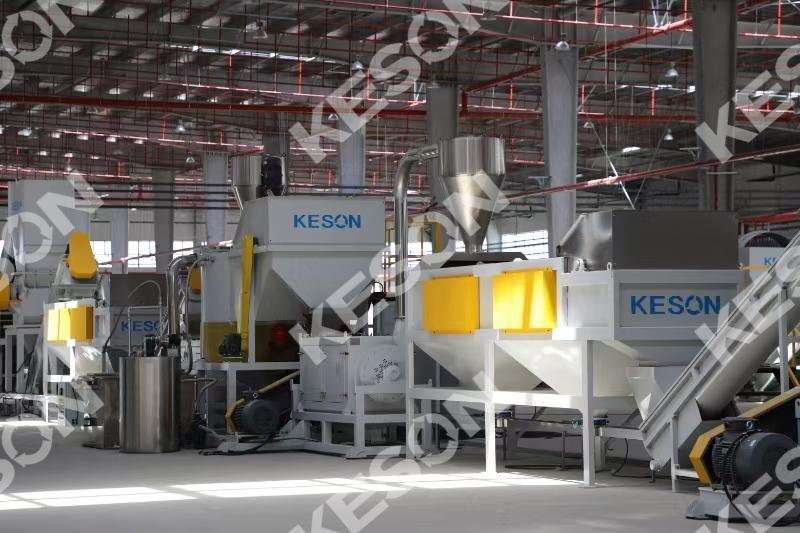
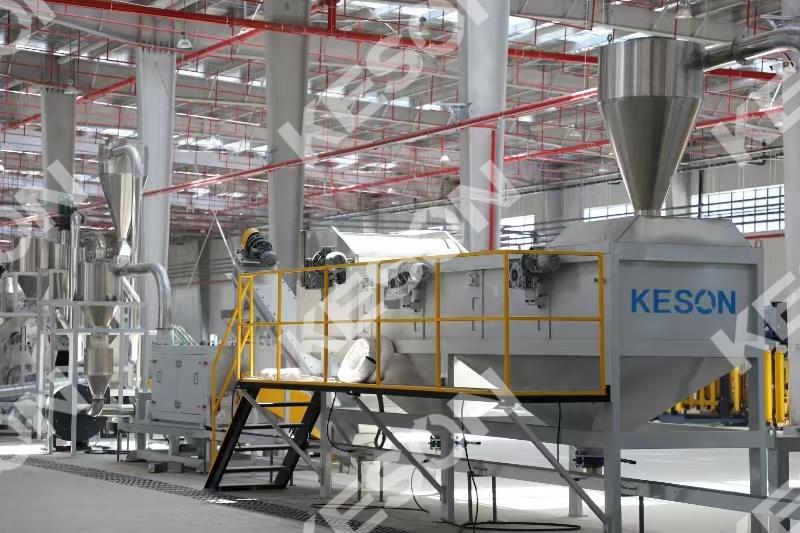
Keson’s recyclable materials recovery project in Taizhou, China, illustrates this approach.
The facility was designed with an overall processing capacity of 46,500 tonnes per year, covering a range of recyclable materials including waste paper, metals, waste foam and plastics. Within the plastics stream, PET bottles and HDPE bottles are handled through dedicated processing routes designed around their respective material and product requirements.
Rather than treating all plastics through a single standardized process, the system applies differentiated processing routes to maximize the value recovered from each material stream.
PET: From Baled Bottles to Recycled Flakes
PET bottles entering a recycling facility typically contain labels, caps, residues and other contaminants that need to be removed before the material can be effectively reused.
In the Taizhou project, PET bottle bales are first opened and then processed through screening and manual sorting, followed by label removal, size reduction, washing, separation, dewatering and drying.
The process can be summarized as:
Bale opening → Screening → Sorting → Label removal → Size reduction → Washing → Separation → Dewatering → Drying → Finished product
This sequence progressively removes unwanted materials and contaminants while preparing the PET for downstream reuse.
The PET bottle washing line has a designed capacity of 1.5 tonnes per hour.
The objective is not simply to recover a larger quantity of PET, but to produce a cleaner and more consistent recycled material suitable for subsequent processing.
This highlights an important principle in modern plastics recycling: product quality is determined by the performance of the entire process chain, rather than by any individual piece of equipment.
HDPE: Extending the Value of Recovered Plastics
For HDPE bottles, washing and preparation can be followed by extrusion and pelletizing when the project requires recycled material in pellet form.
The HDPE line at the Taizhou facility follows a dedicated route beginning with bale opening and size reduction. The material then undergoes washing, rinsing and separation, dewatering and drying before entering the extrusion and pelletizing stages.
The complete process is:
Bale opening → Size reduction → Washing → Rinsing and separation → Dewatering → Drying → Feeding → Screw extrusion → Water-ring pelletizing → Dewatering → Screening → Storage silo
The HDPE washing and pelletizing line has a designed capacity of 0.5 tonnes per hour.
Compared with simply separating and preparing waste plastics, this process extends the recycling chain further—from recovered plastic packaging to recycled polymer pellets that can be used as secondary raw material.
This reflects a broader evolution in the recycling industry: the value of a recycling facility is increasingly measured not only by how much waste it processes, but also by the quality and usability of the secondary materials it produces.
An Integrated Approach to Multiple Recyclable Materials
Plastic recycling does not operate in isolation.
In real-world recyclable materials collection systems, plastics are handled alongside paper, metals, foam and other recoverable materials. For integrated recycling facilities, the ability to efficiently separate these material streams and apply appropriate downstream processes is an important part of overall system design.
The Taizhou project was developed around this principle.
In addition to the PET and HDPE processing systems, the facility includes dedicated lines for waste paper, waste metals and waste foam. Each material stream is directed to a process suited to its specific characteristics.
Waste paper and metals are compressed into bales, while waste foam undergoes size reduction and compaction. Plastics, meanwhile, follow dedicated routes for size reduction, washing, separation and further recycling.
This integrated configuration enables multiple recyclable materials to be handled within one facility while maintaining separate processing routes for each material.
For operators, the result is a more structured material flow and a system designed to recover greater value from the incoming recyclable materials.
Engineering Around the Feedstock and the End Product
There is no single recycling process that can be applied universally to every plastic feedstock.
Material composition, contamination levels, processing capacity and the specifications of the final product all influence the appropriate process configuration.
For this reason, effective recycling system design should start with the feedstock and the desired product—not with a predefined equipment list.
For the Taizhou project, Keson considered processing capacity, feedstock characteristics, product requirements, automation, recovery rates and overall project economics when developing the process design and equipment configuration.
This engineering-led approach allows the system to balance processing capacity, recovery efficiency, product quality and operating economics according to the requirements of each project.
This flexibility is particularly relevant to international recycling markets, where collection systems, feedstock composition, material quality and demand for recycled materials can vary significantly from one region to another.
A successful recycling solution therefore needs to be adaptable—not only in terms of individual machines, but at the process and system level.
From Equipment Supply to Integrated Solutions
The performance of a plastic recycling facility ultimately depends on how effectively the entire system converts discarded materials into usable secondary resources.
For the Taizhou project, Keson was responsible for the process design, equipment manufacturing, installation and commissioning of the equipment system.
This end-to-end capability enables Keson to combine different technologies according to the characteristics of the incoming material and the requirements of the final product.
For plastic recycling projects, this means moving beyond the supply of individual machines such as shredders, washing equipment or conveyors. Instead, the focus is on developing an integrated process in which material flow, equipment selection and downstream product requirements are considered as one system.
Building the Next Generation of Plastic Recycling
The global plastics recycling industry is moving from conventional waste treatment toward a more sophisticated model of material recovery and resource management.
Future recycling facilities will need to address more than throughput. Sorting accuracy, recovery rates, product quality, energy consumption, operating costs and the market value of recovered materials will all play an increasingly important role in project performance.
As a result, competition in plastics recycling is gradually shifting from individual equipment performance toward overall process engineering and system integration capabilities.
This is where Keson continues to focus its expertise.
By connecting front-end sorting with downstream material recovery, Keson aims to help customers develop complete plastic recycling systems that do more than separate plastics from waste. Through size reduction, washing, separation, dewatering, drying and pelletizing, recovered plastics can be transformed into secondary raw materials capable of re-entering the manufacturing cycle.
From waste sorting to material recovery, and from material recovery to renewed resource value, plastic recycling is becoming an increasingly important part of the global circular economy.
Keson is building its solutions around this transition—combining process engineering, equipment manufacturing and system integration to help turn recovered plastics into valuable resources for the next stage of the material cycle.