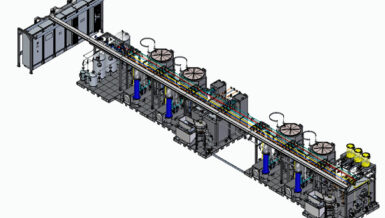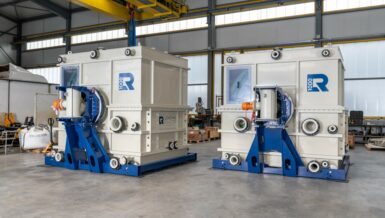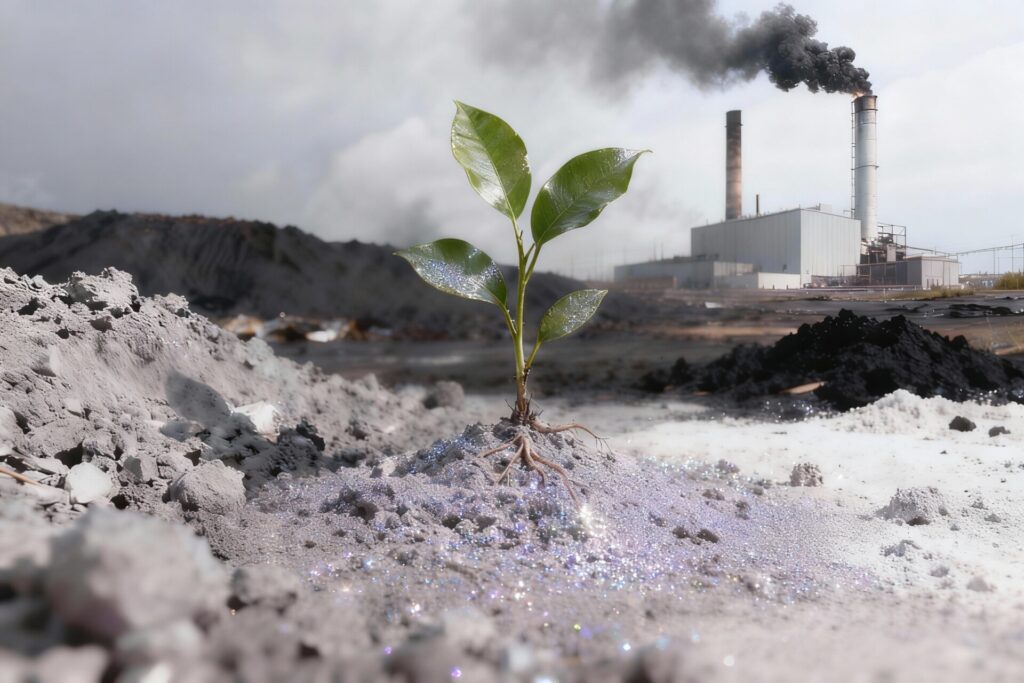
Modern waste incineration plants make an important contribution to waste recovery and energy generation. At the same time, however, they produce residues that require precise and safe treatment. One of the greatest challenges is fly ash, which contains high concentrations of salts, heavy metals, and other pollutants. AIK Technik AG has developed an acid fly ash washing process, known as FLUWA, which has established itself as a solution that not only meets these requirements but exceeds them.
As soon as the ash enters the process, the acidic solution immediately interacts with the fine particles, enabling pollutants contained within the ash to be dissolved directly. This intensive contact allows for al level of deep cleaning that cannot be achieved with other treatments. Chlorides, sulphates and dissolved heavy metals are transferred into the liquid phase and can then be selectively recovered. The remaining ash is significantly more stable, no longer classified as hazardous waste, much less reactive and therefore considerably safer. In Switzerland, it can be disposed of in landfill sites, while in other countries it may be reused as an additive in the production of construction materials, for example in the cement industry, thereby conserving resources. Without acid fly ash washing, the ash would remain classified as hazardous waste. The heavy metals dissolved during the process are subsequently precipitated as hydroxide sludge, allowing them to be reintegrated into the circular economy and to replace primary raw materials.
Quench Water as a Key Medium
The quench water used for fly ash washing originates from wet flue gas cleaning (FGC), where it is initially used and subsequently separated as an acidic stream. Within the FLUWA process, it enables both the dissolution and extraction of heavy metals as well as the dissolution of salts and other soluble components in the ash.
Following the washing process, the former quench water, now referred to as filtrate, is thoroughly treated in a wastewater treatment system designed by AIK Technik AG. Modern chemical and Process and filtration methods remove the absorbed contaminants completely. During this process, dissolved heavy metals and other valuable substances are selectively concentrated in a solid, heavy-metal-rich residue (hydroxide sludge). The purified water can then be returned to the process cycle. This closed-loop system conserves resources, minimizes emissions, and ensures sustainable operation. Quench water is therefore far more than just a technical medium—it is the functional core of the process.
The result is a process that combines safety and environmental responsibility in an impressive way. Acid fly ash washing not only meets strict regulatory requirements but also produces a stable, detoxified material that can be disposed of much more easily and safely in the long term. For plant operators, this means clear processes, maximum reliability and tangible progress toward sustainable waste management.