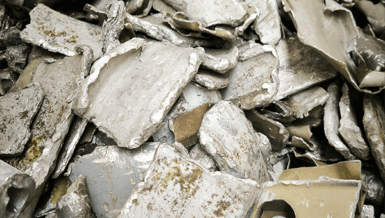
However, modern aluminum scrap streams are becoming increasingly complex. Scrap generated from construction, automotive, packaging, and manufacturing industries often contains ferrous contaminants, plastics, rubber, wood, coatings, paints, oils, and other impurities. Converting these heterogeneous waste streams into high-quality secondary aluminum products requires a combination of advanced sorting, purification, and metallurgical processing technologies.
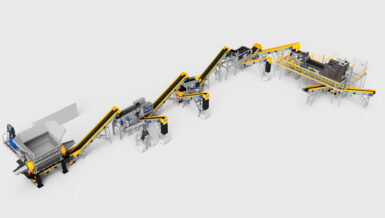
Keson Environment has developed an integrated aluminum recycling solution that combines mechanical pretreatment, thermal purification, melting, refining, and casting technologies to transform low-value aluminum scrap into high-quality secondary aluminum alloy ingots.
Mechanical Separation: Maximizing Metal Recovery
The recycling process begins with mechanical pretreatment designed to maximize metal recovery and improve downstream processing efficiency.
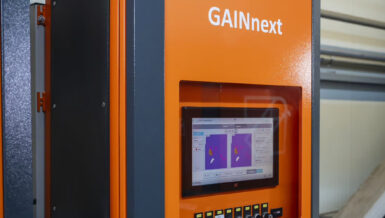
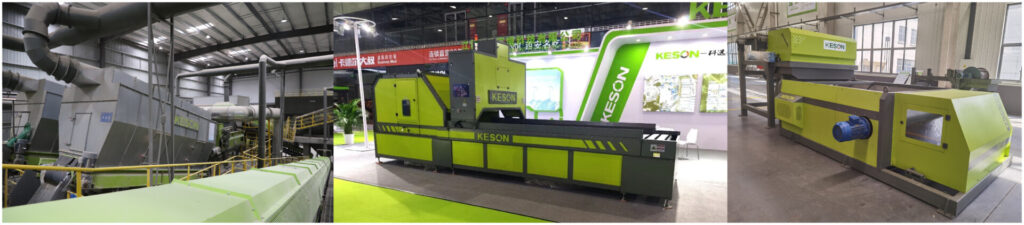
Incoming aluminum scrap is first subjected to shredding and size reduction, allowing different material components to be effectively liberated. The material then passes through a series of separation stages, including magnetic separation, eddy current separation, and air classification, to remove ferrous metals, light fractions, and non-metallic contaminants.
By combining multiple sorting technologies, valuable aluminum fractions can be efficiently recovered from mixed waste streams while reducing contamination levels before thermal processing. This approach not only improves metal recovery rates but also enhances the stability and efficiency of subsequent refining operations.
Thermal Decoating: Preparing Aluminum for Clean Melting
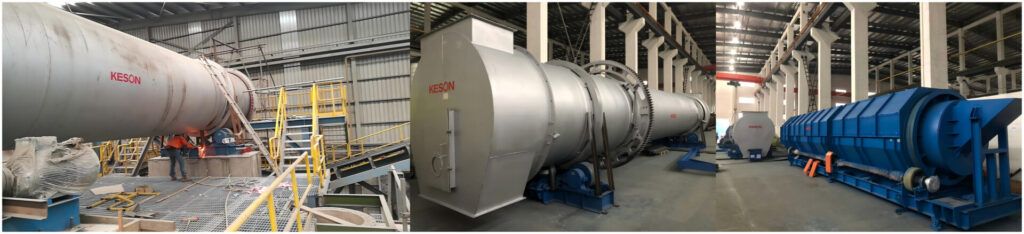
One of the major challenges in aluminum recycling is the presence of surface coatings, paints, oils, adhesives, and other organic residues attached to the scrap.
If these contaminants enter the melting process directly, they can increase oxidation losses, generate excessive dross, affect alloy quality, and create additional environmental control requirements.
To address this issue, Keson incorporates a sealed thermal decoating and drying process into the recycling line. Under carefully controlled operating conditions, organic contaminants are removed from the aluminum surface before melting, while the integrity of the metal itself is preserved.
Compared with direct melting of contaminated scrap, thermal pretreatment improves furnace efficiency, reduces impurity loading, enhances metal yield, and creates more stable operating conditions throughout the recycling process.
Melting, Refining, and Quality Control
Following thermal purification, the cleaned aluminum scrap enters the melting and refining stage.
The molten aluminum undergoes a series of metallurgical treatment processes designed to improve metal quality and ensure product consistency. These include melt stirring, degassing, impurity removal, ceramic filtration, and alloy composition adjustment. Advanced quality-control procedures, including online spectrometric analysis, help maintain precise alloy specifications throughout production.
Material recovery is further optimized through dedicated dross treatment systems, allowing valuable aluminum to be returned to the production cycle while minimizing waste generation. Residual by-products are subsequently treated through environmentally responsible processes to ensure compliance with modern sustainability standards.
Automated Casting of Secondary Aluminum Alloy Ingots
After refining and composition verification, the molten aluminum is transferred to an automated casting system where it is formed into standardized secondary aluminum alloy ingots.
The casting process incorporates controlled cooling, automated demolding, robotic stacking, and product identification systems to ensure consistent quality and efficient production. Final inspections verify the appearance and quality of each ingot before shipment.
The resulting products are suitable for a wide range of industrial applications and can meet internationally recognized quality requirements for secondary aluminum alloys.
Supporting a Circular Aluminum Economy
As global demand for sustainable materials continues to rise, aluminum recycling is evolving from simple scrap processing into a highly engineered resource recovery industry.
By integrating advanced sorting technologies, thermal purification, modern melting systems, and precise metallurgical refining, Keson Environment helps transform complex aluminum waste streams into valuable secondary raw materials.