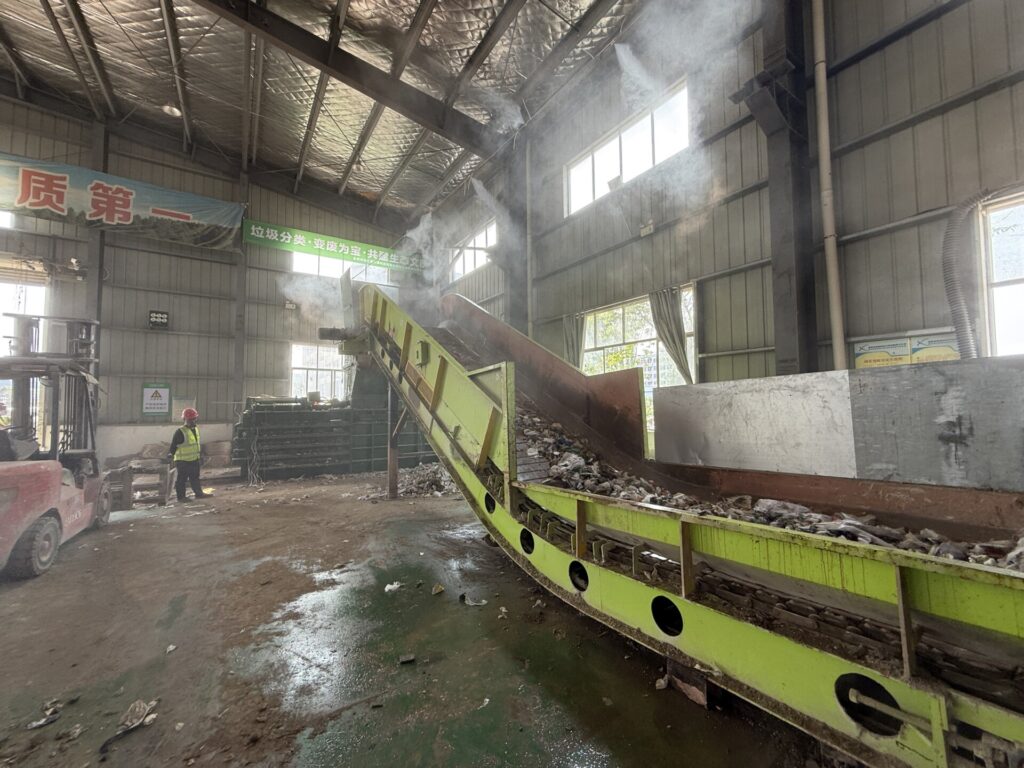
The facility represents a highly specialized engineering response to an intensifying challenge in global waste infrastructure: the processing of highly heterogeneous construction and demolition (C&D) debris that is heavily admixed with municipal solid waste (MSW) and localized commercial scrap.
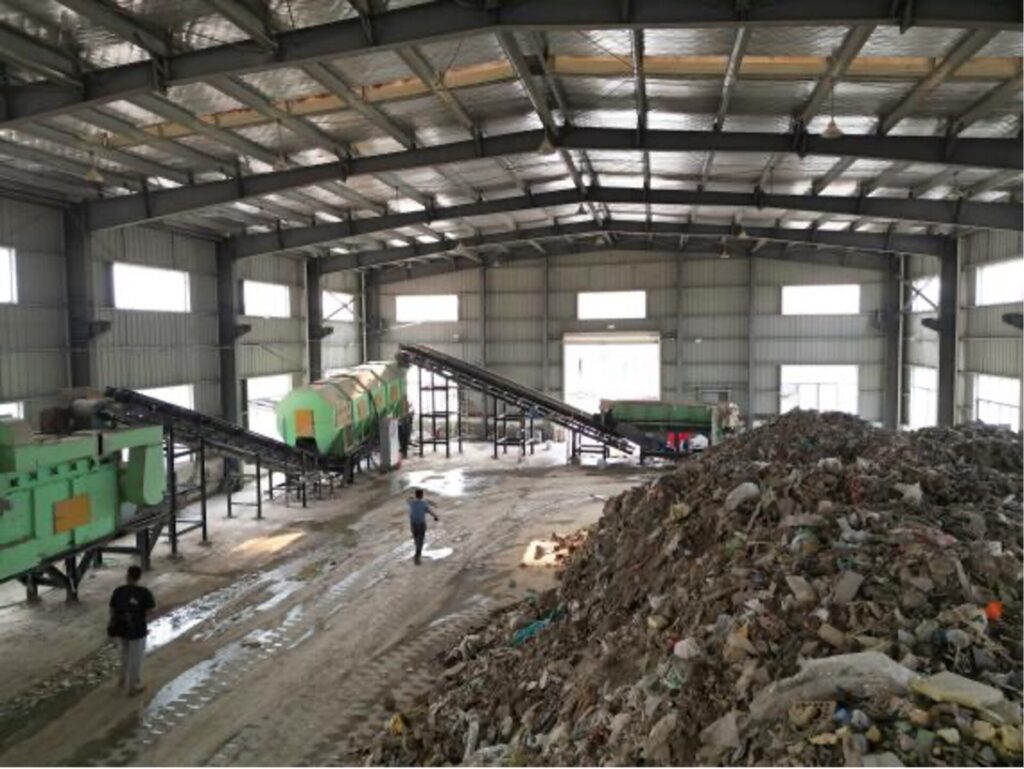
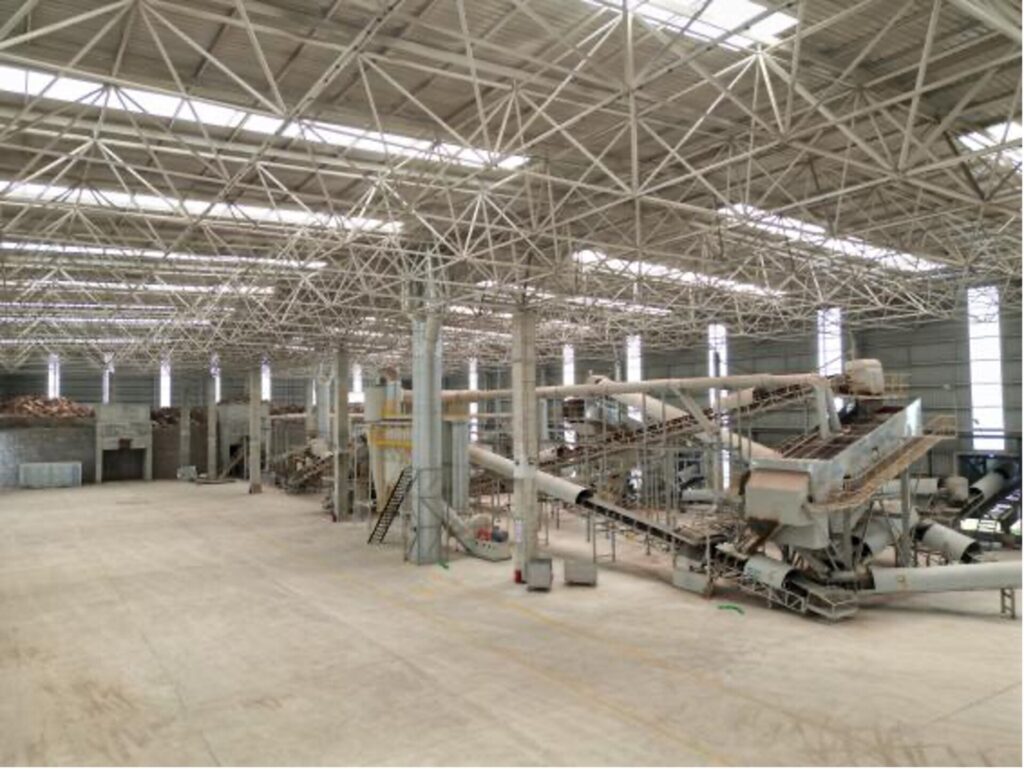
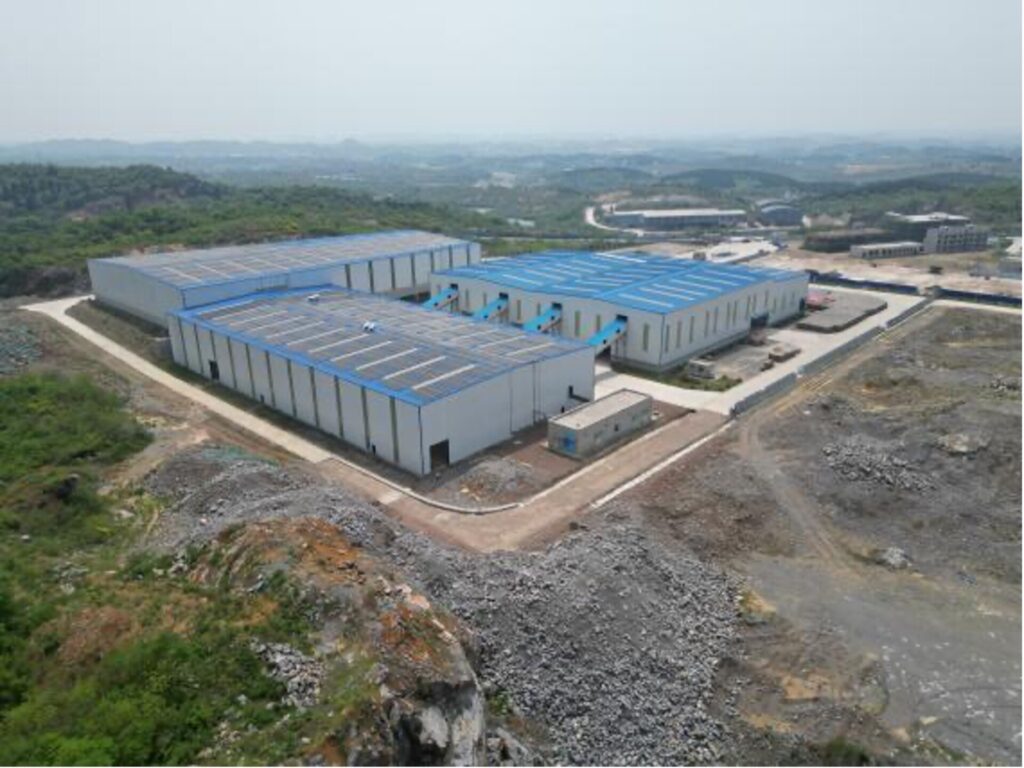
Rather than treating these streams in isolated, capital-intensive processing lines, the Tiantai Environmental Protectiont utilizes a continuous, single-footprint mechanical matrix to split complex incoming feedstock into high-purity, marketable secondary commodities.
The Challenge of Heterogeneous Feedstocks
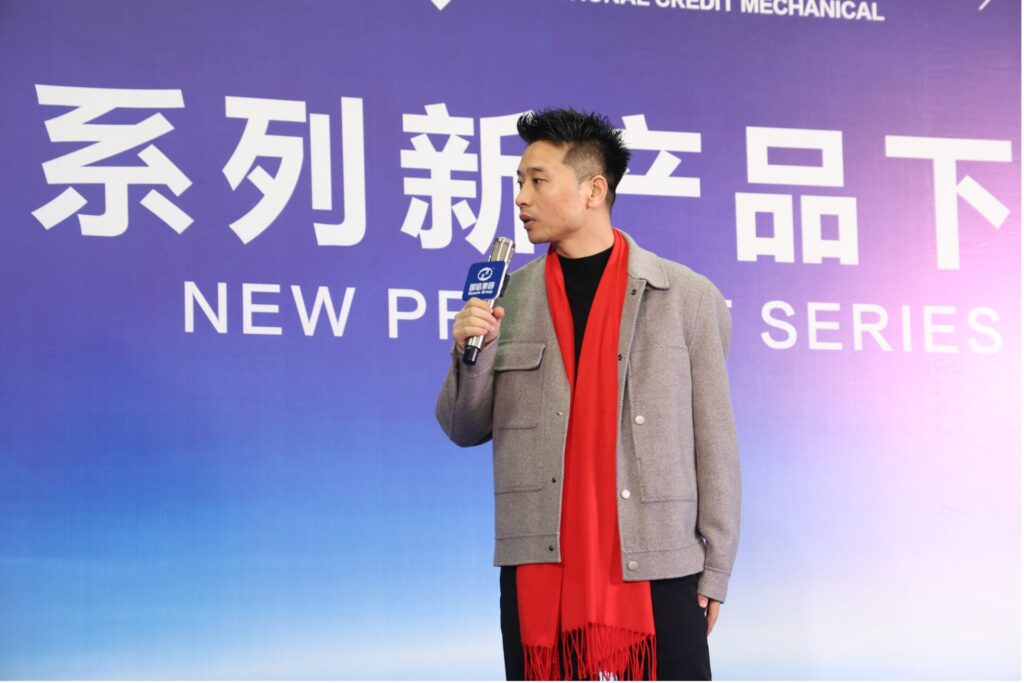
“In modern urban environments, we rarely see ‘pure’ C&D waste anymore,” explains Yang Li, International Technical Director at Henan Guoxin Machinery. “Operational sites are consistently receiving mixed loads containing abrasive concretes, structural metals, flexible polymers, wood, textiles, and even organic domestic waste. If you feed this chaotic mixture directly into a standard crushing circuit, the sticky organics blind the screens, textiles wrap around rotating shafts, and heavy concrete blocks destroy the light-fraction separators.”
The inbound material profile at the site showcases this complexity, consisting of four highly disparate fractions:
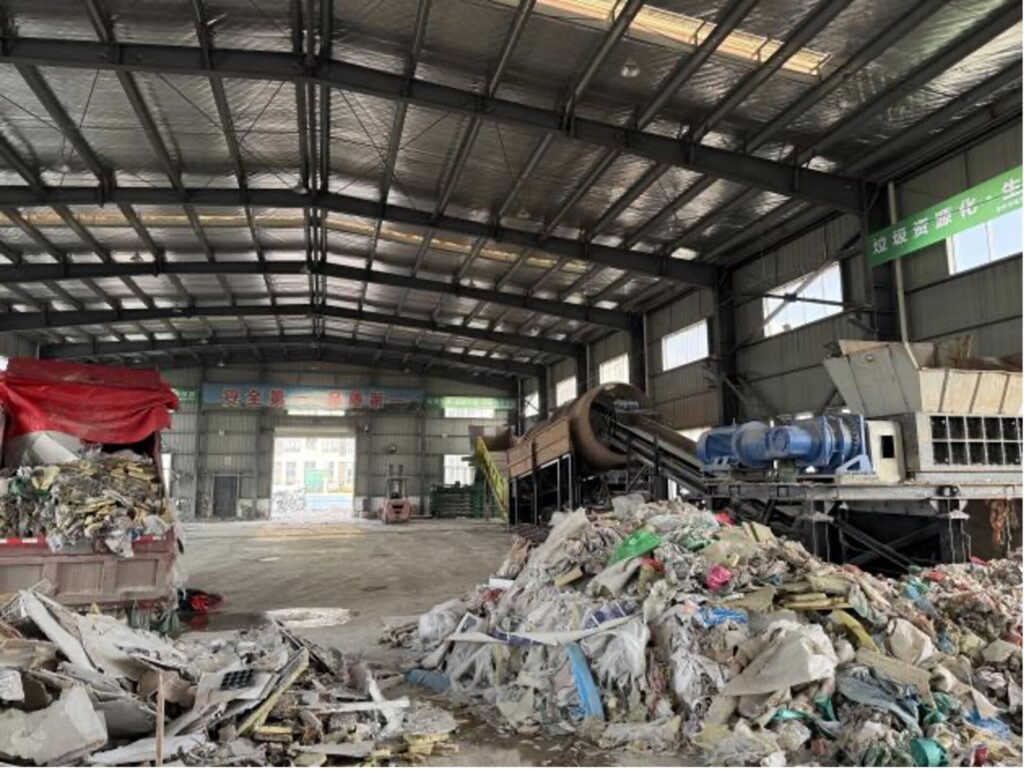
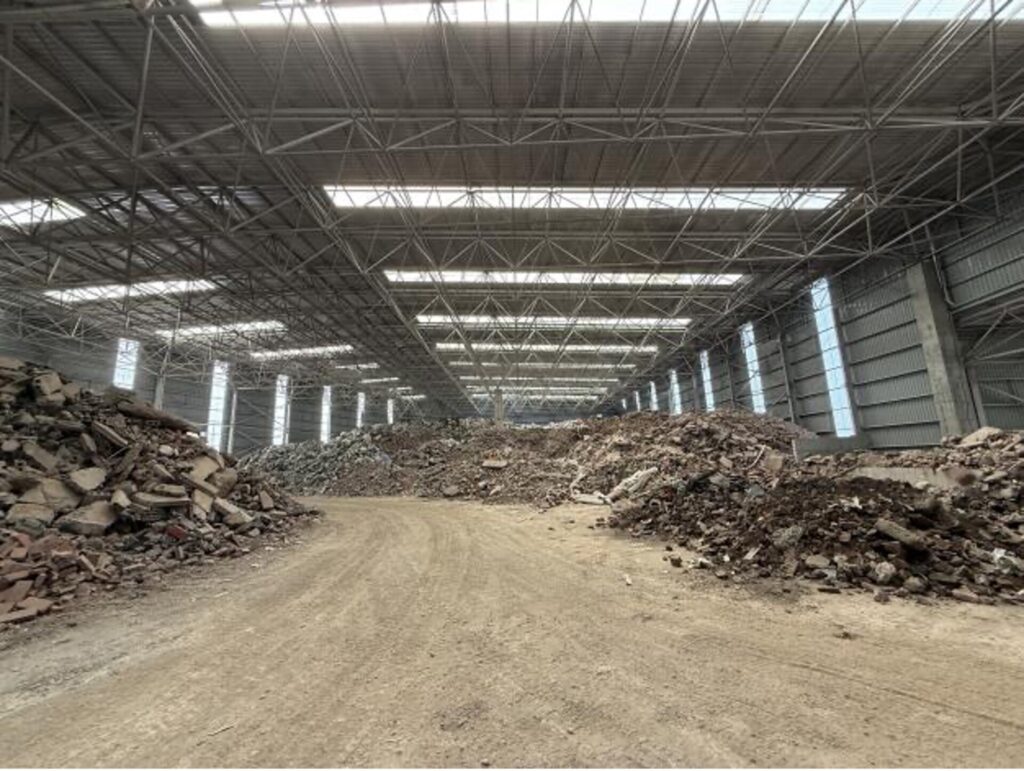
- Inorganic Non-Metallics: Structural concrete, masonry bricks, river stones, ceramics, and glass shards.
- Metallic Elements: Structural steel rebar, high-tensile iron wires, and aluminum alloy profiles.
- Organic Combustibles: Demolition timber, mixed packaging plastics, cardboard, and asphalt composites.
- Composite Contaminants: Intermingled domestic household waste, gypsum wallboards, and rock wool insulation matrices.
To process this highly variable material sustainably, Guoxin engineered a four-stage process logic: front-end volumetric control, mid-stream dimensional calibration, aerodynamic density segregation, and complete downstream valorization.
Advanced Four-Stage Mechanical Processing Architecture
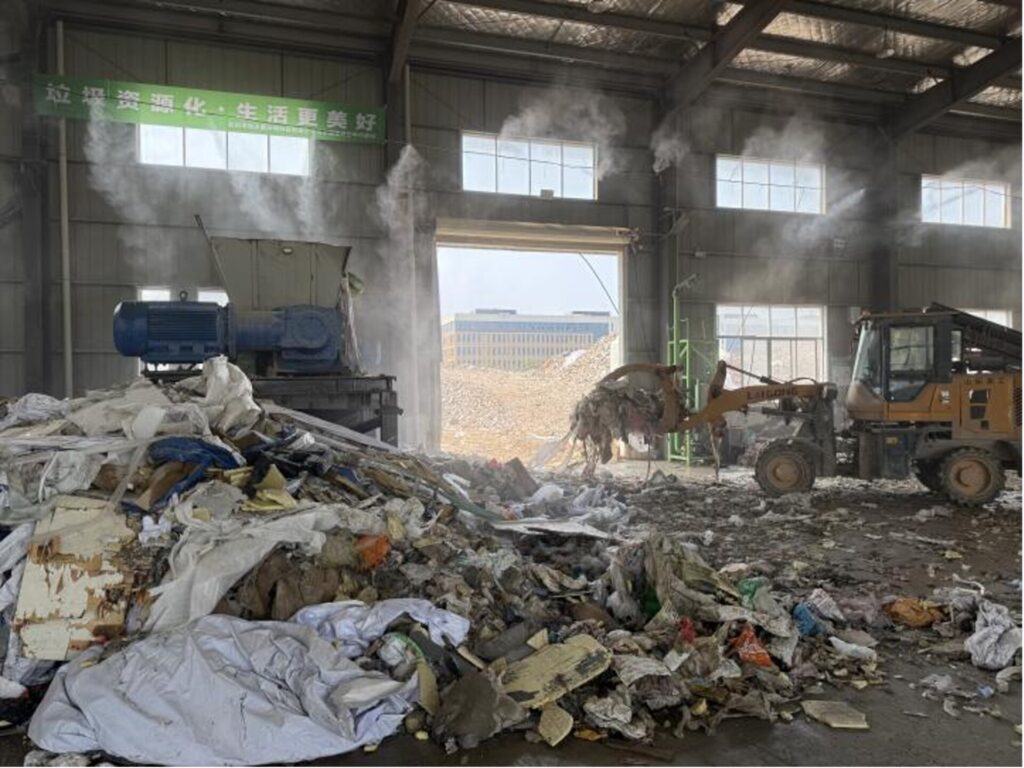
The processing sequence begins at the intake yard, where bulk raw material undergoes macro-scale pre-sorting via heavy hydraulic grapples. This phase isolates oversized concrete columns and long structural steel beams, preventing unexpected downstream mechanical bridging.
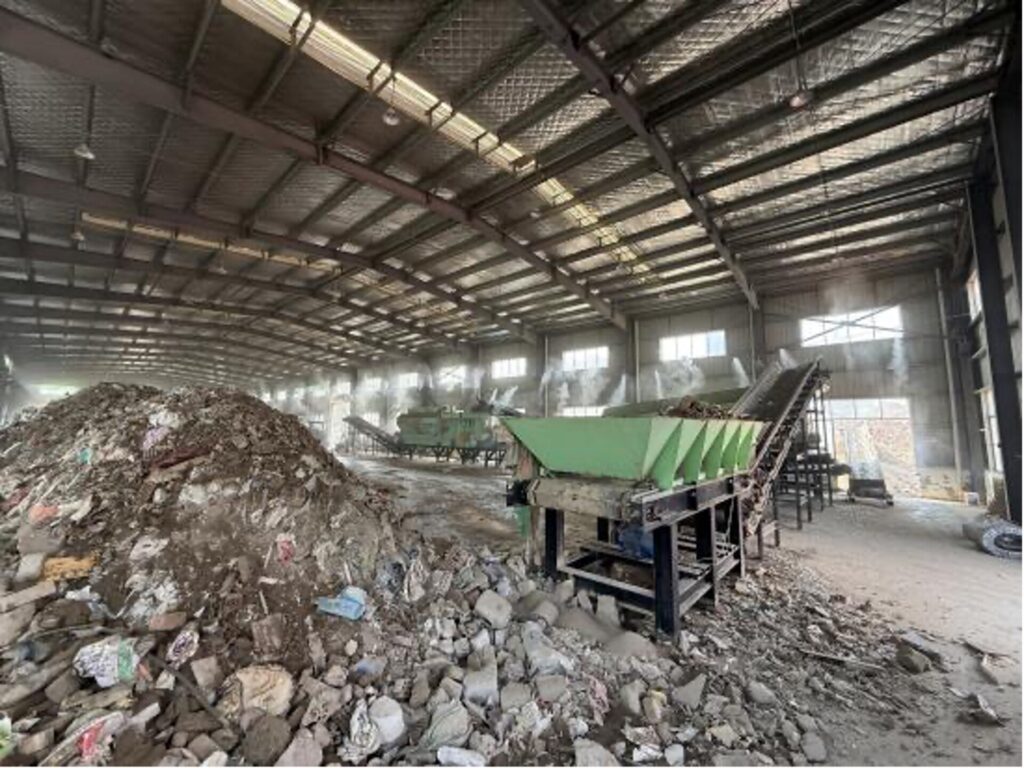
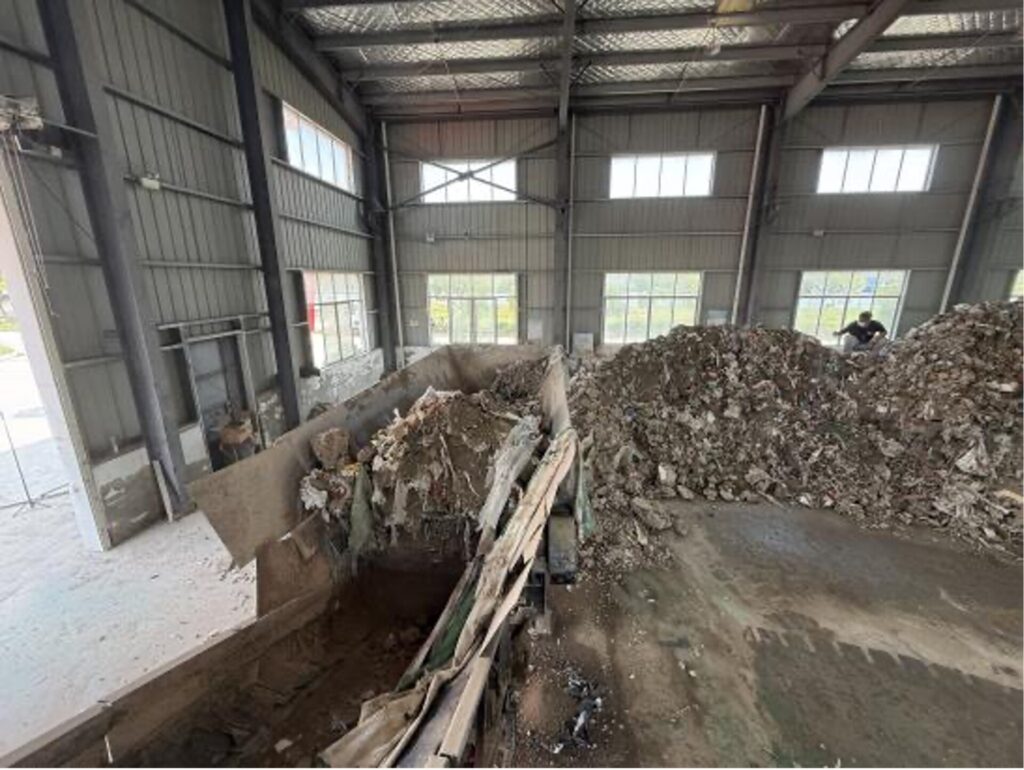
Following macro-scalping, wheel loaders deposit the material into a heavy-duty apron feeder. “In mixed-waste processing, uniform volumetric flow control is everything,” notes Yang Li. “Standard rubber belt conveyors suffer from severe tracking errors and premature tearing under sharp, erratic dumps. Our apron feeder utilizes variable-frequency drive (VFD) steel slats to act as a mechanical surge-damping buffer, transforming erratic, piled payloads into a thin, continuously regulated material stream.”
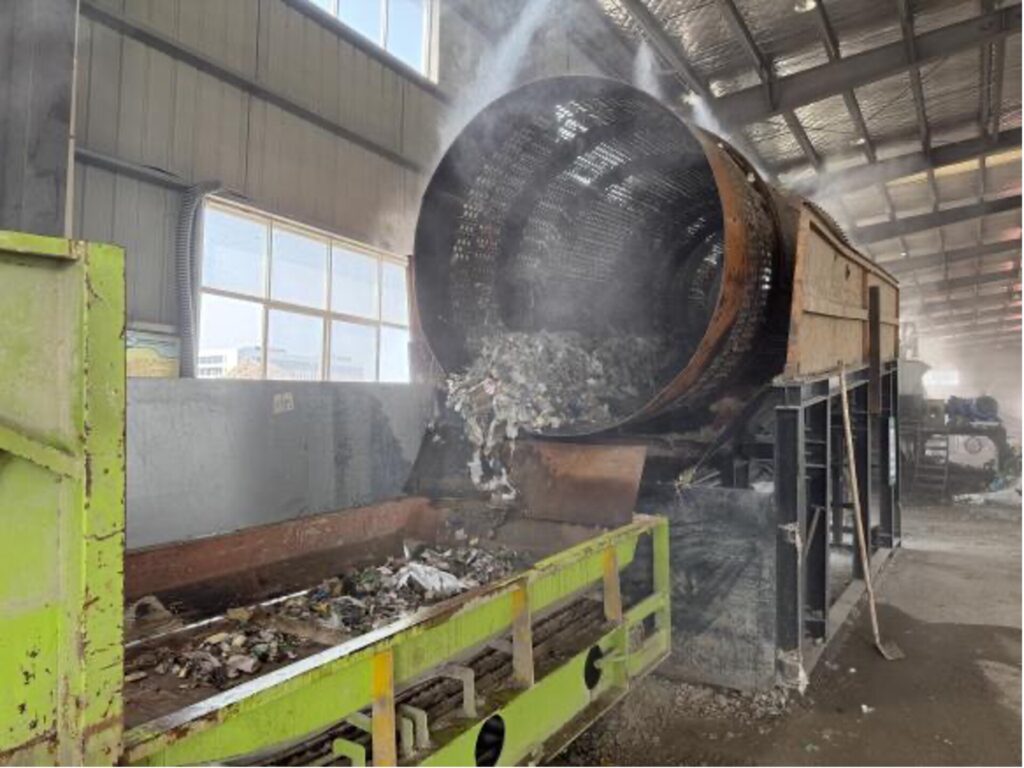
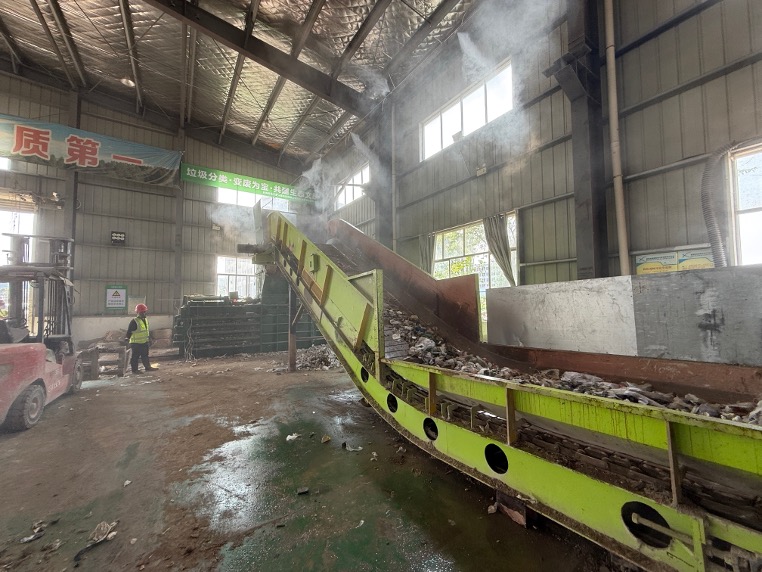
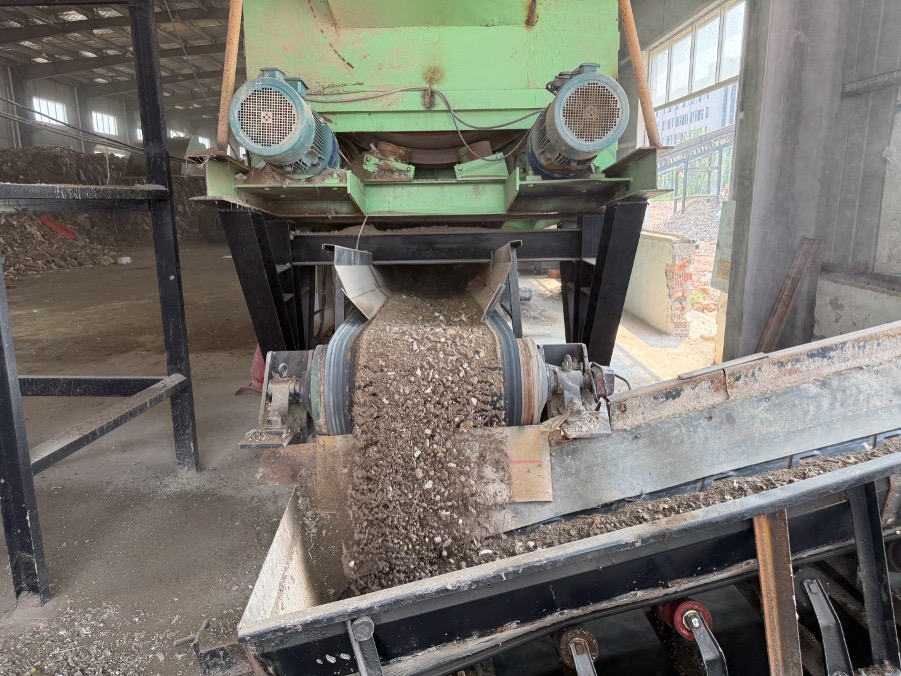
This stabilized flow is discharged into a high-torque trommel screen for dimensional classification. The trommel segments the material based on physical size, immediately isolating soil fines and pulverized minerals through its screen meshes. This early removal of fine particulates prevents them from adhering to high-value recyclables downstream.
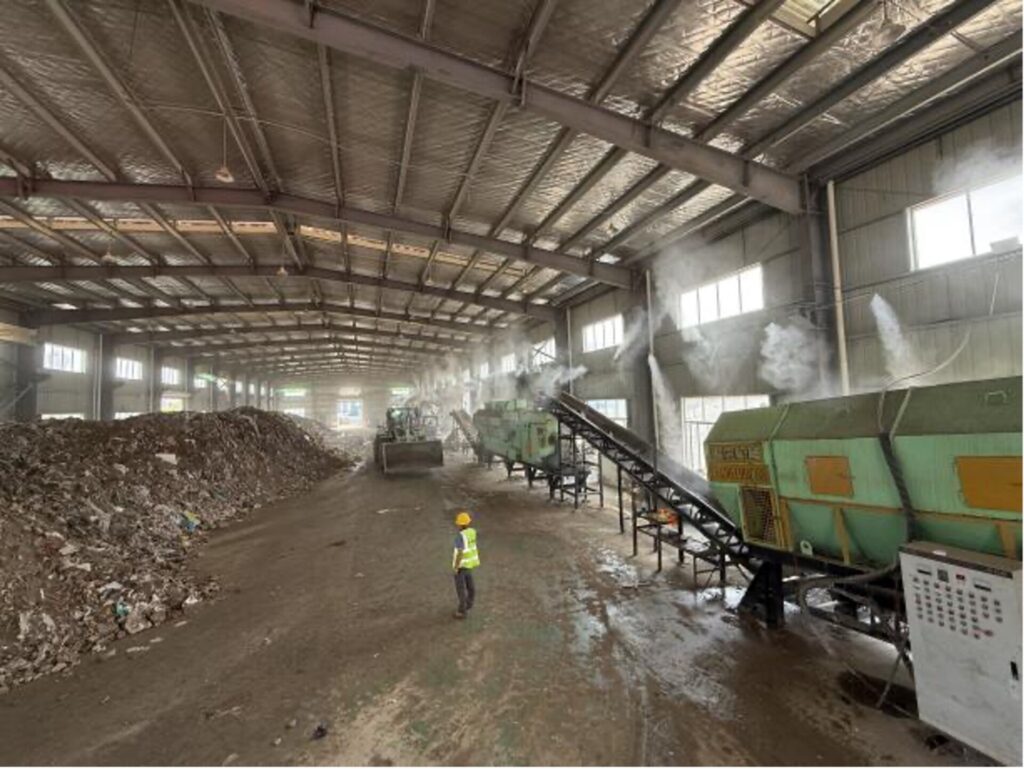
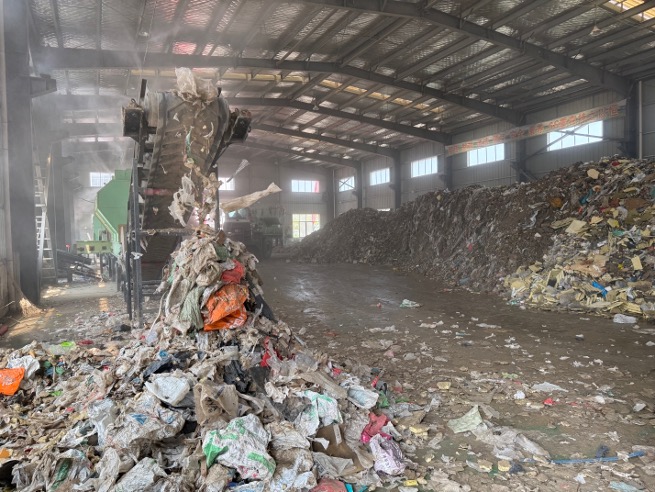
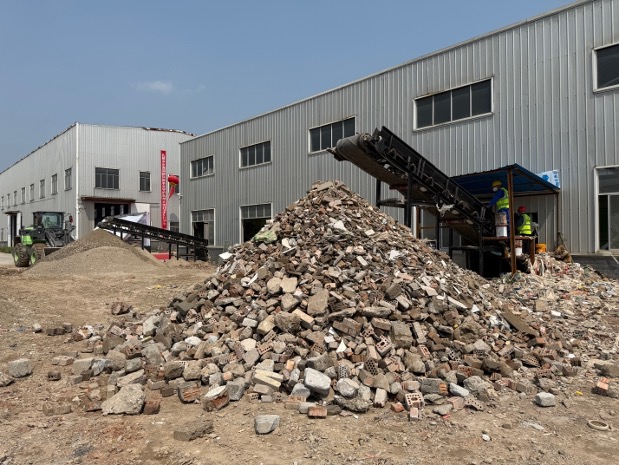
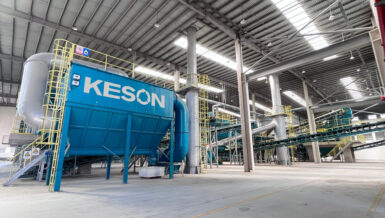
The oversized fractions exiting the trommel cylinder move directly into a comprehensive air density separator. Utilizing a synchronized aerodynamic network of positive-pressure air knives and negative-pressure dust extraction loops, the system segregates materials based on their weight-to-surface-area ratio:
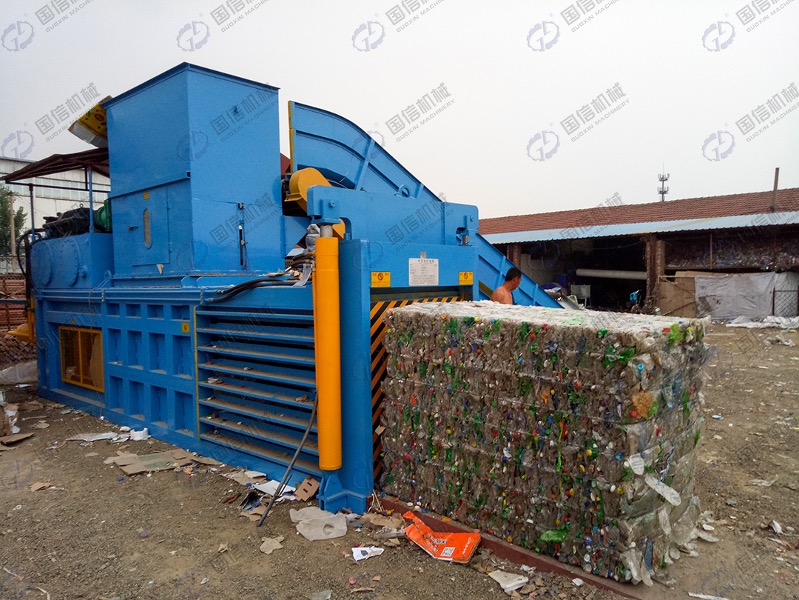
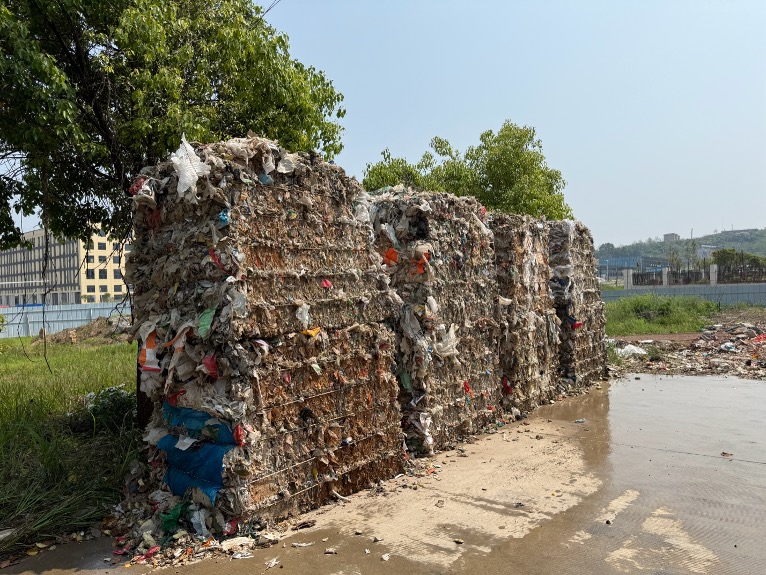
- The Light Fraction: High-surface-area materials, such as plastic films, woven polypropylene sacks, paper, and textiles, are entrained by the airflow, lifted over an adjustable splitter plate, and routed to an automated compaction and baling station.
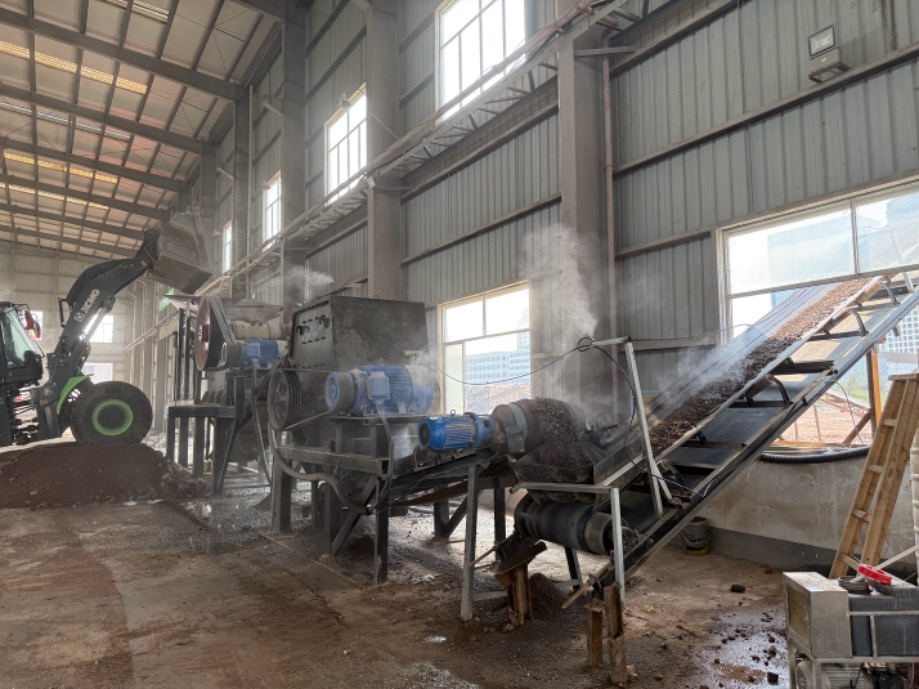
- The Heavy Fraction: Dense concrete blocks, stone aggregates, and bricks drop directly through the air stream onto a dedicated discharge conveyor. Before entering the final reduction phase, a high-gradient overbelt magnetic separator extracts liberated iron wire and rebar fragments, protecting the downstream secondary impact crushers from uncrushable metal damage.
High-Value Downstream Valorization and Market Realities
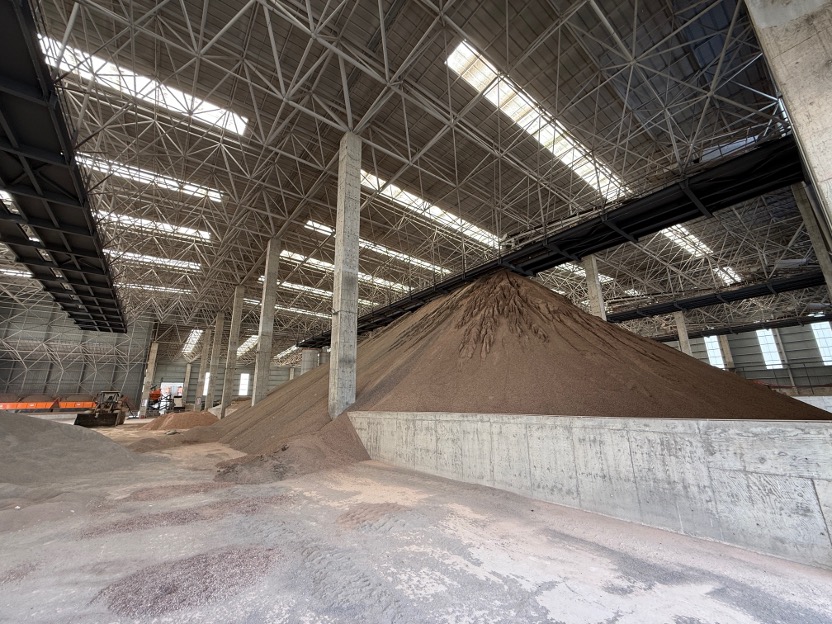
The operational success of the Tiantai Environmental Protection facility is defined by its closed-loop diversion rate, converting up to 90% of the complex incoming feedstock into profitable secondary raw materials backed by real-world industrial demand.
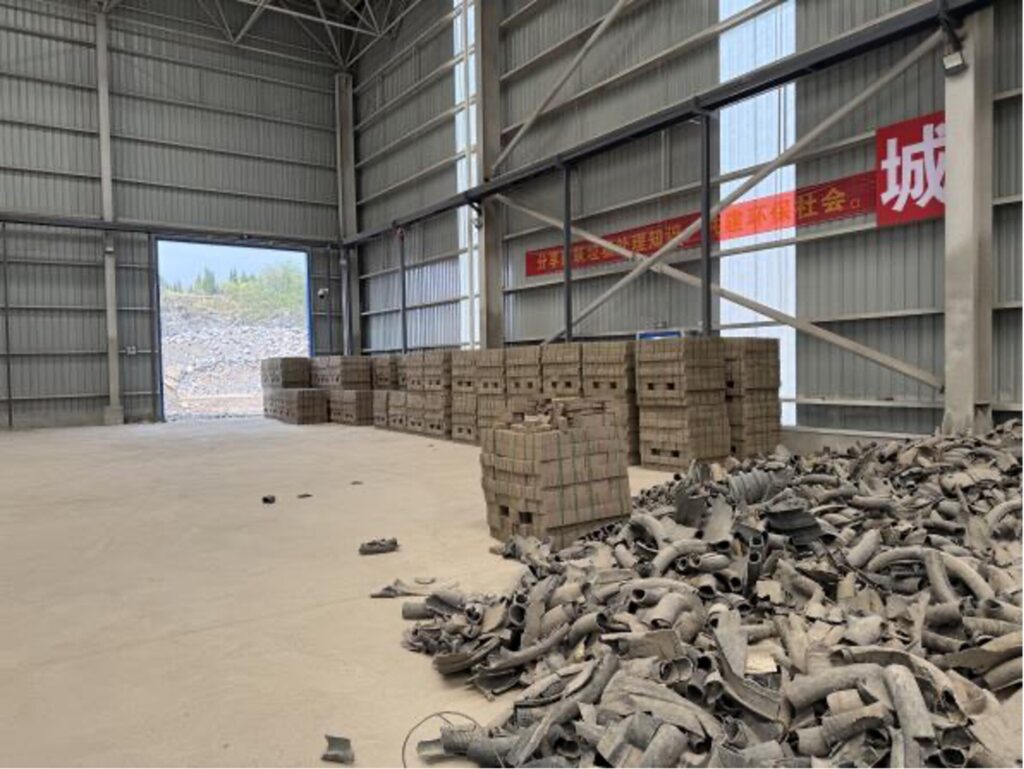
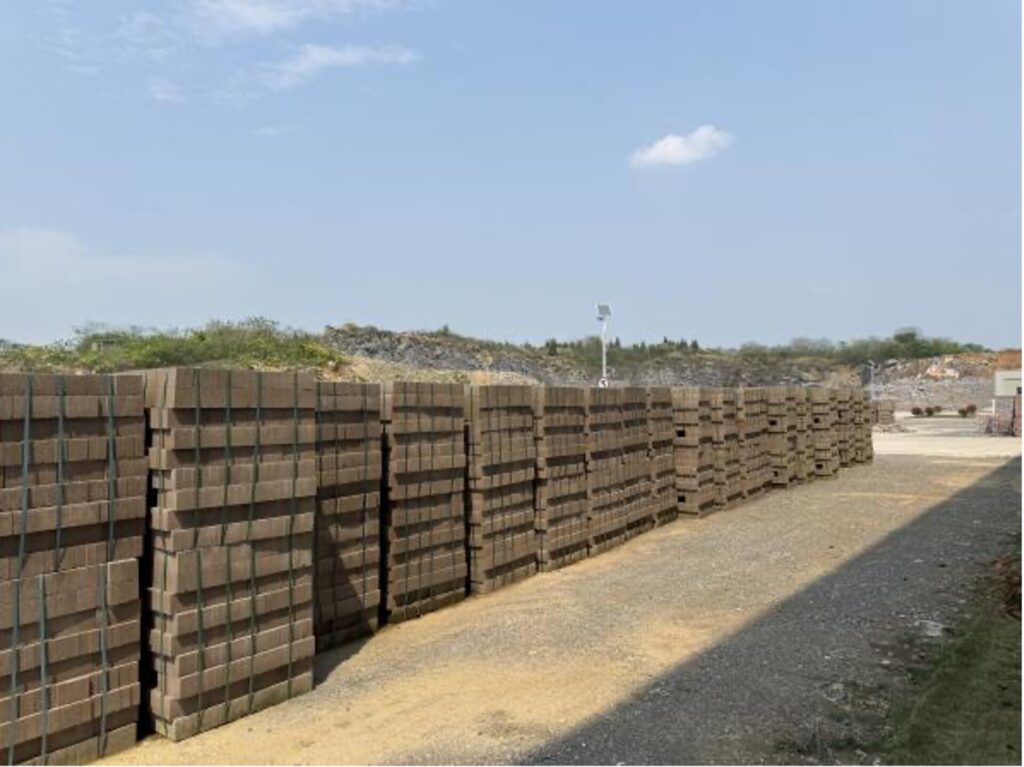
The crushed inorganic heavy fraction is converted into premium Recycled Concrete Aggregates (RCA) and recycled sand, meticulously graded into commercial fractions (0–5 mm, 5–10 mm, and 10–30 mm). The coarse fractions are supplied directly to regional infrastructure projects as unbound sub-base gravel for roadbed construction. The finer fractions (0–10 mm) are routed straight to automated brick-making lines, where they replace up to 50% of virgin river sand to manufacture eco-friendly pavement pavers and retaining blocks that meet rigorous municipal compressive strength standards.
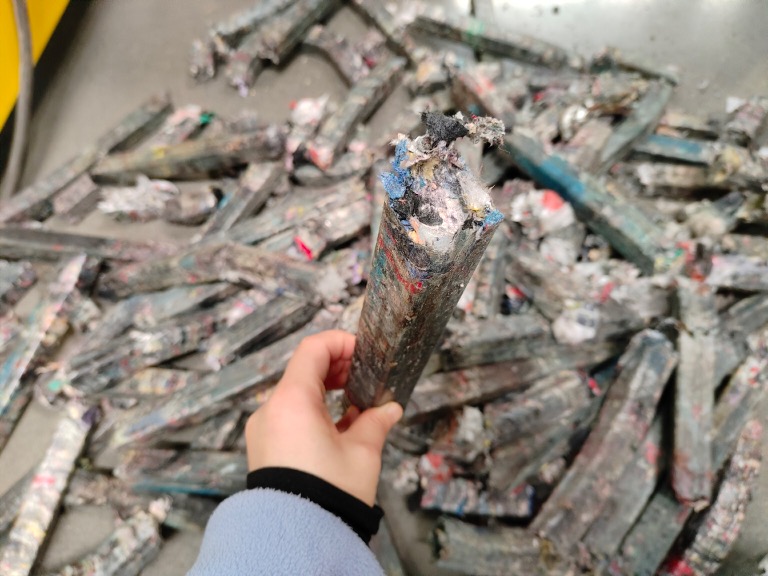
Concurrently, the organic light fraction captured by the aerodynamic classifier undergoes secondary shredding to produce premium Refuse-Derived Fuel (RDF). With a Net Calorific Value (NCV) exceeding 15,000 kJ/kg and low residual moisture, these high-density combustible bales are shipped directly to regional cement kilns and coal-fired power plants. This allows heavy industrial operators to substitute up to 30% of their fossil coal consumption, significantly lowering operational carbon footprints. Any remaining non-RDF-grade combustibles are securely wrapped and routed to municipal waste-to-energy (WtE) incineration plants for grid-tied power generation.
“The operational metrics from the Tiantai Environmental Protection facility prove that multi-stream co-processing is no longer just an environmental theory—it is a highly profitable commercial reality,” concludes Yang Li. “By combining robust mechanical feeding with precise aerodynamic sorting, we enable municipal operators to drastically reduce landfill reliance while generating highly consistent, market-ready commodity streams.”