For over 20 years, FOR REC has been at the forefront of recycling technologies, providing innovative solutions for processing a wide range of materials, including metals, municipal and industrial solid waste, WEEE, plastics, wood, electrical cables, photovoltaic panels and tires. This extensive expertise translates into tailor-made plants designed to meet diverse operational needs with reliability, efficiency, and engineering precision.
In the metal recovery sector, excellence is not defined solely by hourly capacity. It is measured by the quality of the output material, operational continuity and long-term cost efficiency. This approach guided the development of a new FOR REC installation: a complete metal scrap processing plant with a capacity of 15–20 tons per hour.
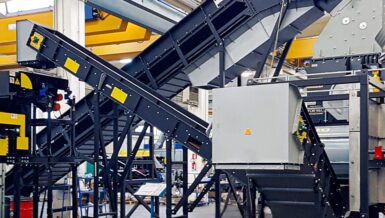
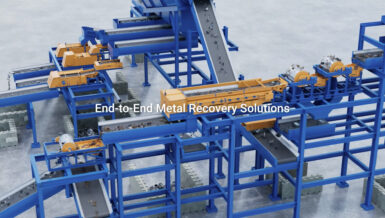
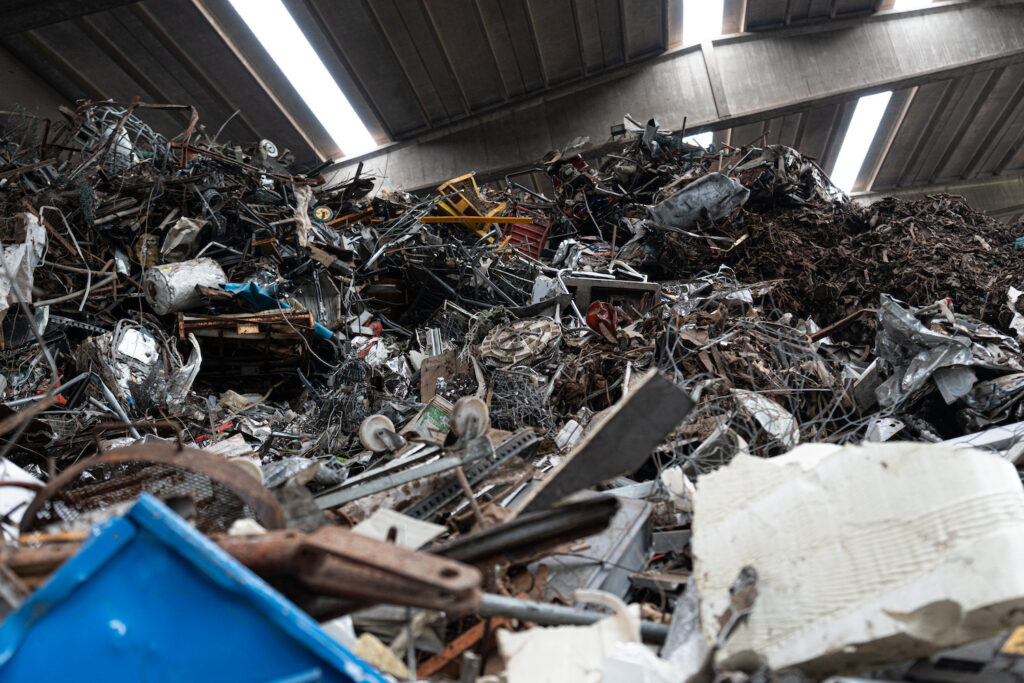
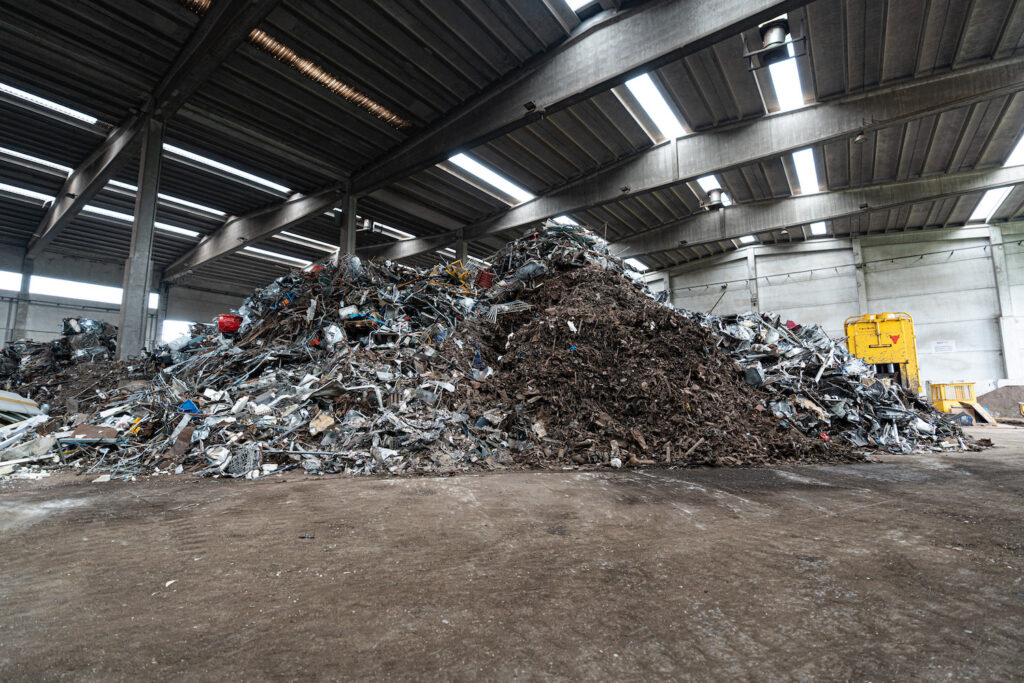
Covering an area of approximately 1,200 sqm, the plant integrates all processing stages in a streamlined and efficient layout, from material intake to the production of clean, separated fractions ready for reuse.
The client is a company specializing in the collection and trading of metal scrap, handling significant volumes of incoming materials each year. Its core activity focuses on maximizing the value of non-hazardous waste derived from separate collection, including both ferrous and non-ferrous metals, as well as production waste and processing residues.
Operating in a highly competitive market, the company’s success depends on two main factors: the ability to process large volumes efficiently and the quality of the output materials, which directly impacts their resale value.
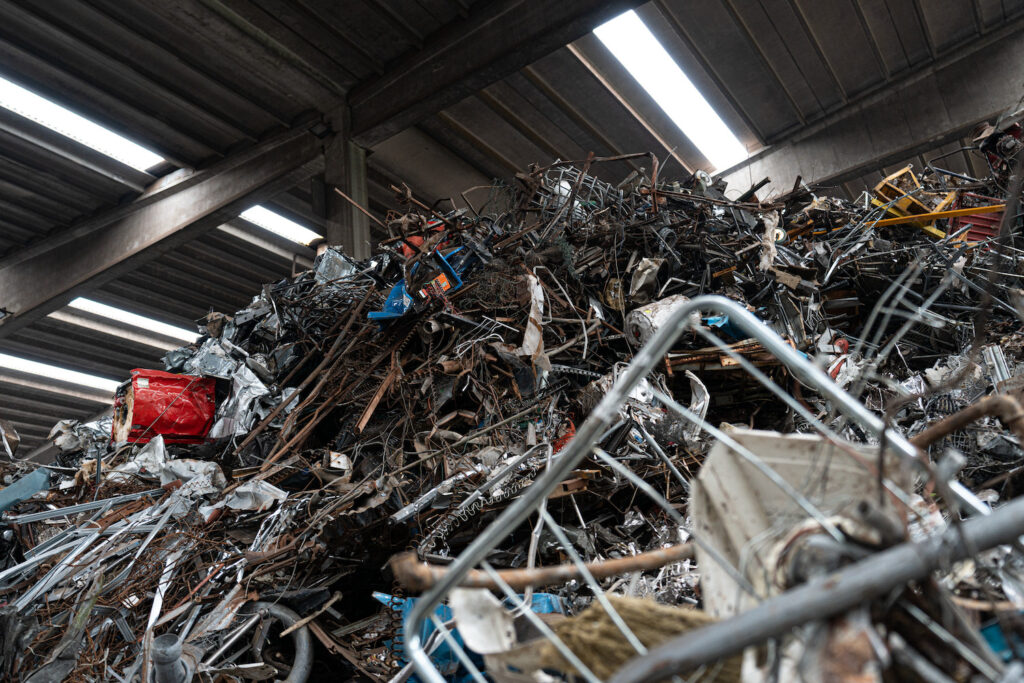
The incoming scrap presented several challenges. It was highly heterogeneous in terms of size, composition, and type — including sheets, car bodies, industrial scrap and mixed materials. This resulted in bulky volumes, making transport both complex and costly. Moreover, treating such material as a single, undifferentiated stream led to significant value loss, as metals like aluminum, copper, and steel require proper separation to achieve their full market potential.
The project therefore aimed to achieve three key objectives: reduce material volume to optimize logistics, enhance the value of each metal fraction through effective separation, and minimize non-recoverable waste. The ultimate goal was to transform heterogeneous scrap into a structured output of high-quality secondary raw materials, ready for reintroduction into the production cycle.
To meet these requirements, the client selected FOR REC for its advanced technologies, designed to guarantee high performance, operational efficiency and long-term reliability. The company’s responsive support service and strong international references also played a decisive role in the selection process.
The facility is capable of processing up to 50,000 tons of scrap per year.
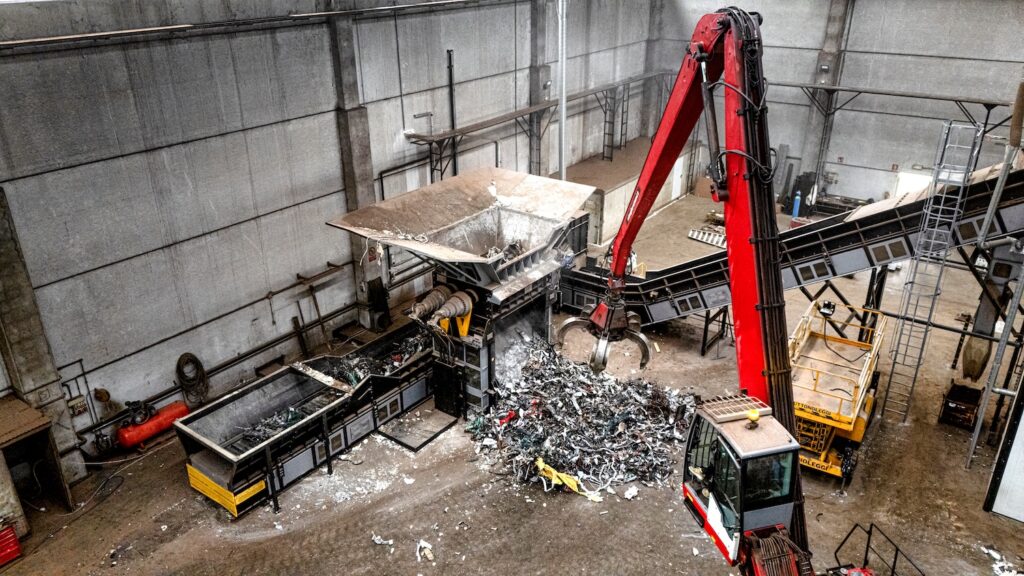
With a clear need to reduce incoming volumes and produce high-quality output material ready for reuse, FOR REC developed an integrated two-stage solution built around two of its flagship machines.
“Today, those operating in the scrap sector can no longer afford waste: every unvalorized kilogram represents a cost, just as every inefficiency does — especially in a context of rising energy prices. Our lines are designed precisely with this goal in mind: to maximize recovery while minimizing consumption, leaving nothing unused.” — Nicholas Zitella, Area Manager of FOR REC
The solution: a high-performance two-stage line
1. FX5000 Rotary Shearing Machine
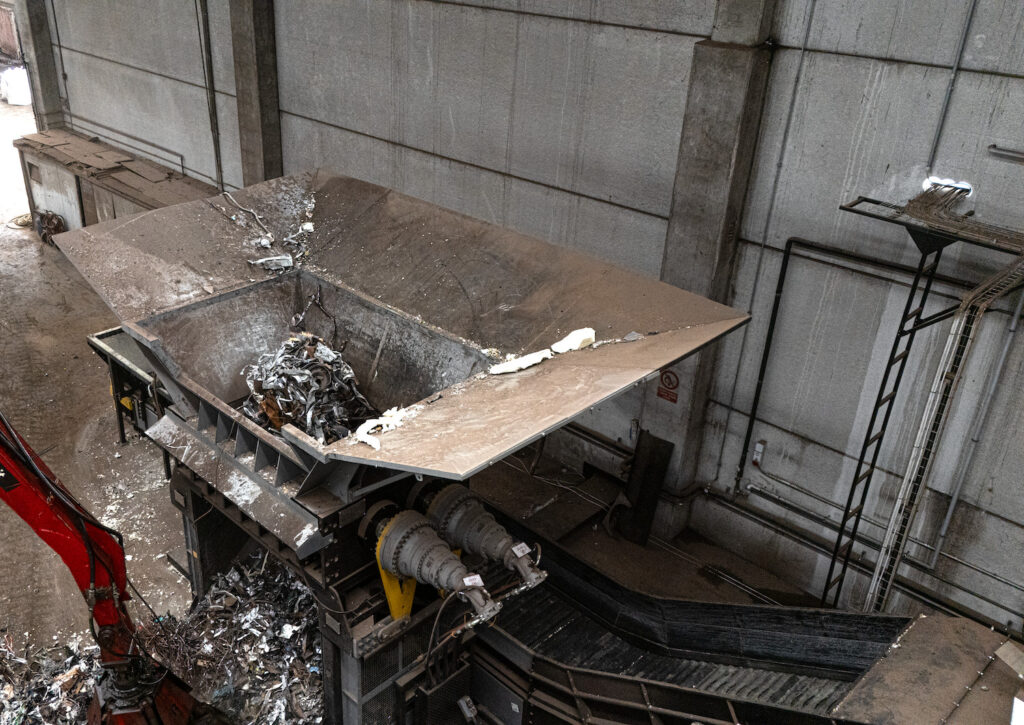
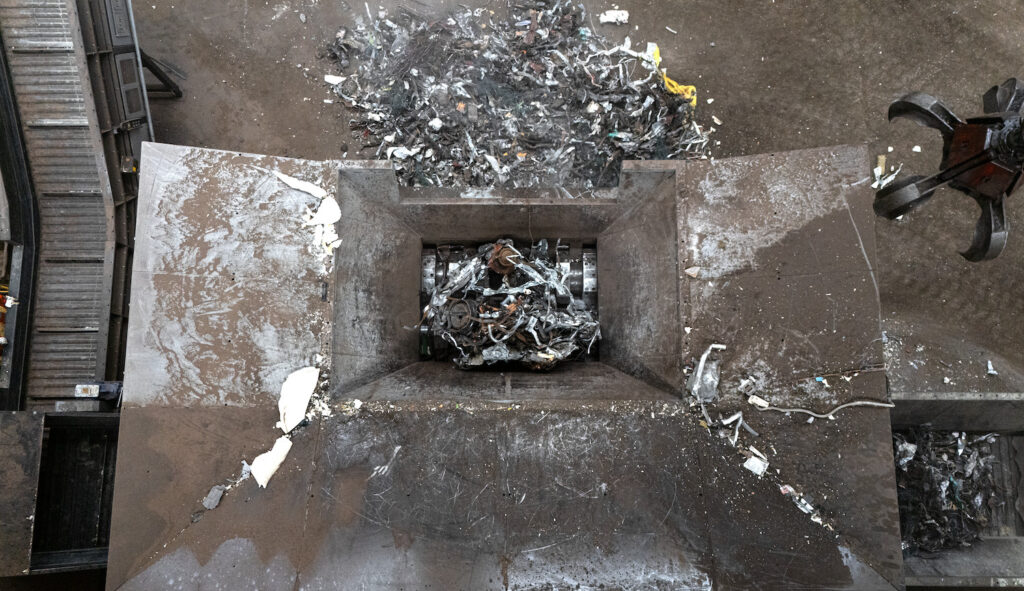
The process begins with the FX5000 double-shaft shredder, a machine designed for heavy-duty operations in metal scrap processing, from pressed sheet metal to vehicle bodies. The four-motor hydraulic configuration — two per shaft — combined with four gearboxes ensures high torque at low speed, offering two key advantages: reduced noise and vibrations, essential in urban environments and the ability to process even the toughest materials continuously, avoiding overheating and ensuring maximum reliability.
The patented system of interchangeable self-aligning blades in special steel allows fast and targeted interventions, drastically reducing downtime and optimizing maintenance and spare parts costs. The high torque available also guarantees precise and homogeneous shredding, even with complex materials.
With installed power exceeding 500 HP, the FX5000 achieves high production capacity, delivering reduced and uniform output size, ideal for efficiently feeding the next processing stages. This combination of performance, durability and efficiency makes the system suitable for both large-scale plants and demanding operational environments requiring high productivity and continuity.
2. Z16 Hammer Mill
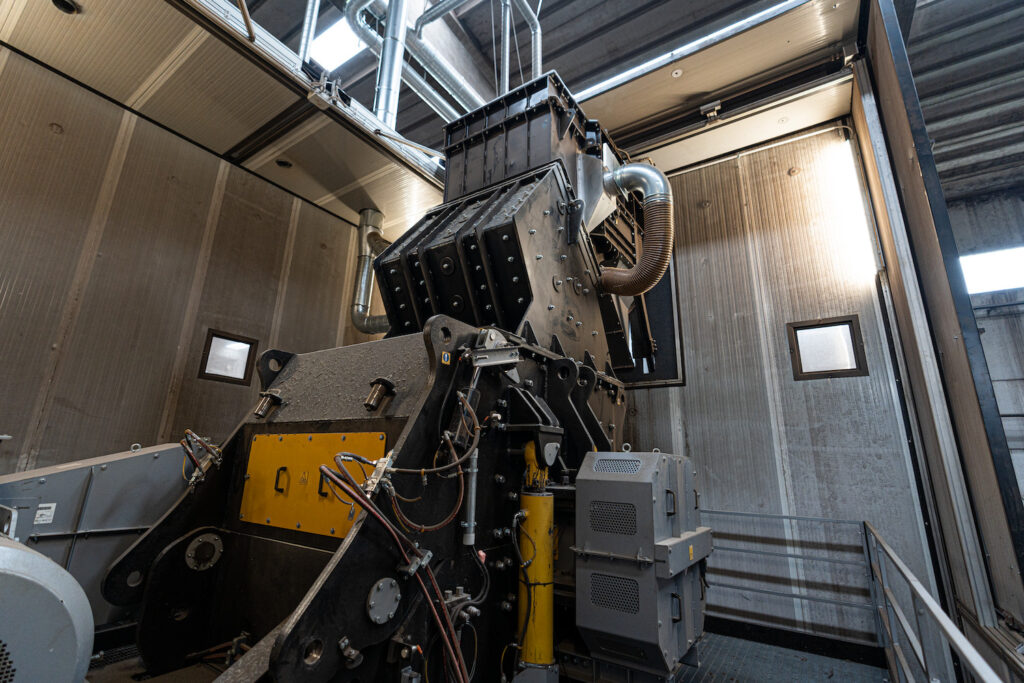
The pre-treated material then moves to the Z16 Hammer Mill, which crushes materials of different nature, producing small, uniform fragments.
The machine stands out for easy access to wear parts: the hydraulic opening of the upper chamber and hydraulic lifting of the rotor — achieved through the opening of the upper casing — allow maintenance operations in reduced time without dismantling the main structure. The hydraulic system for ejecting foreign bodies through a dedicated door ensures safety and operational continuity, while the hammers can be configured in type, thickness, and number to adapt to different material flows.
The adjustable movable armour provides further operational flexibility and special antivibration mounts reduce stress, extending component lifespan. The Z16 hammer mill is also enclosed in a soundproof cabin, minimizing noise emissions — an increasingly important requirement in modern industrial environments.
3. Magnetic Drum
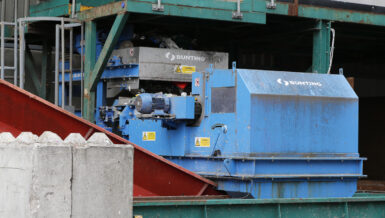
Downstream of the mill, the crushed material passes over a magnetic drum, the first stage of the separation process. The magnetic field attracts and retains ferrous metals, diverting them into a separate stream.
The result is a clean ferrous fraction, with reduced and uniform size, perfectly suitable for transport and direct reuse as secondary raw material in foundries and recycling plants.
4. Eddy Current Separator
The non-magnetic fraction — still containing non-ferrous metals such as aluminum, copper and brass — is conveyed to the eddy current separator. This system exploits electromagnetic induction: a high-frequency rotor generates eddy currents in non-magnetic metals, which are then repelled from the non-metallic waste stream, creating two well-defined flows.
The eddy current separator completes the process: no metal fraction is lost and every recoverable material is properly separated. The remaining non-metal waste — inert materials, rubber, plastics — exits clean and classified, minimizing the final disposal volume.
Results: three measurable advantages
The combination of FX5000 + Z16 delivered immediate and measurable benefits:
- Continuous productivity: the line is designed for continuous operation, with minimal downtime thanks to simplified maintenance of both machines.
- Output value optimization: more precise metal separation allows the processed material to be sold at higher market prices, directly improving operating margins.
- Long-term reliability: the robust construction of FOR REC machines — designed and manufactured in Italy — ensures a long service life, even under severe operating conditions typical of metal scrap processing.
“We supply plants worldwide, but what truly makes the difference is build quality combined with consistent long-term support. On both fronts, FOR REC does not compromise.” — Emanuele Zilio, Area Manager of FOR REC
CEO’s perspective: innovation, market, and international growth
To better understand the industrial context in which this plant was developed, we interviewed Marco Zoccarato, CEO of FOR REC.
1. FOR REC has been operating in the recycling technology sector for many years. What is your current market positioning, and which customer needs do you feel you are most effective at addressing?
FOR REC has been operating for many years in the recycling technology sector and is now recognized as a highly specialized partner in the design and manufacturing of machinery and complete plants for waste treatment. Our positioning is based on a strong engineering approach, enabling us to combine performance, reliability, efficiency, and deep process expertise.
Today, customers are looking for robust and versatile plants with controlled operating costs, capable of ensuring production continuity even under demanding conditions. This demand is steadily increasing, along with the growing interest in turnkey, customized solutions focused on the valorization of secondary raw materials—an area where our know-how delivers maximum value.
We effectively meet the increasing demand for systems capable of continuous operation, high processing capacities, high-quality output fractions and reduced treatment costs. At the same time, we invest in the design of zero environmental impact solutions: optimized energy consumption, more efficient process flows, and technologies that reduce emissions and waste.
Advanced control systems are also playing an increasingly important role, enabling greater energy and operational efficiency, lower management costs, and extended machine lifespan.
In this context, it is essential for us to be more than just a supplier: FOR REC is not simply a manufacturer, but a partner that delivers “tailor-made” plants. We remain close to our customers with high-level technical consultancy, based on careful listening and rapid needs analysis, in order to identify effective and cost-efficient solutions within short timeframes. This approach, combined with a structured after-sales service, is what makes our positioning particularly strong in a market that demands reliability and continuity.
In a rapidly evolving market, customers are looking for partners capable not only of supplying machines, but of delivering complete, high-performance solutions that support the ecological transition. It is in this space—between technological innovation and engineering expertise—that FOR REC expresses its full value today.
“In a rapidly changing market, customers are looking for partners able not only to supply machines but to build complete, high-performance solutions oriented towards ecological transition.” — Marco Zoccarato, CEO of FOR REC.
2. Your product range covers a wide variety of materials and sectors. What are the design principles that unite your solutions, and what differentiates you from other manufacturers in terms of technical approach?
All FOR REC solutions are based on clear and consistent design criteria that represent our technological identity.
The first distinctive element is project customization: each plant is developed on a tailor-made basis, according to the materials to be processed and the client’s objectives. This approach is a cornerstone of our offering and highlights how FOR REC designs specific plants for each type of waste, delivering customized solutions even for complex materials.
From a technical standpoint, our machines share several key principles:
- extremely robust mechanical structure;
- energy and production efficiency;
- simplified maintenance, with easy access and components designed to minimize downtime;
- modular flexibility, allowing the configuration of complete and scalable lines adaptable to different materials;
- separation systems designed to achieve very high-quality output fractions, as demonstrated in our plants dedicated to metal processing as well as WEEE treatment such as refrigerators and photovoltaic panels.
What truly sets us apart is our engineering-driven approach: every plant is developed through detailed material analysis, application testing, and direct dialogue with the customer. This enables us to deliver solutions that are not only high-performing, but also truly reliable, stable over time, and efficient.
Moreover, our entire machinery range is designed to operate at high production capacities, ensuring operational continuity even in complex and intensive processes, while delivering zero environmental impact through optimized energy consumption, reduced emissions, and full valorization of recovered fractions.
3. In recent years, efficiency—energy, operational, and maintenance—has become a central theme in treatment plants. How do your machines respond to this evolving demand?
In recent years, efficiency has become a decisive factor in plant selection: reduced consumption, operational continuity, ease of management, and the quality of recovered fractions are now key priorities.
FOR REC technologies are developed precisely in this direction, integrating solutions that enhance energy, operational, and maintenance efficiency. Our plants are designed to operate continuously, ensure stability even when handling challenging materials, and optimize energy consumption.
From an operational standpoint, we focus on easily accessible components, systems that reduce wear, and modular configurations that simplify management and minimize downtime. This allows us to deliver complete lines capable of producing clean and high-value output fractions.
Regarding maintenance and operational continuity, we support our engineering approach with a structured service organization and scheduled maintenance programs aimed at minimizing machine downtime. We provide rapid interventions even in emergency situations, on-site support through mobile workshops and specialized technical staff, as well as dedicated remote assistance.
Another key advantage is spare parts availability: thanks to our internal warehouse, we guarantee immediate availability of most components—including customized ones—with worldwide delivery within 24–48 hours. This is complemented by integrated real-time remote assistance systems and training programs for technical personnel, making plant management simpler, faster, and more efficient.
For us, efficiency means consistent performance, stable processes, minimized consumption, and controlled maintenance—essential elements for reliable, sustainable plants capable of generating long-term value.
4. One of the most interesting aspects of your journey is your strong growth in international markets. Which geographical areas are responding best to your solutions, and what factors have driven this expansion?
In recent years, we have recorded significant growth in international markets, where we now generate 80% of our turnover, thanks to a flexible engineering approach and technologies capable of addressing very diverse industrial needs. The regions showing the strongest response to our solutions are Central and Northern Europe, the Middle East and Asia, and North America—markets that are particularly receptive to efficient, reliable technologies capable of processing complex materials.
This expansion has been driven by several key factors:
- tailor-made design, which allows us to adapt each plant to local requirements;
- high-efficiency, zero environmental impact technologies, highly appreciated in advanced markets;
- the wide versatility of our systems, capable of handling WEEE, metals, plastics, wood, electrical cables, photovoltaic panels, MSW, and many other waste streams;
- a strong service and spare parts network, ensuring fast and continuous customer support.
This combination of customization, technological quality, and reliability has enabled us to strengthen our international presence and secure new projects in multiple countries.
5. Looking ahead to the coming years, what are the key development directions FOR REC is investing in: new markets, new applications, or technological evolution?
Looking ahead, we are investing in three key strategic directions that will drive FOR REC’s growth.
The first concerns expansion in international markets. Currently, 80% of our turnover comes from exports, and we aim to further strengthen our presence in regions experiencing strong demand for advanced waste treatment technologies, such as Northern Europe, the Middle East, Asia, and North America.
The second direction focuses on the development of new applications. Waste streams are evolving, and the market is increasingly demanding solutions for emerging materials with high recovery potential. For this reason, we are expanding our lines dedicated to photovoltaic panels, complex industrial waste, and next-generation WEEE, which are becoming increasingly heterogeneous. Our goal is to continue delivering plants capable of ensuring high-quality output fractions and economically sustainable material recovery.
Finally, we are pursuing an ongoing path of technological evolution. We invest in research and development to make our machines even more efficient, with reduced energy consumption, lower wear, and greater operational continuity. At the same time, we are developing solutions with increasingly high production capacities and zero environmental impact.