Europe has installed solar at a remarkable pace over the past decade, and the first large cohorts of those panels are now reaching the end of their working lives. The volumes are significant and rising: photovoltaic (PV) waste in Europe could reach 1.7 to 1.8 million tonnes by 2030, and as much as 60 to 78 million tonnes by 2050. Yet today’s treatment recovers little beyond the aluminium frame and valuable materials inside the module such as silver, copper and silicon are too often lost, at the very moment Europe is working to secure its supply of critical raw materials. This is precisely the gap that the SOPHIA projectis working to close.
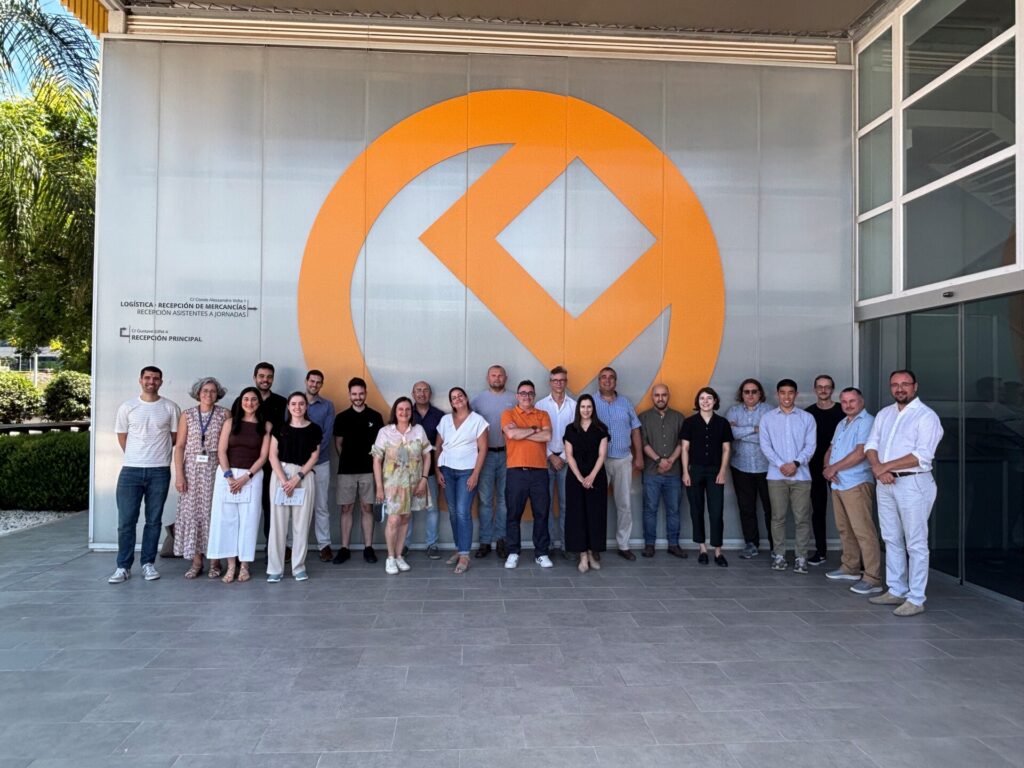
SOPHIA is an EU-funded Horizon Europe project working to increase the reuse, repair and recycling of end-of-life PV panels across the full value chain through advanced digital solutions. Coordinated by AIMPLAS, the Plastics Technology Centre based in Valencia, it brings together 15 partners from eight countries, spanning research organisations, SMEs, recyclers, manufacturers and policy specialists, and runs from June 2025 to May 2028. Rather than treating damaged panels as waste by default, the project assesses whether they can be diagnosed, repaired and reused before recycling, and ensures that those which cannot be saved are recovered for the full value of their materials.
For the recycling community, the most relevant work sits at end-of-life. SOPHIA is developing recycling routes designed to separate a panel’s principal fractions, namely glass, silicon, metals and plastics, into clean, high-purity streams, targeting 85 to 99% material purity across recovered fractions. Among the metals in scope are silver, copper, zinc and tin, recovered for reintroduction into manufacturing rather than downcycled or discarded.
Several of these materials sit at the centre of Europe’s critical raw materials agenda: silicon, in particular, features on the EU’s critical raw materials list, while silver and copper carry significant value and demand. Beyond end-of-life recovery, the project is also designing next-generation modules using debondable, on-demand adhesives, an eco-design approach that makes future panels far easier to dismantle and their materials far easier to recover. Together, this work supports the emergence of new value chains for recovered PV materials and reduces reliance on virgin extraction.
A year into the project, that foundational stage is complete. The opening phase mapped the European PV panel value chain alongside best practices for the collection, transport and reverse logistics of end-of-life panels. It also set out the requirements for the project’s key outputs and specified the characteristics and composition expected from the recovered material fractions. With that analytical groundwork in place, the focus now moves to the hands-on development of the diagnostic, repair and recovery technologies at the core of SOPHIA.
This technical work is closely tied to a moving policy landscape. The European Commission is revising the WEEE Directive, under which PV panels fall, and preparing a new Circular Economy Act, both of which are expected to strengthen collection, raise recycling rates and encourage greater use of recycled content, with particular attention to critical raw materials. To connect its results with this agenda, SOPHIA will host a policy event on 4 November 2026 at CEPS in Brussels, bringing together policymakers, industry leaders and the scientific community to present the project’s first policy recommendations, discuss the EU framework for PV circularity, and showcase early results. Updates on the event will be shared through the SOPHIA newsletter and the project’s channel in LinkedIn, where readers can follow the work as it develops.