


A different way to look at wood residues
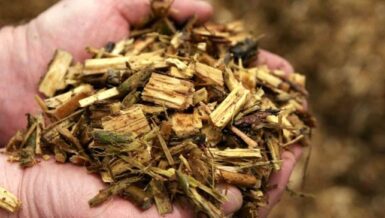
In furniture and wood-processing industries, residues are part of everyday production. Sawdust, shavings, and offcuts quickly add up, often in large volumes that need to be handled, stored, or transported away.
For many companies, this is simply a cost of doing business.
But there is another way to look at it.
These materials contain energy—significant amounts of it. The challenge is not the lack of fuel, but the form it comes in. In its loose state, wood waste is difficult to manage. It takes up space, absorbs moisture, and can create safety concerns when fine dust accumulates.
With the right approach, however, these residues can be transformed into something much more valuable: a reliable fuel that can be used on-site or supplied to local heating systems.
This is exactly what companies like Carl Hansen & Søn and Lilleheden have done by introducing briquetting into their production setup.
The challenge: When form limits function
Wood residues may be rich in energy, but their physical form creates practical limitations.
Loose material has a low density, which means that large volumes are required to store relatively small amounts of energy. This affects everything from storage capacity to transport efficiency. At the same time, variations in moisture content can make combustion less predictable, while fine dust can create both operational and safety concerns.
At Carl Hansen & Søn, these challenges became very visible. Their production generated between four and five tons of wood residues per day, much of it in the form of fine particles. The dust content was estimated at 60–70%, which introduced a real risk of fire and dust explosions when handled in its raw form.
For Lilleheden, the issue was not safety but timing. Their production of glulam beams resulted in up to 18 tons of residues per day, but the demand for heating did not follow the same pattern. During the summer, large amounts of material had no immediate use, while winter required more fuel than was available.
In both cases, the problem was not the quantity of material—but the inability to use it efficiently in its existing form.
The solution: Turning loose material into a stable fuel
Briquetting changes the way wood residues behave.
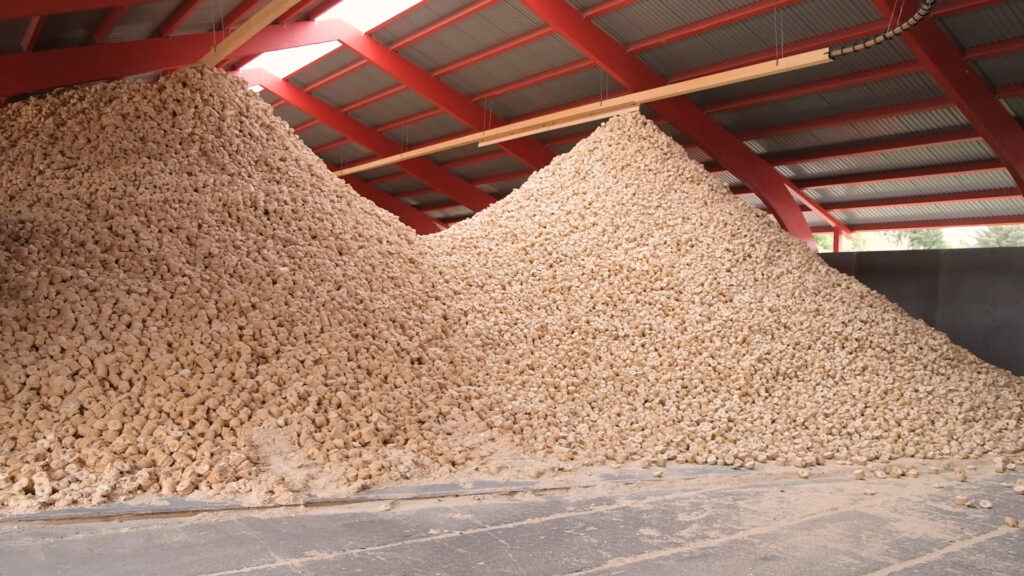
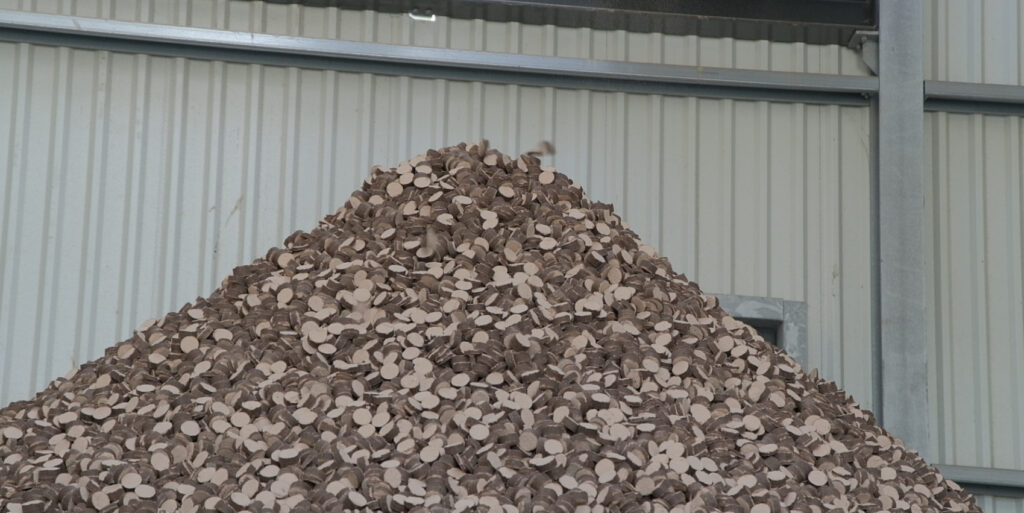
By compressing the material under high pressure, loose particles are turned into solid briquettes. The process uses the natural binding properties of wood, meaning no additives are required. What comes out is a dense, uniform fuel that is much easier to handle and store.
Compared to loose residues, briquettes offer several clear advantages:
- They take up significantly less space
- They are less sensitive to moisture
- They provide a more stable and consistent combustion
- They reduce dust and improve handling safety
In practical terms, this means that a material which was previously difficult to manage can now be used as a dependable energy source.
Case: Carl Hansen & Søn
From excess residues to local heating
At their facility in Gelsted, Denmark, Carl Hansen & Søn faced a familiar situation. While some of their wood residues were used internally for heating, the total volume exceeded what they could consume. Storage capacity was limited, and the surplus had to be removed continuously.
This resulted in a logistical setup where up to 165 truckloads of residues were transported away each year. At the same time, the local district heating company, Gelsted Fjernvarme, was looking for a more stable and cost-effective fuel source.
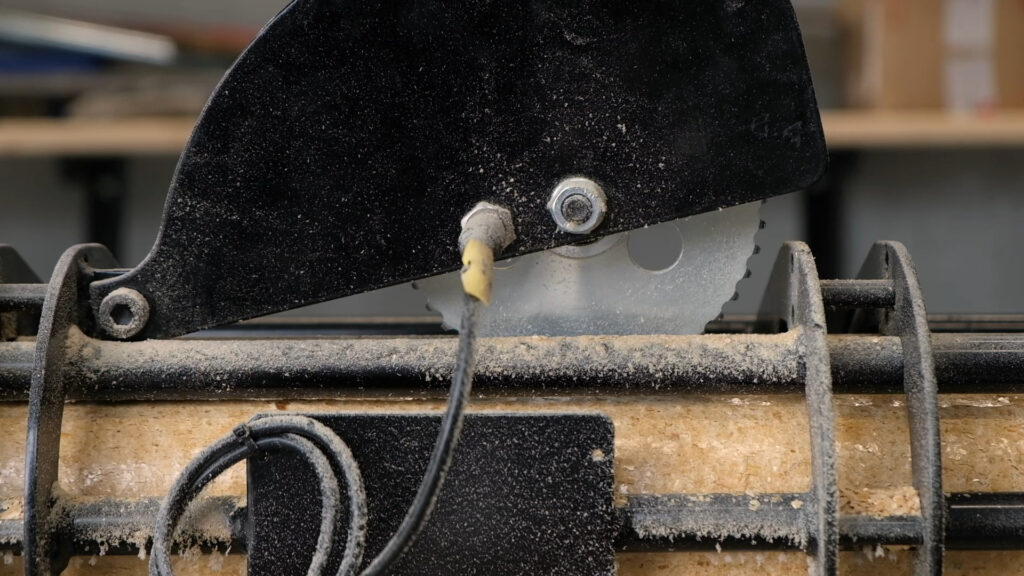
The solution was developed as a collaboration. A briquetting plant was installed near the production facility, allowing residues to be converted into briquettes and supplied directly to the heating system.
This change had several immediate effects. First, the dust issue was significantly reduced, as fine particles were compressed into solid units. This improved both safety and handling. Second, the fuel itself became more efficient. The briquettes had a much lower moisture content—around 7% compared to roughly 30% in traditional wood chips—resulting in better combustion and higher energy output.
Storage also became far more efficient. Because of the increased density, it was possible to store four to five times as much energy in the same amount of space.
Today, the system supplies heating not only to the factory but also to more than 400 households in the surrounding area. At the same time, the company has reduced its CO₂ emissions by around 40% and eliminated the need for both residue disposal and external fuel deliveries.
What was once a logistical burden has become part of a local energy solution.
Case: Lilleheden
Balancing energy supply throughout the year
Lilleheden’s situation was different, but the underlying challenge was just as practical.
The company already used its wood residues to produce heat for both its own facility and the local district heating network. However, the system was not balanced. During the summer, there was more material than needed, while winter periods required additional fuel purchases.
Loose residues were difficult to store. They absorbed moisture, required large storage areas, and lost quality over time. As a result, the company had to sell surplus material in the summer and buy additional fuel in the winter.
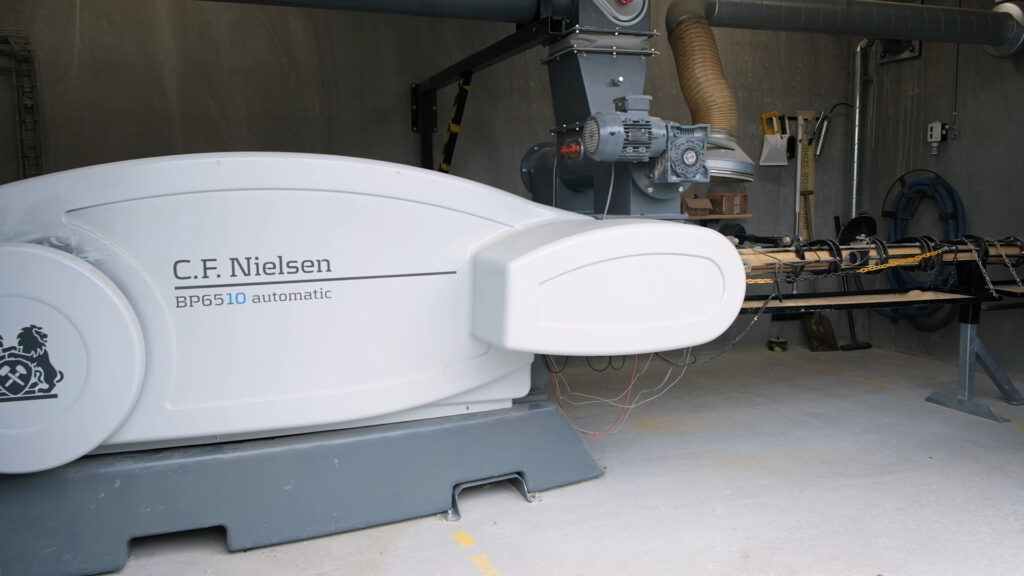
By installing an in-house briquetting press, Lilleheden was able to change this dynamic.
Instead of dealing with loose material, the company could now convert its residues into briquettes continuously and store them for later use. The briquettes were transported automatically to storage, creating a smooth and reliable flow from production to energy use.
This made it possible to align fuel availability with demand. Excess material produced during the summer could now be stored and used during the winter, reducing the need for external fuel.
The change also improved day-to-day operations. With a more consistent fuel, the boiler could run more efficiently and with fewer fluctuations. Maintenance requirements were reduced, and the need for transportation dropped significantly.
Over time, this has allowed Lilleheden to move towards a largely self-sufficient heating setup, while still supporting the local community.
Why briquetting makes a difference
Looking across both cases, a clear pattern emerges. The benefits are not tied to one specific setup but come from changing the characteristics of the material itself.
Briquetting makes it possible to:
- Store energy in a compact and manageable form
- Use residues when they are needed, not just when they are produced
- Improve combustion stability and overall efficiency
- Reduce transport, handling, and disposal requirements
In addition, the reduction of dust plays an important role in improving safety and working conditions.
Compared to alternatives such as pellets, briquettes can often be produced with simpler setups and less preprocessing, making them well suited for industrial environments where reliability and ease of operation are key.
Conclusion: From by-product to energy resource
What the experiences of Carl Hansen & Søn and Lilleheden show is that wood residues do not have to be treated as waste.
With the right solution, they can become a stable and valuable energy source—one that supports both the company’s own operations and the surrounding community.
In both cases, the introduction of briquetting made it possible to move from a situation defined by excess material and inefficiencies to one where resources are used more effectively. Whether the goal is to reduce transport, improve energy efficiency, or balance supply and demand, the principle is the same: by changing the form of the material, it becomes possible to unlock its full potential.
For companies working with wood, this represents a clear opportunity—not just to manage residues more effectively, but to turn them into something that creates real value.