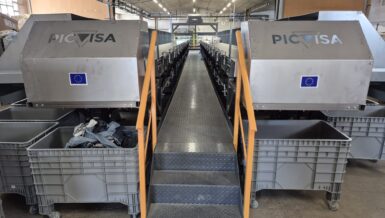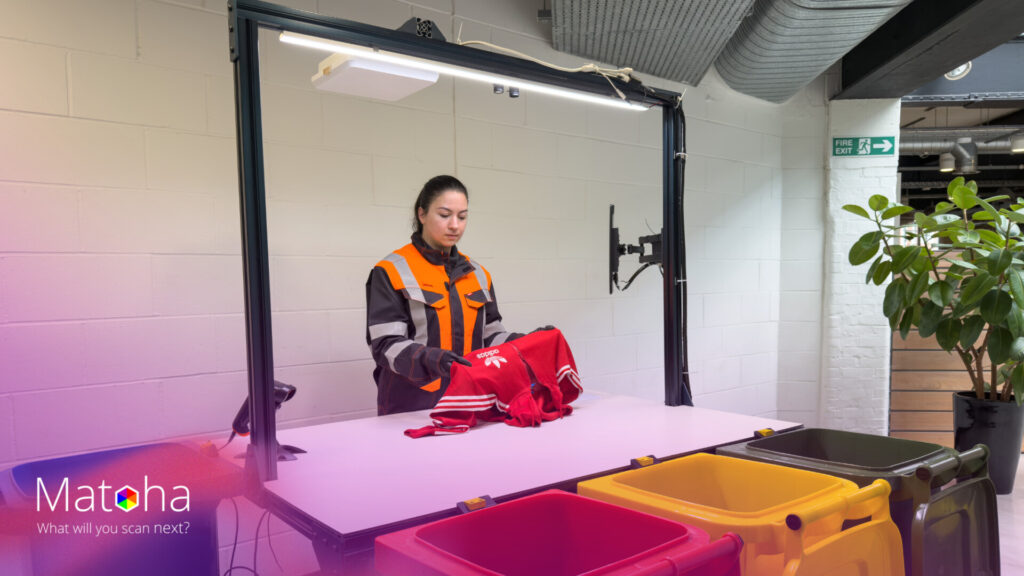
S-Bench changes that.
Operators place a garment on the bench and capture key data instantly. The system identifies material type, garment category, colour, and flags features such as zips, buttons, or visible damage. Each item receives a unique digital record, including images and classification data, ready for resale, export, or recycling workflows.
This shift from bulk sorting to item-level data unlocks new opportunities across the textile value chain.
Teams can move faster with consistent decisions, reduce misclassification, track garments through resale or recycling, understand bale composition before processing, and align with Digital Product Passports (DPP) and Extended Producer Responsibility (EPR).
Chris Newton, Chief Commercial Officer at Matoha, said:
“S-Bench comes from watching how sorting actually happens on the ground. Skilled people doing their best, but without the tools to capture consistent data at speed. We wanted to build something practical that fits real workflows and delivers value straight away. This is about turning every garment into usable data in seconds.”
The S-Bench builds on Matoha’s experience developing handheld material identification devices used across plastics and textiles recycling globally.
Early use cases include resale operations listing items faster, exporters improving stock visibility, and recyclers enhancing material routing and reporting.
S-Bench is available with flexible pricing, including lease options.