



At the show, PICVISA will present three advances in automated textile sorting aimed at higher purity, greater autonomy and broader material recovery — responding to the operational pressures recyclers face as EU regulation and extended producer responsibility (EPR) drive demand for traceable, high-quality recycled fractions.
Broader textile recognition: no fixed limit on sortable classes
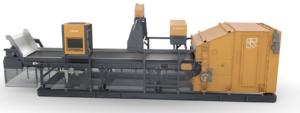
PICVISA’s EcoExpert platform increases the number of fibre classes a single machine can identify, with no fixed limit on the number of sortable categories. By combining near-infrared (NIR) and RGB imaging with deep learning, the system recognises multiple fibre types and blends, widening the range of textile streams that can be sorted accurately at industrial speed.
Knitted versus woven: construction-based sorting
Beyond fibre composition, PICVISA’s technology now distinguishes fabric construction, separating knitted from woven textiles automatically. Because the two structures behave differently during recycling, sorting by construction produces cleaner, route-ready fractions, reduces contamination and allows each material to be directed to its optimal recycling process rather than downcycled.
Automated feeding: a fully automated textile sorting line
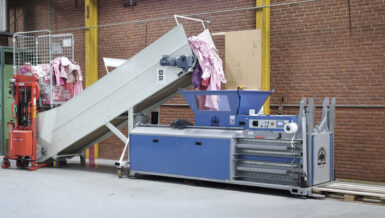
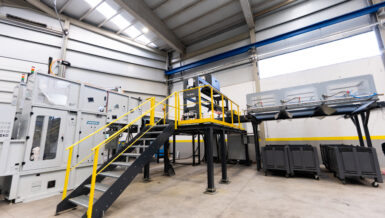
Through a strategic collaboration with Girbau, PICVISA has integrated Girbau’s Sortech automated feeding and separation system with its ECOSORT optical sorting technology to create a single, continuous, fully automated line for post-consumer textiles. Sortech automates the separation and classification of garments in high-volume environments, removing repetitive manual tasks while maintaining a steady, controlled flow. Originally developed for industrial laundry, the system has been adapted to the demands of post-consumer textile sorting, where rising volumes call for robust, scalable processing.
The technology is already in operation: PICVISA and Girbau have commissioned a new plant in Northern Europe that combines automated feeding and advanced optical sorting in a single continuous process — one of the first European installations to fully integrate both for post-consumer textile treatment.
Together, these developments reinforce PICVISA’s role as a technology partner for textile recyclers, where the challenge is no longer collecting waste but transforming it into clean, well-classified material streams with genuine market value.
The Textiles Recycling Expo brings together the full textile supply chain — recyclers, waste managers, manufacturers, retailers and technology providers — to address the growing challenge of textile waste.
Visit PICVISA at stand 2100, Textiles Recycling Expo, 24–25 June 2026, Brussels Expo.