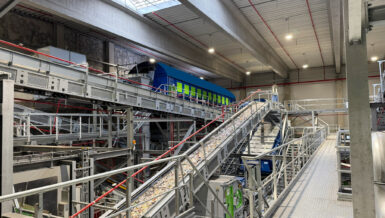
Take paper mill pulper rejects, for example. It is a messy, complicated slurry of high-value cellulose fibres trapped alongside plastic films, adhesive foils, and styrofoam. It is heavy, it is soaking wet, and historically, it has been an expensive, straight-to-landfill headache.
As you look at a typical pile of raw pulper rejects, you see the core challenge: a tangled web of materials locked together by moisture. Traditional recovery systems try to wash these streams using massive amounts of water in hydrocyclones or bake them dry using energy-intensive thermal dryers. But adding water to a wet problem is inherently counterproductive, and buying fossil fuels to evaporate water is an economic non-starter in today’s margin-pinched markets.
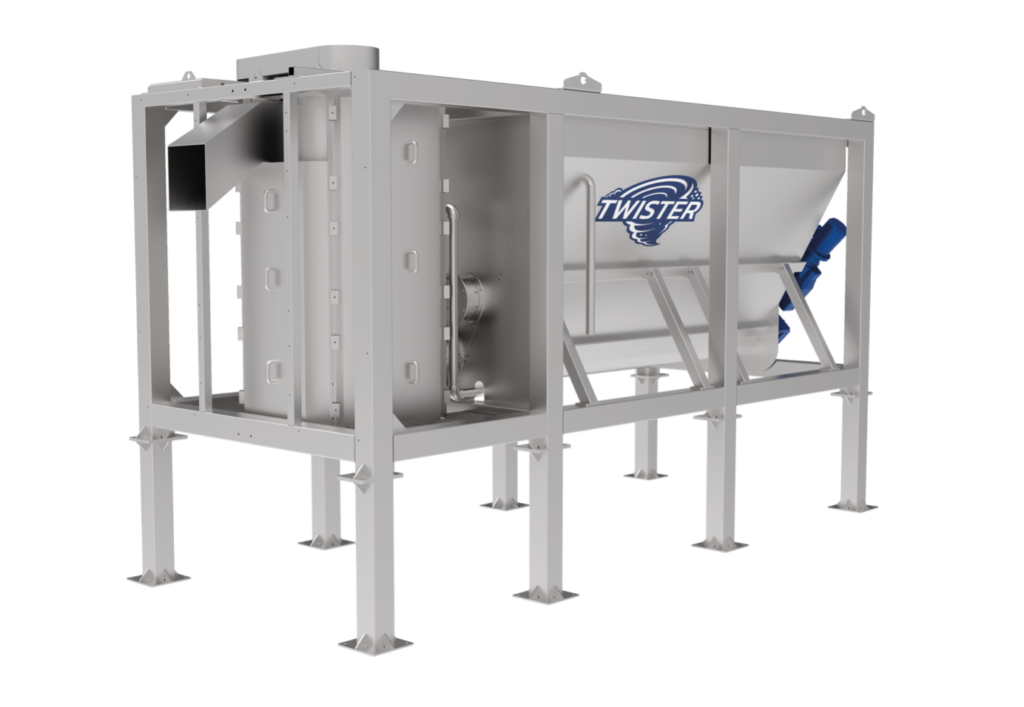
This is where the paradigm shifts. Drycake has introduced a vertical separator called the Twister. Instead of relying on brute force or tons of water, it utilizes a proprietary aerodynamic vortex separation process without adding water to liberate the remaining fibres and organics from paper mill pulper rejects while simultaneously turning the leftover plastics into a clean, bone-dry byproduct.
The Physics of the Vortex: How It Works
To understand why this method is gaining traction, we have to look at the fluid dynamics happening inside the machine. Traditional horizontal separators rely heavily on internal screens to filter out materials. The problem? Wet plastic films and sticky fibres love to blind and clog screens, creating constant operational bottlenecks.
The Twister skips the traditional screen basket entirely by utilizing high-velocity air streams and intense mechanical action to create a localized, high-energy vortex. When a high-consistency paper mill pulper slurry (typically between 30% and 40% solids) is fed into the chamber, the aerodynamic forces generate massive shear stresses.
This environment performs two tasks simultaneously:
- Mechanical Water Liberation: The intense air velocity literally shears surface moisture and breaks the capillary bonds holding water inside plastic pores and film layers.
- Density and Aerodynamic Sorting: Materials separate instantly based on their unique mass and aerodynamic behaviour. Heavy, valuable fibres or organic components are isolated and funnelled back into the production loop, while lightweight plastics are swept upward, cleaned, and dried.
To see how these variables interact in real time, you can test the relationship between air velocity, input moisture, and final separation quality in the interactive simulator below.
Real-World Proof: The September 2025 Mpact Trial
Technical specifications look great on paper, but how does this translate to an actual industrial environment? In September 2025, a landmark innovation trial was conducted at Mpact Limited in South Africa to evaluate the Twister’s performance on live, high-volume pulper rejects.
The incoming stream was notoriously difficult: a mixture of Low-Consistency (LC) pulper rejects and heavy Forward Flow Cleaner Rejects (FFD) carrying an initial feed moisture level ranging from 61% to 75%.
The results from the trial fundamentally challenged conventional waste-processing assumptions:
- Single-Pass Dryness: In a single pass through the system, the Twister consistently delivered an output dryness of 75% or above, with results varying by feed moisture and material composition. Under optimised operating conditions with integrated low-grade heat, output dryness approaching 90% has been recorded.
- Autothermal Combustion: By driving the moisture level down so low without relying on standalone thermal drying lines, the recovered plastic fraction crossed the critical threshold for autothermal combustion. This means the material can be fed directly into an energy-recovery system or Solid Recovered Fuel (SRF) process and will burn continuously without needing any supplemental fossil fuels. The calorific value of 19,000 kJ/kg is close to the equivalent of low-grade coal.
- Massive Volume Reductions: By stripping out the water and reclaiming the trapped fibres, the physical volume of waste requiring transport dropped by approximately 30%.
For a plant manager, that 30% reduction is a game-changer. You are no longer paying to haul thousands of tons of heavy local river water to a landfill; instead, you are trucking away a light, dry, value-dense fuel or recycling feedstock.
Because the system lacks a restrictive screen infrastructure, it completely eliminates the traditional clogging bottlenecks that plague older separation units. It accepts high-volume, erratic dump loads and processes them continuously without clogging up.
The Four Pillars of the Twister Advantage
If we break down the operational economics of deploying aerodynamic vortex technology over traditional options, the benefits group neatly into four distinct operational pillars:
1. Zero Water Addition
Traditional washing drums and separation systems add external water to process complex waste streams. The Twister takes the opposite approach. It takes high-consistency slurries directly from the mill infrastructure, utilizing purely mechanical action and airflow to extract water right at the point of origin.
2. Low-Grade Waste Heat Integration
One of the most elegant engineering choices in the Twister design is its ability to utilize low-grade waste heat. While standard thermal dryers require specialized, high-temperature energy sources, the Twister can integrate directly with existing mill exhaust loops. It can take 60–85°C air from paper mill dryer hoods or utilize low-grade thermal streams as low as 40°C. This “free” energy drastically accelerates the breaking of capillary bonds on plastic surfaces without adding a single Euro to the plant’s fuel utility bill.
3. Continuous, High-Throughput Processing
Because the system handles heavy residual loads via dynamic air paths rather than static mechanical filters, it offers true non-stop operation. The continuous flow minimizes downtime, lowers maintenance intervals, and effortlessly absorbs surges in production lines.
4. Direct Financial Payback
By transforming what was once a pure compliance and disposal liability into two distinct revenue streams—usable cellulose fibre that goes straight back into the pulper, and highly dry, marketable plastics—the system shifts waste management from a cost centre to a profitable circular operation.
Universal Applications Beyond the Paper Mill
While the pulp and paper industry offers a perfect showcase for this technology, the underlying physics of the Twister make it universally applicable to several other challenging industrial sectors:
Biogas Substrate Preparation for Food Waste Biogas Plants
In the food waste and anaerobic digestion industries, depackaging is a major hurdle. Operators need to strip plastic wrapping, containers, and cardboard away from food scraps without leaving microplastics in the organic slurry. The Twister excels here, cleanly splitting organic matter for high-yield biogas digestion while leaving behind a clean, dry plastic stream optimized for traditional recycling lines.
Commercial Plastic Recycling
For plastics recycling plants running advanced washing lines, drying wet plastic flakes and films is incredibly energy-intensive. By replacing traditional, high-amp thermal dryers with mechanical vortex drying, recycling plants can achieve identical or superior dryness levels while slashing their operational carbon footprints.
The Big Picture: Closing the Loop
As environmental regulations tighten and landfill costs climb globally, the strategy of simply “hauling the problem away” is dying out. True sustainability requires process-level innovation that recovers every scrap of value before a stream ever leaves the facility gates.
The Twister demonstrates that with the right combination of fluid dynamics and smart integration, we can stop viewing industrial residuals as garbage and start treating them as the complex resources they truly are.
To review detailed technical case studies, view exact machine footprints, or request a system evaluation for your specific facility infrastructure, visit the official Twister website.