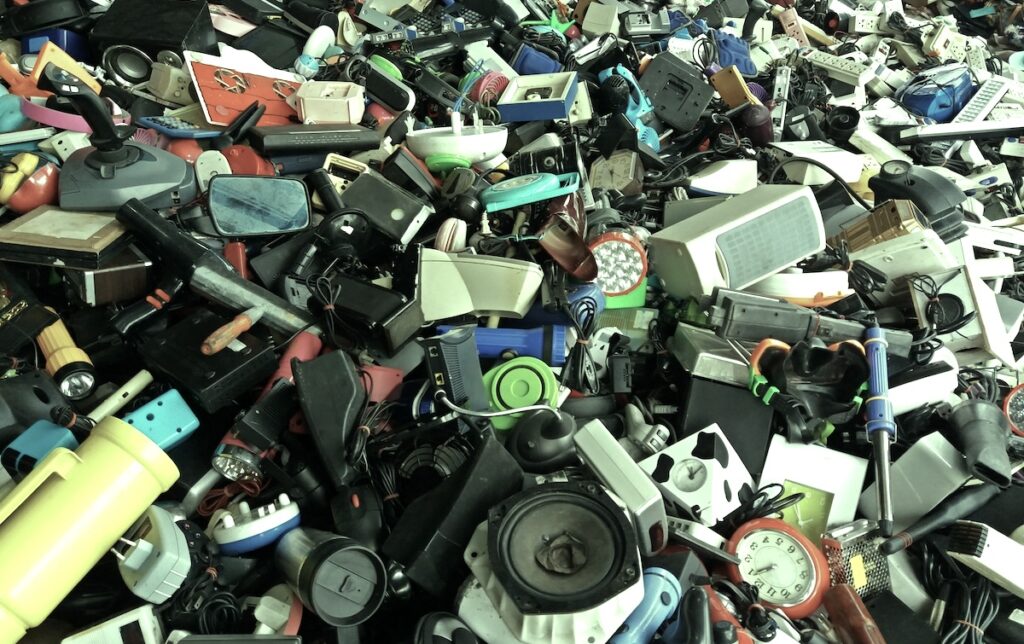
The electronics recycling market is moving into a new phase. What was once seen mainly as a compliance issue — a downstream obligation for producers and municipalities — is now increasingly viewed as a strategic industrial activity tied to resource security, circularity, and supply chain resilience. That shift is being driven by one hard reality: the world is generating electronic waste faster than formal recycling systems are expanding.
In 2022, global e-waste generation reached a record 62 million tonnes, while only 22.3% was documented as formally collected and recycled. The same global monitoring work projects e-waste volumes to rise to 82 million tonnes by 2030 if current trends continue.
The widening gap between generation and formal recovery is exactly what makes electronics recycling such a critical market to watch. E-waste is not merely waste. It is a concentrated repository of economically and strategically significant materials — copper, aluminium, gold, palladium, cobalt, lithium, tantalum, indium, silver and rare earth elements — embedded in highly complex assemblies that the global economy increasingly cannot afford to lose.
From compliance obligation to industrial opportunity
The market is no longer defined only by end-of-life handling. It is increasingly shaped by the value locked inside discarded electronics. That changes the business case for recyclers, technology suppliers and policymakers alike. Electronics recycling now sits at the intersection of environmental protection, industrial policy and raw material recovery.
This convergence is not incidental. Research on urban mining has consistently shown that e-waste concentrations of precious metals far exceed those of primary ores. A tonne of mobile phones contains roughly 300 grams of gold — compared with approximately 5 grams per tonne in commercial gold ore deposits. The economic argument for sophisticated recovery is strong; the challenge has always been industrial scale and process efficiency.
In Europe, that strategic concern is now embedded in the Critical Raw Materials Act, which explicitly aims to strengthen circularity, improve collection of critical raw material-rich waste, and increase recycling yields back into manufacturing chains. The European Commission notes that demand for critical materials — including rare earths and lithium — is expected to rise sharply by 2030 and beyond, driven by electrification, digital infrastructure and defence applications. That makes electronics recycling more than a sustainability story. It is also a competitiveness story — about supply chain resilience, industrial sovereignty, and access to the raw materials that power modern economies.
Growth fundamentals remain strong
Several structural drivers continue to support market growth. Digitalisation is expanding across households, transport, healthcare, energy systems and industry. Product turnover remains high in consumer electronics. More electrical and electronic products are entering the market, while repairability and reuse are still inconsistent across categories. The result is a growing and increasingly diverse e-waste stream, ranging from small household devices and IT equipment to telecom hardware, control systems, batteries and electronics embedded in energy infrastructure.
The market is also benefiting from sustained policy momentum. In the EU, electronics recycling is being shaped not only by the WEEE framework, but also by newer product and circularity rules that push durability, reparability and better end-of-life outcomes. The direction of travel is clear: products must stay in use longer, and when they do become waste, they must be easier to collect, sort, dismantle and recycle.
Europe leads — but the performance gap is real
Europe remains the most advanced region in documented formal e-waste recycling. According to the Global E-waste Monitor 2024, Europe generated 17.6 kg of e-waste per capita in 2022 and achieved the world’s highest documented collection and recycling rate, at 42.8% of e-waste generated.
But that leadership should not be mistaken for adequacy. Eurostat reports that the EU’s WEEE collection rate in 2023 was 37.5% when measured against the average weight of electrical and electronic equipment placed on the market in the three preceding years. Only nine EU countries exceeded the 45% collection target, while just three reached the more ambitious 65% target.
The gap reflects a persistent structural problem: a significant portion of e-waste in Europe is still flowing into informal channels, being exported illegally, or disappearing into general waste streams. Consumer behaviour, fragmented take-back logistics, enforcement inconsistency and product design that frustrates disassembly all contribute to the shortfall.
This is one reason the European Commission evaluated the WEEE Directive in July 2025. The review examined whether the framework remains fit for purpose and whether simplification or revision is needed. Any future revision could affect producer responsibility structures, collection targets, treatment standards and the scope of products covered — all with significant market implications.
Regulation is tightening across the value chain
A dense regulatory pipeline is reshaping the market from multiple directions simultaneously. The EU’s Right to Repair Directive entered into force in July 2024 and must be applied by member states from 31 July 2026, influencing the balance between repair, reuse, refurbishment and recycling. The Basel Convention’s e-waste amendments took effect on 1 January 2025, making all electrical and electronic waste subject to the prior informed consent procedure for cross-border movements and significantly closing off the routes that have historically allowed substandard processing to continue at scale. New EU ecodesign and energy labelling requirements for smartphones and tablets began applying on 20 June 2025, introducing rules on durability, repairability and consumer information.
For recyclers, this regulatory density is a double-edged reality. Higher standards raise compliance costs and operational complexity. But they also reduce informality, raise feedstock quality and build the investment case for modern treatment infrastructure — changes that, over time, benefit operators running best-in-class facilities.
Technology and safety: the new competitive frontier
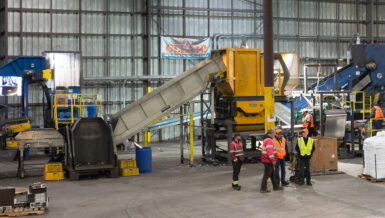
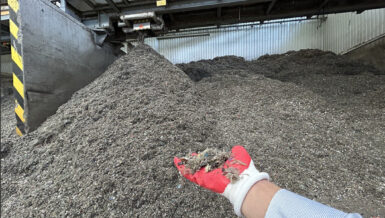
As the market matures, competitiveness depends less on volume throughput and more on recovery efficiency and process sophistication. Strong operations combine selective dismantling, depollution, safe battery handling, precision shredding, and multi-stage separation to isolate ferrous and non-ferrous metals, engineered plastics, and printed circuit board-rich fractions. The highest-value layer comes downstream: hydrometallurgical and pyrometallurgical refining capable of recovering gold, palladium, cobalt and rare earth elements at commercially meaningful yields.
One of the biggest operational challenges in the industry today is the growing concentration of embedded lithium-ion batteries across device categories. Mishandled cells in mixed streams are a leading cause of fires in collection vehicles, transfer stations and processing facilities. European waste-sector organisations have documented a significant rise in such incidents. Earlier detection, dedicated pre-sorting and specialised handling protocols are now central to plant design and risk management — not optional add-ons.
Beyond battery safety, the deployment of near-infrared sorting, X-ray fluorescence identification and robotic dismantling is raising recovery rates and reducing output contamination. These technologies also enable better material chain tracking — increasingly important as downstream manufacturers and battery producers demand certified, traceable secondary material inputs.
The market is broadening well beyond consumer devices
Perhaps the most consequential structural shift in the sector is the expansion beyond the traditional core of consumer electronics. The growth frontier increasingly lies in more complex categories: telecommunications infrastructure, industrial control electronics, medical equipment, photovoltaic panels, grid-scale battery storage, and the dense electronics embedded in modern vehicles and buildings.
Each of these streams brings distinct technical requirements, regulatory overlaps and material compositions. A grid-scale lithium-iron-phosphate battery is a fundamentally different processing challenge than a smartphone. A decommissioned piece of medical imaging equipment carries data governance obligations alongside its metals recovery value. This heterogeneity means that “e-waste recycler” is no longer a sufficient description of what the market’s leading operators actually do.
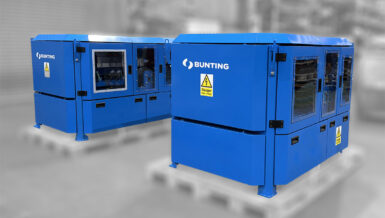
For equipment suppliers and process engineers, the broadening scope creates demand for modular, adaptable infrastructure: battery-safe pre-processing lines, sensor-based multi-fraction sorting, controlled dust and emissions management, and downstream integration with specialist refiners. For operators, the strategic question is where to specialise, which partnerships to build, and how to develop capabilities that scale as input streams diversify.
Outlook: a stronger market, but not an easier one
The long-term outlook for electronics recycling is structurally positive. More devices, deeper electrification, more demanding regulation and greater concern over critical raw material access are all converging to enlarge both the volume and the economic significance of the market. By 2030, the global e-waste stream is projected at 82 million tonnes — a figure that will only grow with the continued expansion of battery-intensive transport and renewable energy systems.
But volume growth does not automatically translate into margin. The market is becoming more capital intensive, more technically complex and more demanding on compliance. Operators that depend on outdated collection models, low-spec processing, or regulatory arbitrage through informal export channels will find the space narrowing considerably.
The competitive advantage in this market will belong to operators that can deliver across multiple dimensions simultaneously: safe and compliant processing, high and certifiable recovery yields, clean secondary output streams, and integration into the supply chains of manufacturers that are themselves under pressure to demonstrate circular sourcing. Electronics recycling is no longer a downstream environmental service sitting at the margin of the economy. It is rapidly becoming a strategic industrial link in the circular economy — and the companies that invest accordingly will be best positioned when demand for secondary critical materials intensifies.