






Problem & Opportunity
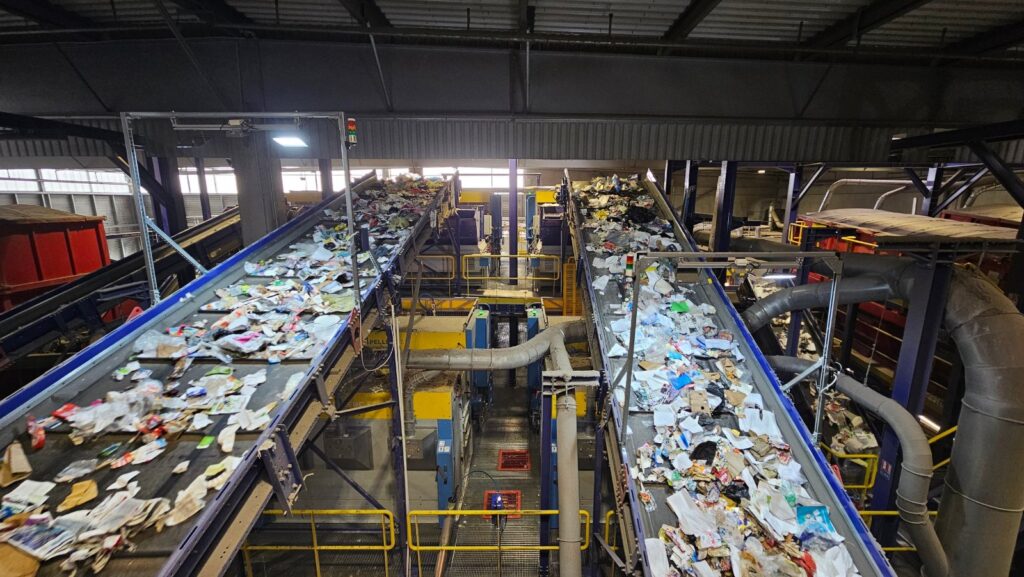
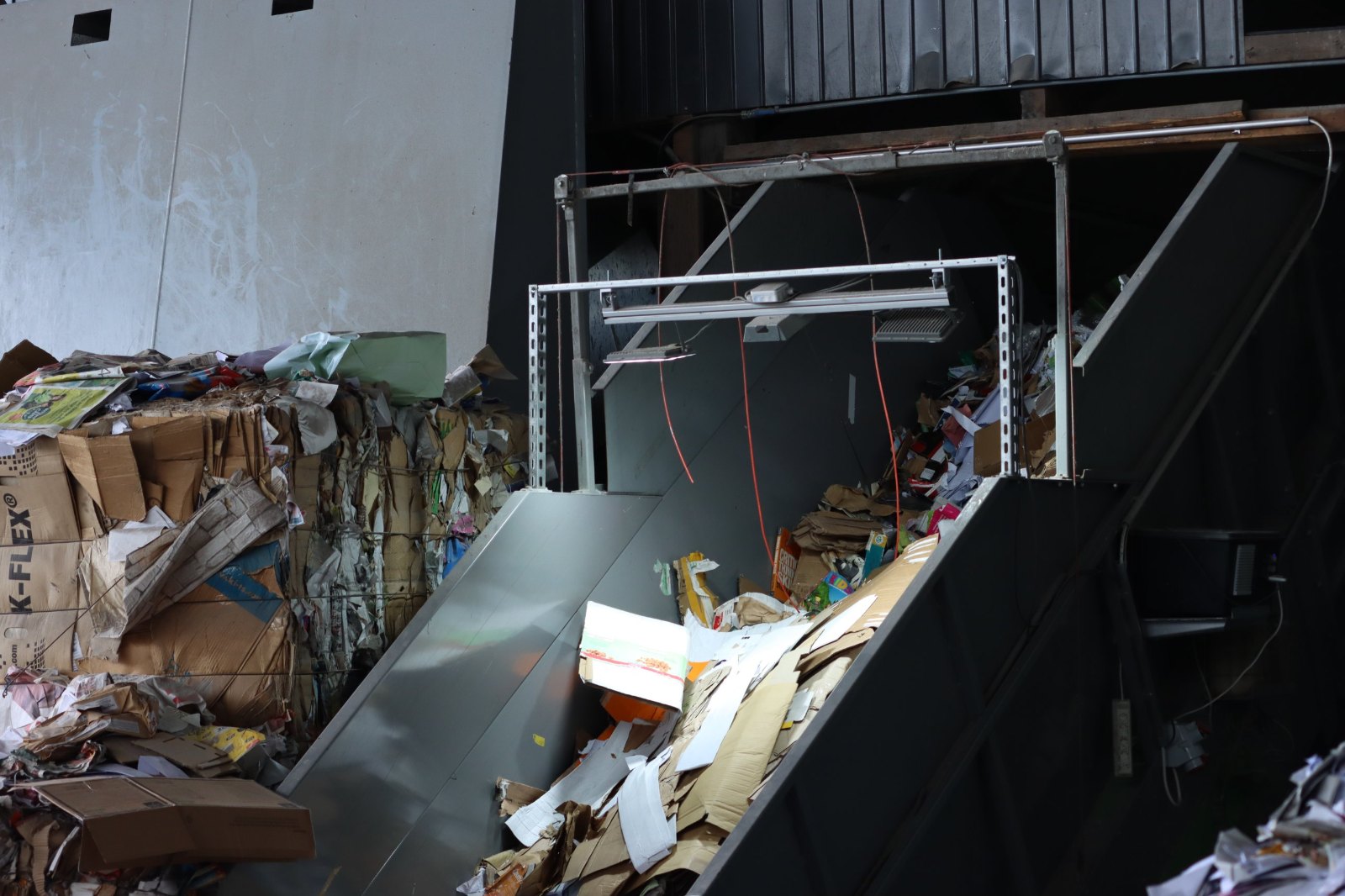
Conveyor belt speed at Retripa Vernier used to be set manually at a fixed rate that does not adapt to the volume or composition of material passing through the line. The facility ran at a single static speed regardless of conditions: when intake was light, capacity was under utilized; when intake was heavy or rich in recoverable paper and cardboard, material was moving through too quickly to be properly captured. Without a mechanism to sense and react to real-time material flow, there was no method to know whether the line was running at the optimal speed for maximizing both recovery and sorting accuracy at any given moment.
- Real-time characterization generates continuous data on the volume and composition of material moving through the line.
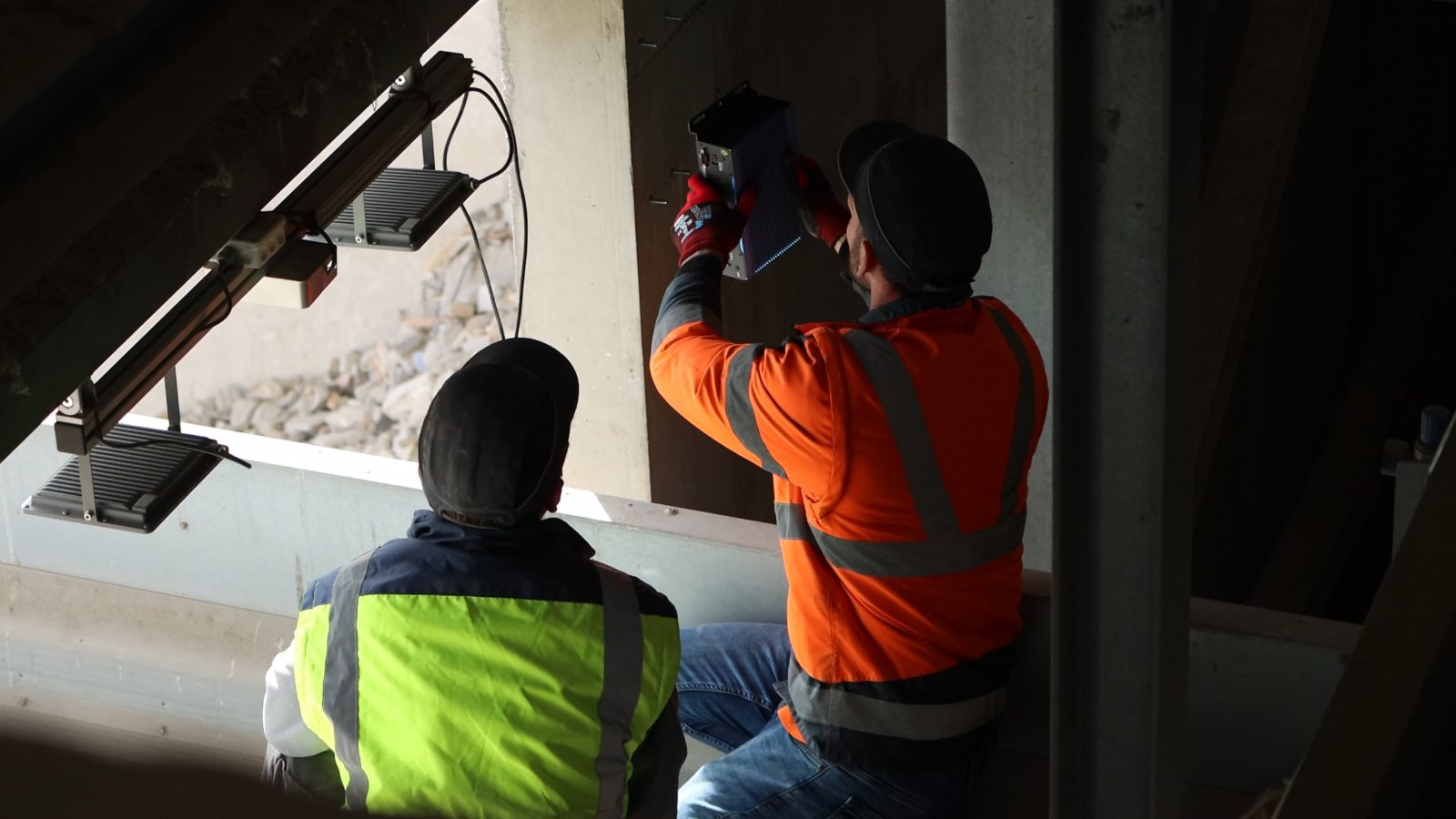
- WasteFlow’s data can be connected directly to the conveyor belt control system, via PLC integration to automatically adjust speed based on the quality of the material flow.
- The sensors analyze conditions continuously across the full length of the process, and conveyor speed is adjusted in real time on a hybrid decision basis.
Results
Two operating conditions were compared through the project: WasteFlow ON, where conveyor speed is continuously optimized based on material flow rate and WasteFlow OFF, where conveyors run at their standard fixed and manually configured speed. The system was tested against real operating conditions for months (February – July 2026) and complemented by two days dedicated field tests (07th July – 08th July 2026).
| Conveyor | WasteFlow OFF | WasteFlow ON | Observation |
|---|---|---|---|
| Feeding conveyor | 15 Hz | 18 Hz | +20 % speed increase |
| Manual sorting cabin | 57 Hz (constant) | 44-69 Hz | dynamically adjusted |
WasteFlow ON increased the feeding conveyor speed by 20%. This is possible because the system can control the conveyor whenever too much material arrives at the input, slowing the belt only when needed and letting it run faster the rest of the time. Sustained across six months of live production data, this speed increase translates into a gain in throughput.
| Condition | Tonnes processed | Active facility hours |
|---|---|---|
| WasteFlow OFF | 303.5 t | 88 h |
| WasteFlow ON | 360 t | 88 h |
Extending the analysis beyond the initial two-day speed test, several months of active production data confirmed that WasteFlow ON consistently outperforms WasteFlow OFF on the two metrics that matter most operationally: throughput and purity. To make the comparison easier to read, the results were normalized to the same duration of 88 active hours. Over that window, WasteFlow OFF processed 303.5 tonnes, compared with 360 tonnes for WasteFlow ON, a gain of roughly 18.5%. “Active hours” refers specifically to periods when the facility’s motors were running, excluding downtime. Results speak for themselves:
Throughput gains track the speed increase almost exactly
Throughput increases by +18% improvement in tonnes/hour closely mirrors the +20% speed increase measured on the feeding conveyor, showing a direct link between automated acceleration and processing capacity.
Purity improves rather than decrease at a higher speed
Purity increased by roughly +4.3% under WasteFlow ON rather than declining as belts run faster, suggesting the facility’s sorting equipment performs more effectively above a certain speed threshold, with the help of WasteFlow’s intelligent automation. The system slows down when impurities or throughput are high (giving sorters more time per load) and speeds up when throughput is low, but quality is good, so higher speed ends up correlating with higher purity.
Conclusion & Next Steps
The pilot showed that WasteFlow’s real-time control can raise throughput and improve output quality at once. Both gains hit the plant’s unit economics directly. Since a sorting line’s costs are largely fixed per hour, higher throughput lowers the cost per tonne sorted with no added capex. Better purity, in turn, commands a higher price per tonne and reduces rejected loads. Together, these effects compound: lower cost per tonne and higher revenue per tonne, delivered through software on existing hardware. The same line, building and team produce more, at higher value, every hour.
