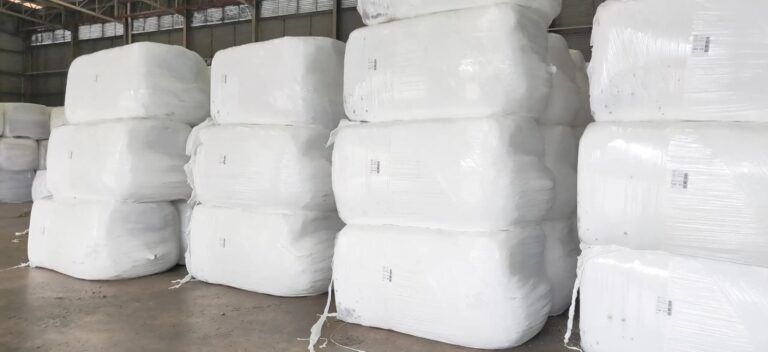
Inside the RDF Chain: Only the RDF That Arrives Intact Counts
“The biggest risk in the RDF chain isn’t what it costs to bale material. It’s the possibility that material doesn’t make it to market in the condition it…


Market
Refuse-derived fuel (RDF) and solid recovered fuel (SRF) production turns the high-calorific, non-recyclable fraction of municipal and commercial waste into a substitute fuel for cement kilns, power plants and industrial boilers.
Latest in this market
“The biggest risk in the RDF chain isn’t what it costs to bale material. It’s the possibility that material doesn’t make it to market in the condition it…



Asked by plant operators and engineers, answered by named experts.
No questions here yet. Ask the first one.
Ask the Expert
Engineers and product specialists who answer technical questions from readers. The answer comes back to you by e-mail; when we publish it, other readers benefit too.
No field expert for this market yet — your question still reaches our editors.
Recycling technology worth your time: new equipment, plant case studies and the numbers behind them. Free, twice a week.
Questions and answers
Refuse-derived fuel (RDF) is a broad term for fuel made from processed waste, usually with a coarse particle size and variable quality. Solid recovered fuel (SRF) is produced to a defined specification for a known end user. In Europe, EN ISO 21640 classifies SRF by net calorific value, chlorine content and mercury content, which lets producers and users agree on a guaranteed quality.
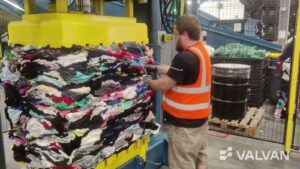
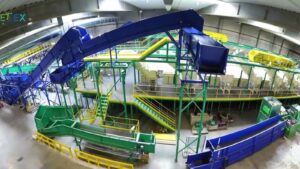
Waste is first pre-shredded and screened to remove fines and organic material. Magnets and eddy current separators take out ferrous and non-ferrous metals, and air separators (windsifters) remove heavy inerts such as stones and glass. Near-infrared sorters can eject PVC to reduce chlorine. A secondary shredder then brings the fuel to the particle size the user requires, after which it is baled, wrapped, stored or pelletised.
Cement kilns are the largest users: they co-process RDF and SRF in the calciner and main burner as a substitute for coal and petcoke. Other outlets include dedicated RDF power and heat plants, industrial boilers, waste-to-energy plants and gasification projects. Baled RDF is also traded across borders when domestic incineration or co-processing capacity is limited.
Users specify calorific value, moisture, ash content, particle size, chlorine and heavy metals such as mercury. Chlorine is critical because it causes corrosion in boilers and affects kiln operation and clinker quality. Moisture lowers the calorific value and can make the fuel harder to feed. Consistent particle size and low levels of metals and inerts keep dosing and combustion stable.
Shredders, bunkers and stored bales of RDF are among the highest fire risks in waste processing: hot spots from batteries, friction or self-heating can ignite dry, high-calorific material. Plants use infrared and thermal-camera detection over bunkers and conveyors, spark detection in shredder discharge, automatic extinguishing systems and strict storage rules such as limited pile sizes and separation distances.
Use the Manufacturers Directory A–Z or the Equipment Guide. Partner profiles carry direct contact details; other listings link to the company website.
Yes. Ask the Expert puts your question to a field expert active in Refuse-Derived Fuel (RDF & SRF). The answer comes back to you by e-mail; when we publish it, other readers benefit too.
Our partners
Sense2Sort – Toratècnica develops and builds sensor-based sorting machines for recycling, including XRF, LIBS, induction and robotic sorting.
 Spain · Separation and Sorting Technology
Sense2Sort – Toratècnica develops and builds sensor-based sorting machines for recycling, including XRF, LIBS, induction and robotic sorting.
 United States · Size Reduction
CM Shredders manufactures tire shredders, industrial shredders and complete turnkey tire recycling systems with patented knife technology.
 United States · Size Reduction
SSI Shredding Systems engineers and manufactures 1-, 2-, 3- and 4-shaft industrial shredders, primary reducers and transfer station compactors.
 Germany · Volume Reduction Technology
HSM develops and manufactures baling presses, shredders and compaction systems for recycling and industry, and document and data media shredders.
 Germany · Separation and Sorting Technology
TOMRA Recycling develops and manufactures sensor-based sorting systems with NIR, LIBS and deep learning AI for waste and metal recycling.
 Netherlands · Separation and Sorting Technology
Bollegraaf Group designs, engineers and builds turnkey recycling and waste sorting plants, balers and sorting equipment, with its brands Bollegraaf and Lubo.
 United Kingdom · Separation and Sorting Technology
Eriez designs and manufactures magnetic separation, metal detection, vibratory and metals recycling equipment for the processing and recycling industries.
 Germany · Separation and Sorting Technology
Cleansort develops LIBS (laser-induced breakdown spectroscopy) sorting solutions that separate scrap metals by alloy content.
 China · Separation and Sorting Technology
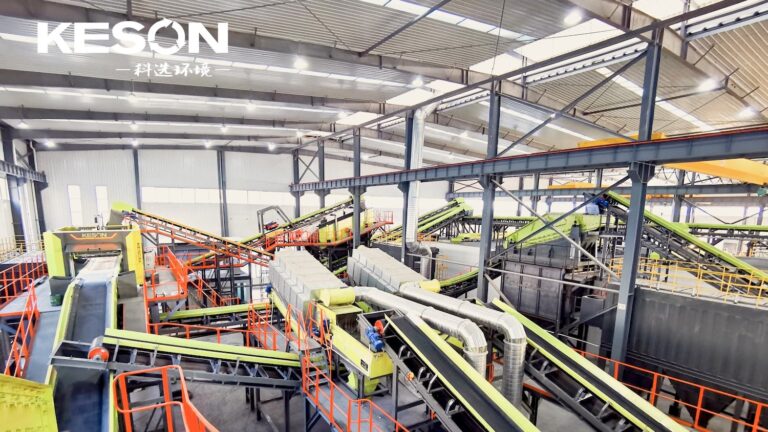
KESON develops and manufactures intelligent equipment and complete solutions for solid waste sorting, resource recovery and low-carbon treatment.
 Sweden · Volume Reduction Technology
Presona manufactures prepress balers, compactors and waste handling systems for recycling, waste management and packaging and graphic industries.
Your company here?