


Answering Question:
Finding the Right Technology for Effective Odour Control
Choosing the right exhaust air treatment technology is therefore essential – not only to comply with environmental regulations but also to ensure reliable plant operation and good relationships with neighbouring communities.
Three technologies are commonly used for industrial exhaust air treatment: biofilters, biotrickling filters and chemical scrubbers. While all three can contribute to effective odour control, they differ considerably in their operating principles, application ranges, space requirements and operating costs.
So, which technology is the right choice for your plant?
1. Biofilters: A Proven Solution for Large Air Volumes
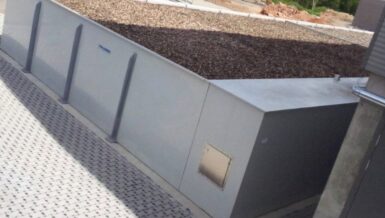
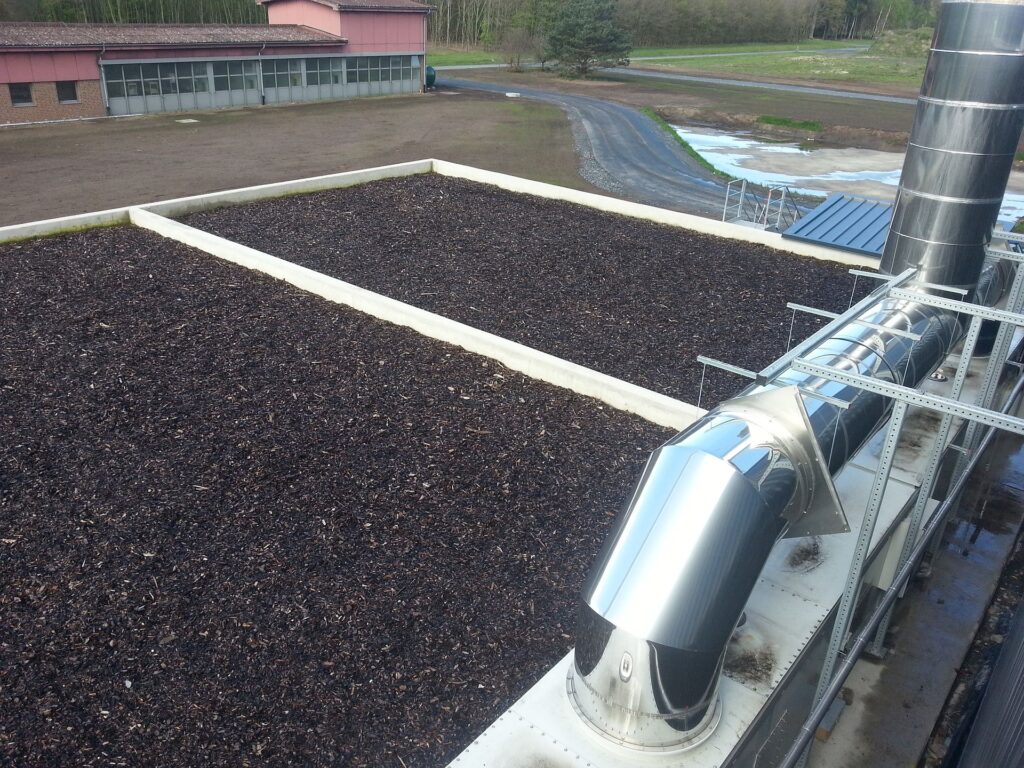
Biofilters use naturally occurring microorganisms to break down odorous compounds and other biodegradable pollutants.
The contaminated exhaust air is passed through a moist filter bed, typically consisting of organic or inorganic filter material. Microorganisms growing on the surface of the filter material absorb and metabolise pollutants, converting them into simpler, less harmful substances.
When are biofilters the right choice?
Biofilters are particularly suitable for applications with:
- Large exhaust air volumes
- Low to moderate pollutant concentrations
- Biodegradable organic compounds
- Relatively stable operating conditions
Typical applications include composting facilities, green waste treatment plants, biowaste processing facilities and wastewater treatment plants.
Advantages:
- Relatively low operating costs
- Low energy consumption
- No continuous chemical dosing required
- Effective removal of a broad range of biodegradable odorous compounds
- Proven technology for large-volume exhaust air treatment
Limitations:
Biofilters require sufficient installation space due to their relatively large filter surface. Their performance also depends on maintaining suitable moisture levels, temperature and pH conditions within the filter bed. High pollutant concentrations or sudden variations in the exhaust air composition can affect biological performance.
Another important consideration is ammonia. At elevated concentrations, ammonia can influence the biological conditions within the filter bed. In such cases, an upstream chemical pre-treatment stage may be beneficial.
2. Biotrickling Filters: Compact and Efficient Biological Treatment
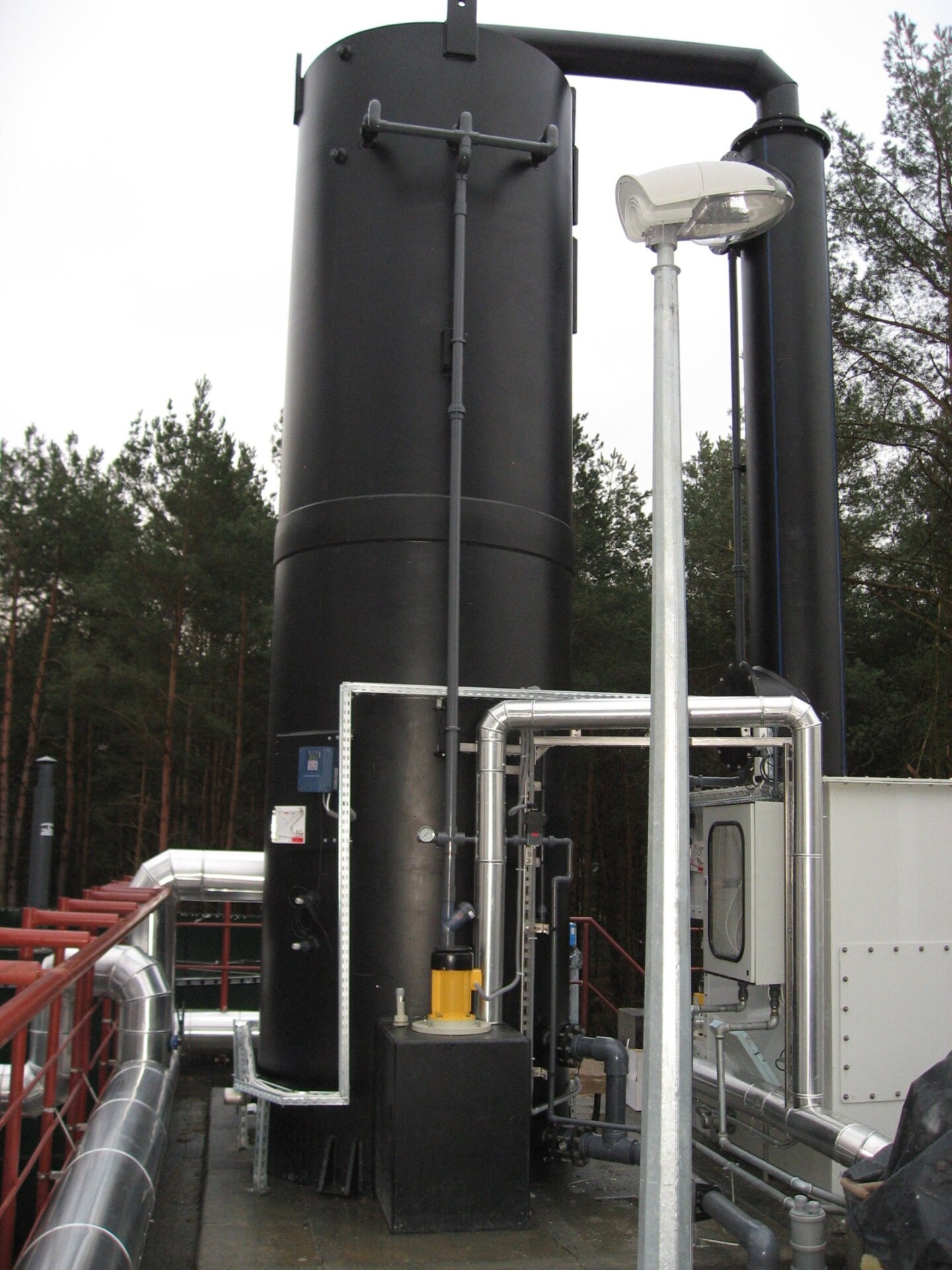
Biotrickling filters also rely on microorganisms to degrade pollutants, but their operating principle differs from that of conventional biofilters.
The exhaust air flows through a structured packing material, on which microorganisms form a biofilm. A liquid is continuously or intermittently circulated over the packing, supplying moisture and nutrients while helping to control pH and remove degradation products.
When are biotrickling filters the right choice?
Biotrickling filters are particularly suitable for:
- Higher pollutant concentrations
- Hydrogen sulphide (H₂S) removal
- Applications requiring controlled biological conditions
- Plants with limited installation space
- Exhaust air streams with relatively consistent pollutant loads
They are widely used for treating sulphur-containing compounds, particularly in wastewater treatment, sludge processing and waste treatment applications.
Advantages:
- Compact design compared with conventional biofilters
- Controlled moisture and nutrient supply
- Good performance for H₂S and other water-soluble pollutants
- Controlled pH conditions
- Biological treatment with relatively low chemical consumption in suitable applications
Limitations:
Biotrickling filters require pumps and a liquid circulation system, resulting in higher technical complexity than conventional biofilters. Depending on the pollutant load, pH adjustment and nutrient dosing may also be necessary.
The technology is particularly effective for specific pollutants such as H₂S, but it may not be sufficient on its own when the exhaust air contains a complex mixture of different odorous compounds.
3. Chemical Scrubbers: Effective Treatment for High and Variable Pollutant Loads
Chemical scrubbers remove pollutants by bringing contaminated air into intensive contact with a washing liquid. Depending on the application, different chemicals are used to absorb, neutralise or oxidise specific contaminants.
For example, sulphuric acid is commonly used to remove ammonia, while alkaline or oxidising washing solutions can be applied to treat acidic or sulphur-containing compounds.
When are chemical scrubbers the right choice?
Chemical scrubbers are particularly suitable for:
- High ammonia concentrations
- High or fluctuating pollutant loads
- Water-soluble contaminants
- Applications requiring reliable pre-treatment
- Processes where biological treatment alone would be insufficient
Advantages:
- High removal efficiency for specifically targeted pollutants
- Rapid response to changing pollutant concentrations
- Controlled and predictable treatment conditions
- Suitable for high pollutant loads
- Can be combined with biological treatment systems
Limitations:
Chemical scrubbers require a continuous supply of operating chemicals, water and energy. Operating costs depend on pollutant concentrations, chemical consumption, water treatment and disposal requirements.
Furthermore, scrubbers are generally designed to target specific pollutants. They may therefore need to be combined with additional treatment stages to achieve comprehensive odour removal.
4. Comparing the Three Technologies
The following overview summarises the main differences:
| Criteria | Biofilter | Biotrickling Filter | Chemical Scrubber |
|---|---|---|---|
| Main principle | Biological degradation | Biological degradation in circulating liquid | Chemical absorption/reaction |
| Large air volumes | Very suitable | Suitable | Suitable |
| High H₂S loads | Limited without pre-treatment | Very suitable | Suitable, depending on chemistry |
| High NH₃ loads | Limited without pre-treatment | Application-dependent | Very suitable with acid scrubbing |
| Space requirements | Relatively high | Relatively low | Moderate |
| Chemical consumption | Usually low or none | Low to moderate, depending on application | Moderate to high |
| Operating complexity | Low to moderate | Moderate | Moderate to high |
| Typical operating costs | Low | Moderate | Moderate to high |
Actual performance and costs depend on the exhaust air composition, inlet concentrations, required outlet values, air volume and plant-specific conditions.
5. Why Combining Technologies Often Makes Sense
In many waste treatment and composting applications, a single treatment technology is not sufficient to address all pollutants effectively.
Combining different technologies can provide a more efficient and reliable solution.
For example, an acid scrubber installed upstream of a biofilter can remove ammonia before the air enters the biological treatment stage. This reduces the pollutant load on the biofilter and helps maintain favourable biological conditions.
Similarly, a biotrickling filter can be used as a pre-treatment stage for removing high H₂S concentrations, followed by a biofilter to eliminate remaining odorous organic compounds.
A typical treatment concept could therefore consist of:
- Chemical pre-treatment: Removal of ammonia or other specific contaminants.
- Biological treatment: Degradation of remaining odorous compounds in a biofilter or biotrickling filter.
- Exhaust air discharge: Release of the treated air into the atmosphere in accordance with applicable requirements.
The optimal configuration depends on the specific process conditions and treatment objectives.
6. What Should Plant Operators Consider When Selecting a System?
Before choosing an exhaust air treatment technology, plant operators should evaluate several key parameters:
- Exhaust air volume: How many cubic metres of air need to be treated per hour?
- Pollutant composition: Which compounds are present, particularly NH₃, H₂S and VOCs?
- Pollutant concentrations: Are the concentrations low, moderate or high? Do they fluctuate significantly?
- Available space: Is sufficient installation space available for a conventional biofilter?
- Operating costs: What are the expected costs for energy, water, chemicals, maintenance and filter material replacement?
- Operational reliability: Can the system handle continuous operation and changing process conditions?
- Environmental requirements: Which emission limits and odour control requirements must be met?
A detailed analysis of the exhaust air is the best starting point for selecting the appropriate technology.
Conclusion: The Right Solution Depends on the Application
There is no universal solution for exhaust air treatment in waste treatment and composting plants.
Biofilters are an excellent choice for large air volumes with relatively low pollutant concentrations and predominantly biodegradable odorous compounds. Biotrickling filters offer a compact and effective solution, particularly for H₂S removal and controlled biological treatment. Chemical scrubbers are especially suitable for high concentrations of specific pollutants such as ammonia and can provide valuable pre-treatment before biological filtration.
In many cases, combining these technologies offers the best overall solution.
The key to successful exhaust air treatment is understanding the composition of the exhaust air and matching the technology to the actual requirements of the plant.
With the right combination of chemical and biological treatment processes, plant operators can achieve reliable odour control, optimise operating costs and contribute to environmentally responsible waste management.