



Efficient Waste Air Treatment with THOLANDER Biofilter Technology
Project Overview
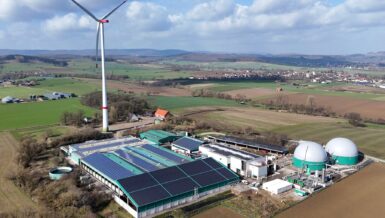
A key challenge is the treatment of odorous exhaust air generated during the fermentation process. To ensure effective odour control and minimise the impact on the surrounding environment, the facility relies on a high-performance biological air treatment system supplied by THOLANDER.
The solution consists of two simultaneously operated THOLANDER biofilters, designed to treat an exhaust air volume of 40,000 Bm³/h.
The Challenge: Treating Odorous Exhaust Air
During the processing and fermentation of organic waste, odorous compounds are released into the exhaust air. Among the key contaminants are ammonia (NH₃) and hydrogen sulphide (H₂S), both of which require effective treatment to prevent unpleasant odours and environmental nuisance.
The system was designed to handle the following inlet concentrations:
- Exhaust air flow rate: 40,000 Bm³/h
- Ammonia (NH₃): < 100 ppm
- Hydrogen sulphide (H₂S): < 10 ppm
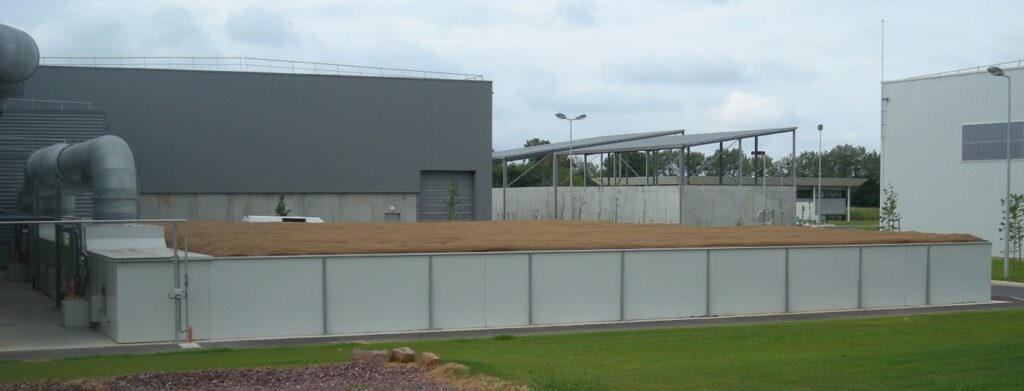
- Biofilter surface area: 2 × 124 m²
The objective was to provide a reliable and continuous treatment solution capable of handling the exhaust air generated by the facility while ensuring effective odour reduction.
The Solution: THOLANDER Biofilter Technology
THOLANDER implemented a two-stage air treatment concept combining chemical pre-scrubbing with biological filtration.
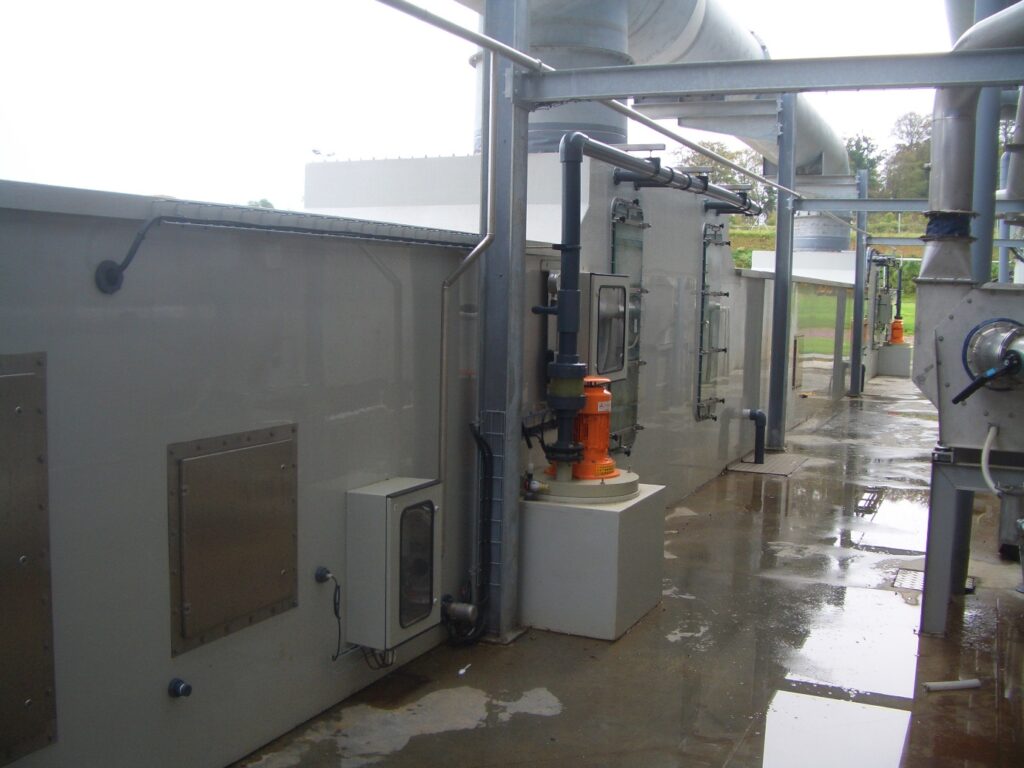
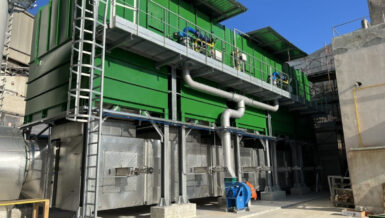
The exhaust air extracted from the fermentation plant is first directed through pre-scrubbers, where sulphuric acid is added. This process absorbs ammonia (NH₃) from the air, reducing the pollutant load before the biological treatment stage.
Following pre-treatment, the air is humidified and further conditioned to create suitable conditions for the subsequent biofiltration process.
The pre-treated exhaust air is then distributed through dedicated air distribution channels into the empty chambers beneath the biofilter media. From there, it spreads evenly across the entire filter surface, ensuring uniform airflow through the filter beds.
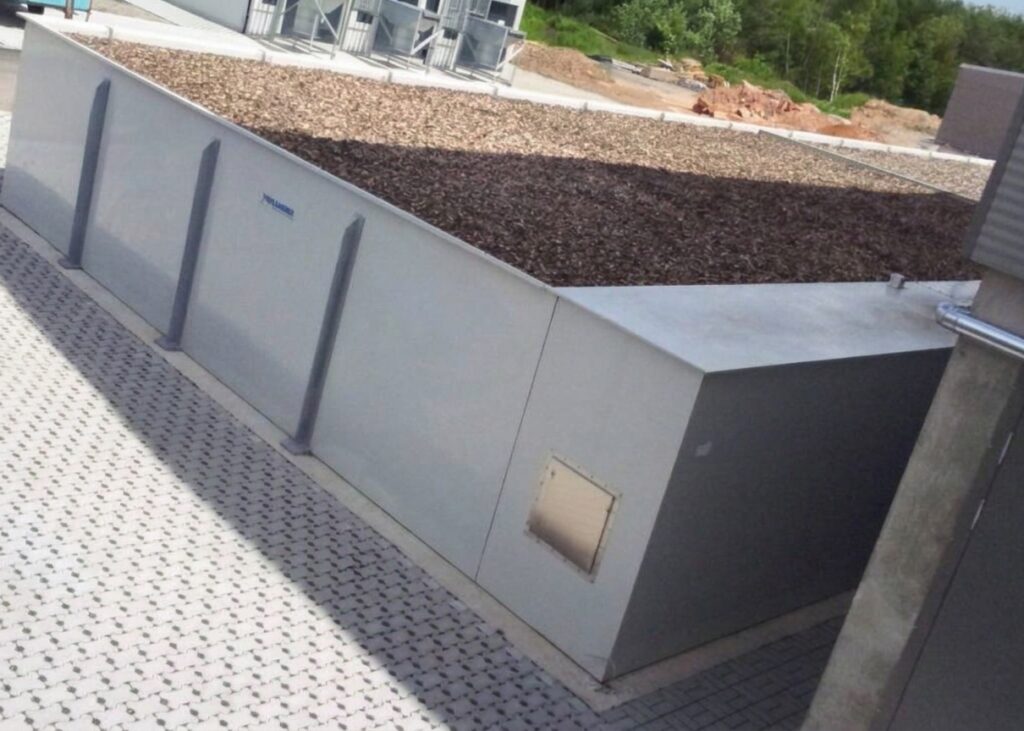
The air subsequently passes upwards through two THOLANDER B-124-HD biofilters, each providing a filtration surface of 124 m². Within the biological filter media, naturally occurring microorganisms break down odorous compounds as the air passes through the filter bed.
Finally, the treated air exits through the top of the biofilters and is discharged into the atmosphere.
Engineering and Material Design
Reliability, durability and resistance to aggressive operating conditions were key considerations in the design of the system.
The biofilter beds are supported by open, corrosion-resistant support grids, ensuring stable support while allowing optimal airflow distribution throughout the filter media.
Both the pre-scrubbers and the biofilter structures are manufactured from glass-fibre-reinforced plastic (GRP). This chemically resistant material provides long-term protection against the demanding conditions associated with industrial exhaust air treatment.
The combination of robust construction, effective air distribution and integrated pre-treatment ensures reliable operation under continuous industrial conditions.
Results and Benefits
The THOLANDER system provides the Großenlüder biogas facility with a comprehensive solution for treating odorous exhaust air from its fermentation processes.
Key benefits include:
- High treatment capacity: Designed for an exhaust air volume of 40,000 Bm³/h.
- Effective ammonia removal: Sulphuric acid pre-scrubbing reduces the ammonia load before biofiltration.
- Biological odour treatment: Two THOLANDER B-124-HD biofilters provide a combined filtration surface of 248 m².
- Uniform air distribution: Dedicated distribution channels ensure that the entire filter surface is utilised.
- Durable construction: Chemically resistant GRP components provide reliable protection against corrosive conditions.
- Continuous operation: Two simultaneously operated biofilters support the ongoing treatment requirements of the facility.
Conclusion
The biogas facility in Großenlüder demonstrates how chemical pre-treatment and biological air filtration can be combined to address the challenges of industrial odour control.
With its two THOLANDER B-124-HD biofilters, integrated ammonia pre-scrubbing and robust GRP construction, the installation provides a high-capacity solution tailored to the requirements of a large-scale biogas operation.
THOLANDER – Reliable technology for effective industrial odour control and cleaner air.