









Write down when the crew first noticed the fines, what went into the machine and what had changed since the last satisfactory run. Record the resin and lot, the shape of the scrap and the feed conditions. Ask about recent work on the knives, screen or discharge. A screen fitted that morning and a material change late in the shift belong on separate lines in the log.
Give the Next Shift a Sample It Can Use
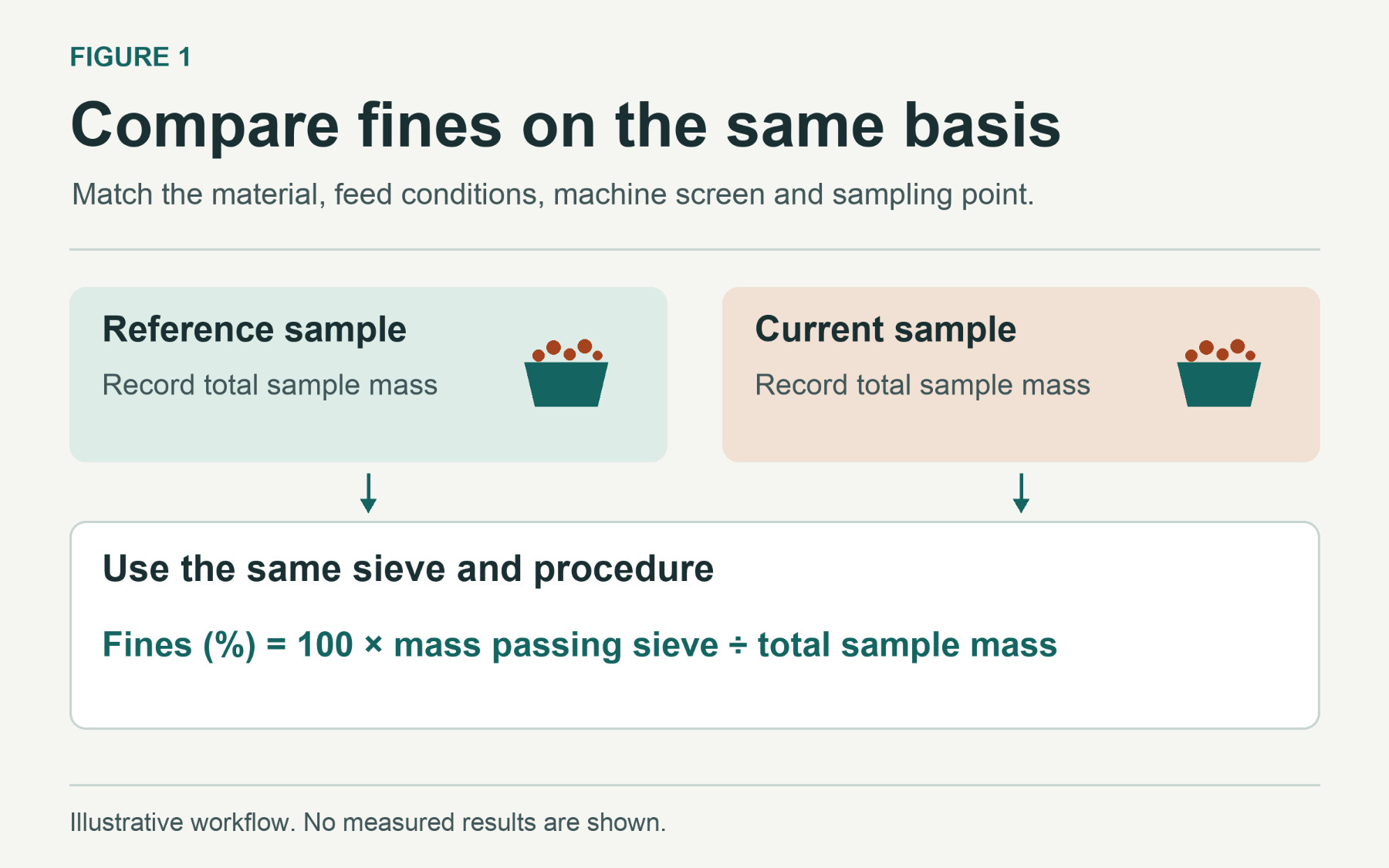
Take samples from the same discharge point over comparable intervals of steady running. Use the same collection and sieving method each time. Note the test sieve opening, then weigh the whole sample and the fraction that passes through. Figure 1 shows how to express that fraction as a percentage by mass. Record the test sieve opening separately from the opening of the screen fitted to the granulator.
A sample from the previous run of unfilled resin shows what the discharge looked like before the changeover. For a wear investigation, look for a reference from the same type of reinforced scrap, run at similar feed conditions through the same machine screen. If you have no matched reference, keep the current sample and the operating record for the next comparable run.
Let the Timing Guide the Inspection
If the fines rose after a screen change or the discharge became erratic, start with the screen and discharge path. If the rise followed knife service, pull the service record and focus first on the cutting edges and clearance. Record any changes that happened together so the next shift knows which findings still need to be separated.
Before opening the cutting chamber or accessing hazardous parts of the discharge or conveying equipment, authorized staff follow the site’s energy isolation procedure and the manufacturer’s instructions. Confirm the screen specification and check for plugged openings, wear, damage or poor seating. Where discharge conveying is fitted, check for restrictions and recent changes there as well.
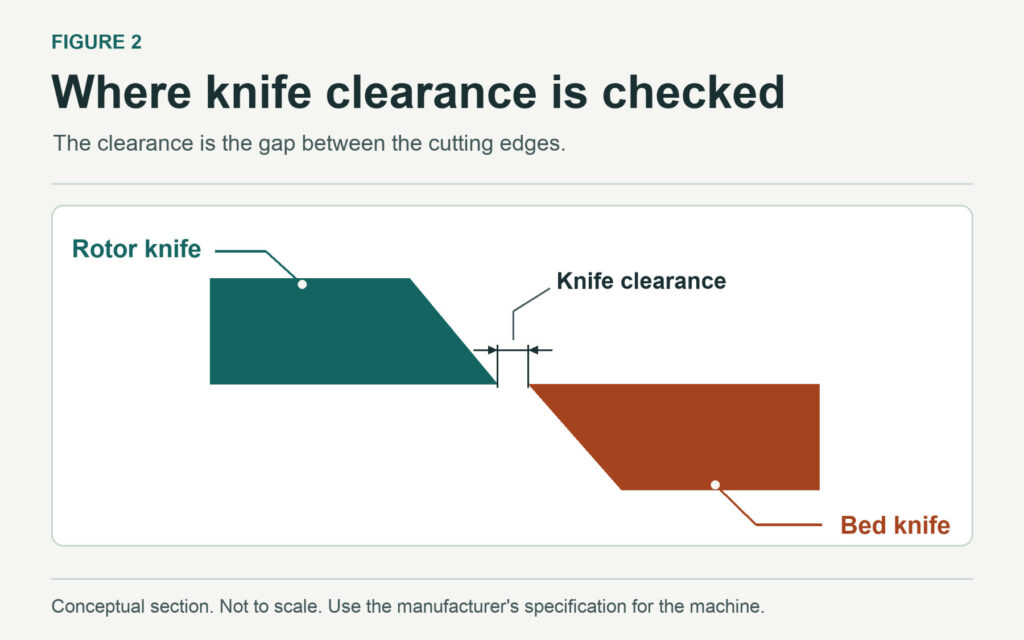
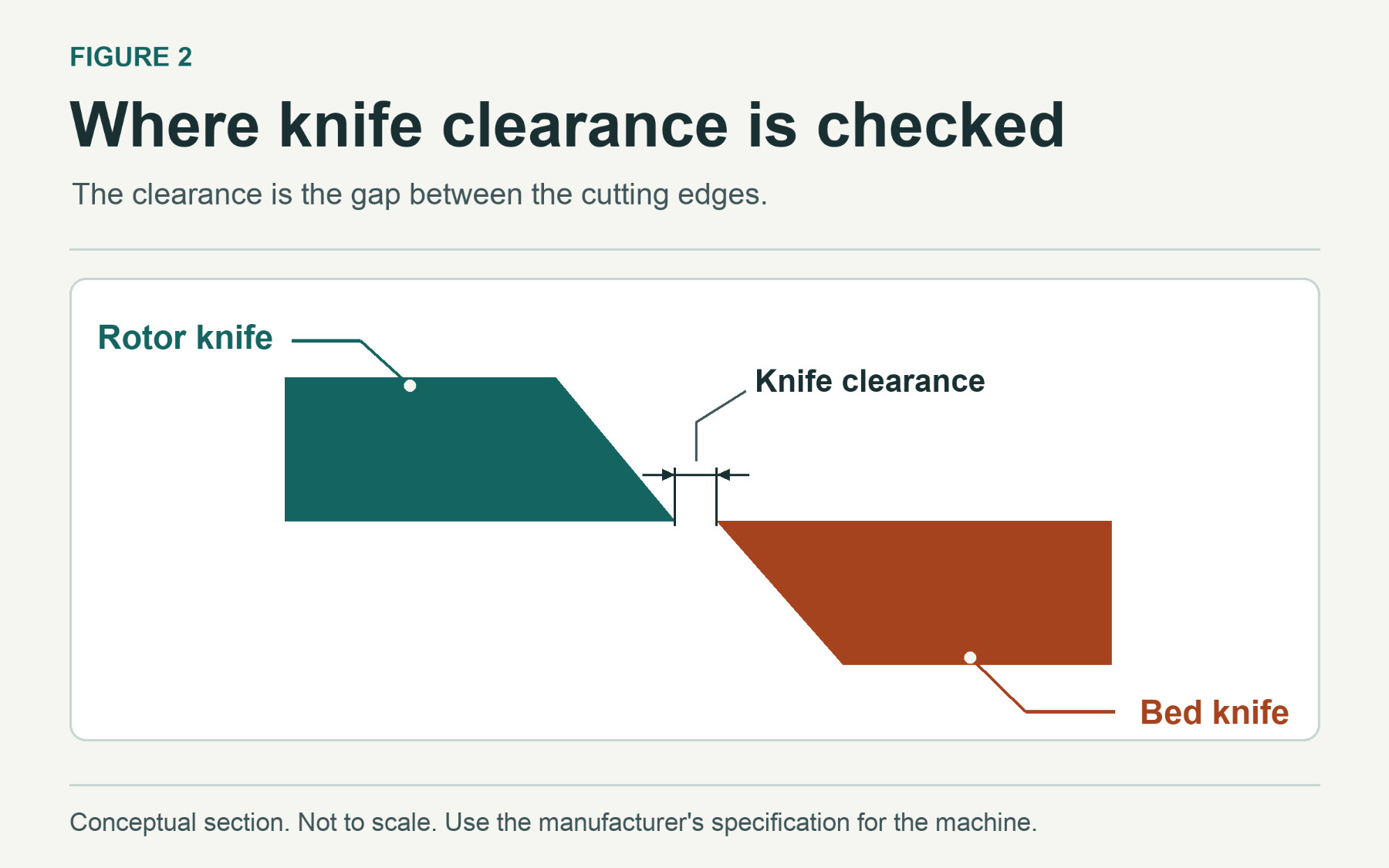
Examine the cutting edges of the rotor and bed knives against the manufacturer’s criteria. Record where you find wear or damage and compare clearance readings at the prescribed positions with the machine specification. Figure 2 shows the edges in a simplified section. Motor current or vibration trends can help direct the inspection when records come from the same machine under similar material and feed conditions.
Check the Knife Before Ordering a Spare
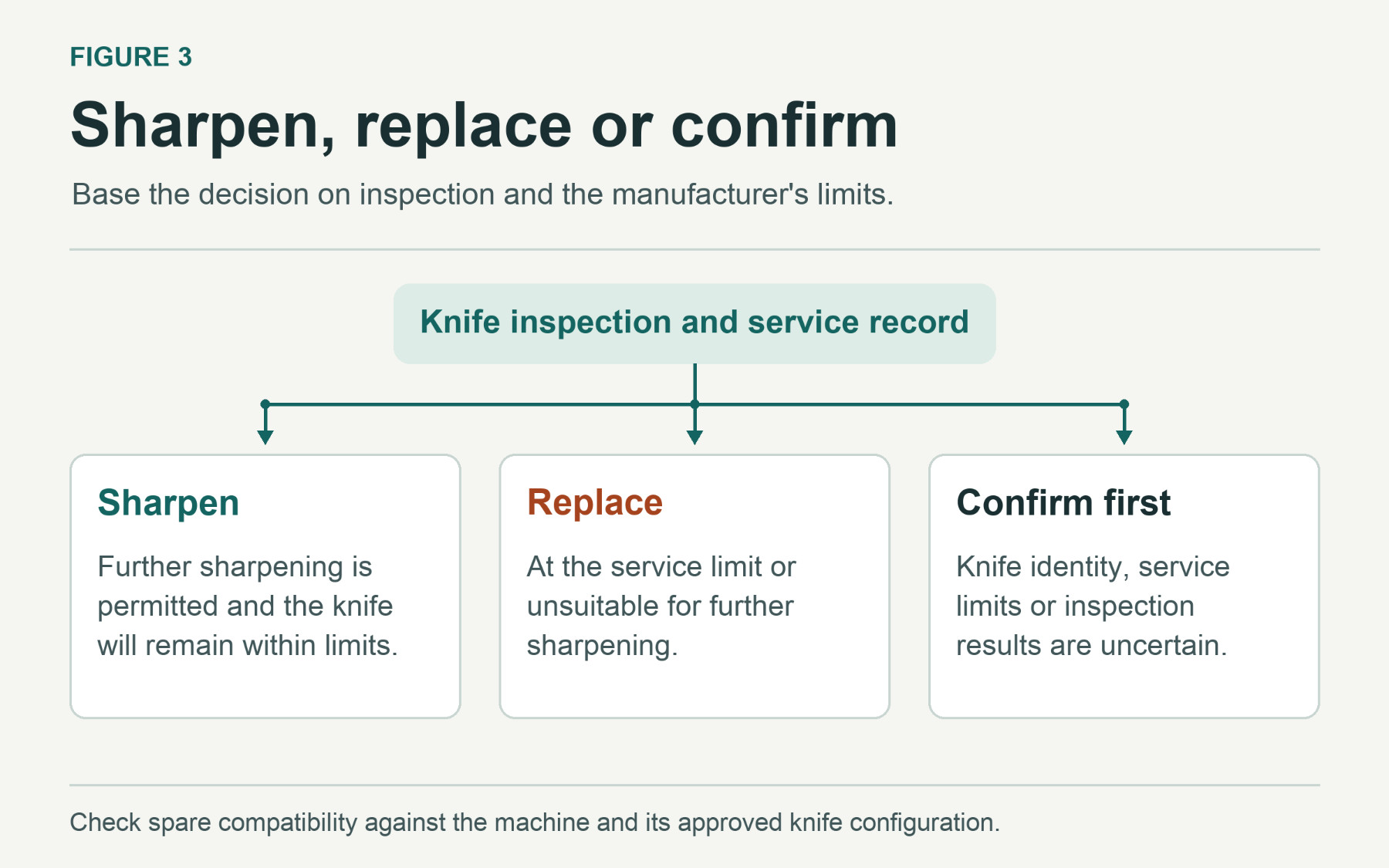
If the manufacturer allows another grind, check that the finished knife will still meet the specified limits. Replace a knife that has reached its service limit or is unsuitable for further grinding. If you cannot identify the knife or establish its limits, confirm both before authorizing the work. Figure 3 puts those decisions side by side.
For a spare, give the supplier the machine model and serial number, the knife position (rotor or bed) and the part number if known. Before ordering, confirm the approved part number, blade material grade and knife configuration for that machine. Two knives can share an outline and still differ in grade or mounting. RHONG’s knife maintenance and spares guide lists the details to check with a supplier.
Run the Comparison Again
After maintenance and the required return-to-service checks, take another sample using the original sampling point, method and test sieve. Match the material, feed conditions and screen specification, and log the work done. If the feed or screen specification has changed, log that result under the new conditions and wait for a matched run before judging the repair.
If fines fall after a single documented correction under comparable conditions, the result points to that correction. Repeat the comparison if the change is small or the samples vary. If fines stay high, hand over the latest sample result with the checks already completed and the next suspect on the list.