


Market
Aerosol Recycling
Aerosol cans present a distinct challenge during disposal and recycling due to their pressurized nature and the presence of residual propellants and chemical contents. If not handled correctly, these materials can pose serious safety risks, including explosions, fires, and the?


All articles in this market
Aerosol Recycling ? page 1 of 1
Ask the Expert
Ask a aerosol recycling expert ? free
Engineers and product specialists who answer technical questions from readers. The answer comes back to you by e-mail; when we publish it, other readers benefit too.
No field expert for this market yet ? your question still reaches our editors.
Market & Technology Focus
Aerosol Recycling, in depth in your inbox
Every Thursday edition takes one market or technology in depth. These are the editions on this market ? read them online or get the next one by e-mail.
Subscribe to our E-newsletters
Join 28,000+ engineers, plant managers and technical buyers. Free, twice a week.
What this market covers
Frequently asked about aerosol recycling
What happens to an aerosol can once it enters the recycling stream?
It's punctured and drained in a sealed system — such as the Aerosolv® Can Recycling System or NEWSTRIPE AeroVent® — which captures residual propellant and volatile organic compounds (VOCs) through carbon filtration before the empty can is baled for metal recycling.
Why can't aerosol cans just go in with regular scrap metal or household recycling?
A used aerosol can typically still holds pressurized propellant and residual product, which makes it a compressed gas container under most hazardous waste rules rather than plain scrap. Crushing or baling an unpunctured can risks a sudden gas release, fire, or explosion, so it has to be depressurized and drained in dedicated equipment before it can be handled like ordinary metal.
What materials are actually recovered from a spent aerosol can?
The steel or aluminum body is recovered as clean metal for remelting, while the plastic actuator and cap are typically separated out for plastics recycling. Any liquid or gaseous product residue drained from the can is captured separately and, depending on its chemistry, either fuel-blended, incinerated, or otherwise treated as regulated waste.
Are all aerosol cans recyclable the same way?
No — an aerosol can that is fully empty and non-pressurized can sometimes go directly into standard metal recycling, but any can with residual product or pressure needs to go through a puncture-and-drain unit first. Cans that contained highly flammable, corrosive, or otherwise hazardous formulations may require additional handling under hazardous waste regulations rather than the universal waste pathway used for most household and industrial aerosols.
What regulations govern how facilities handle and recycle aerosol cans in the US?
In the United States, most spent aerosol cans fall under the EPA's Universal Waste Rule, which allows generators and handlers to manage them with lighter administrative burden than full RCRA hazardous waste while still requiring proper storage, labeling, and disposal timelines. Cans that don't qualify for universal waste status, or that are processed on-site by puncturing, may trigger additional RCRA hazardous waste generator obligations depending on the residual contents.
What equipment do recycling facilities use to process aerosol cans at scale?
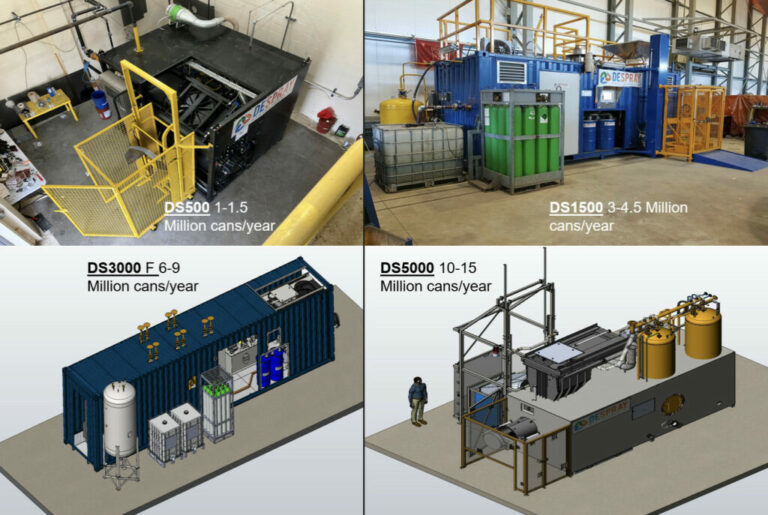
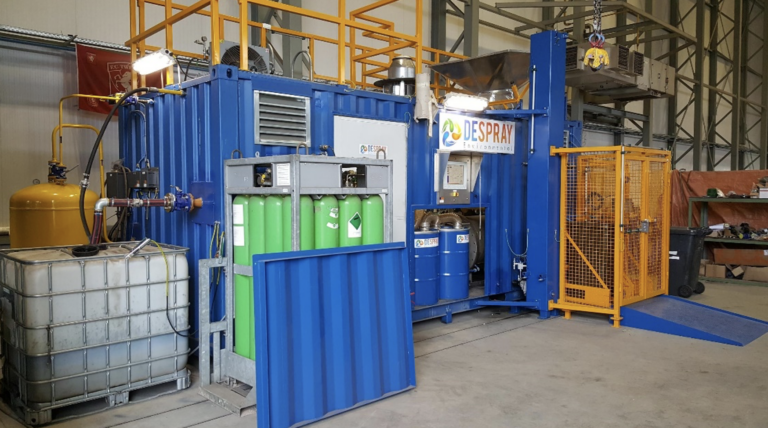
High-volume facilities use automated can-processing systems that puncture, drain, and shred large batches of cans continuously, feeding captured liquids into holding tanks and vapors through activated carbon filtration. Smaller generators, such as auto body shops or maintenance facilities, more commonly use benchtop or drum-mounted puncture units designed for lower daily volumes.
What happens to the propellant and product residue captured during aerosol can processing?
Recovered liquids are typically consolidated and sent for fuel blending, solvent recovery, or licensed hazardous waste disposal depending on their chemical makeup. Propellant gases, often hydrocarbons like propane or butane, are usually routed through carbon filtration or vapor recovery systems rather than vented directly to the atmosphere.
What are the environmental and cost benefits of recycling aerosol cans instead of landfilling them?
Draining and recycling aerosol cans keeps residual VOCs, propellants, and product chemicals out of landfills and open waste streams, reducing fire risk and soil or groundwater contamination. Recovering the steel or aluminum also feeds clean scrap back into metal markets, which is generally cheaper for generators than paying hazardous waste disposal rates for whole, unprocessed cans.
Can aerosol cans that contained hazardous or flammable products still be recycled?
Yes, in most cases — puncture-and-drain systems are specifically designed to handle flammable propellants and hazardous residues by capturing them in a closed, ventilated environment rather than releasing them during handling. The captured hazardous liquid is then diverted to appropriate treatment or disposal rather than the metal recycling stream, so the hazard is managed rather than avoided.
What trends are shaping the aerosol can recycling market right now?
Growth in personal care, food service, and industrial aerosol use is pushing more generators, from retailers to auto shops, to adopt on-site puncture units that let them reclassify spent cans as recyclable scrap rather than hazardous waste. There's also increasing attention to capturing and reusing recovered propellant and solvent streams rather than sending them straight to disposal, as facilities look to offset processing costs.