




Market
Solar Panel Recycling
Solar panel (PV module) recycling recovers glass, aluminium, silicon and silver from end-of-life photovoltaic panels — a fast-growing waste stream as the first wave of installed capacity reaches end of life.
All articles in this market
Solar Panel Recycling — page 1 of 1



Ask the Expert
Ask a solar panel recycling expert — free
Engineers and product specialists who answer technical questions from readers. The answer comes back to you by e-mail; when we publish it, other readers benefit too.
No field expert for this market yet — your question still reaches our editors.
Subscribe to our E-newsletters
Recycling technology worth your time: new equipment, plant case studies and the numbers behind them. Free, twice a week.
Questions and answers
Frequently asked about solar panel recycling
What materials are recovered from a recycled solar panel?
A standard silicon PV module is roughly 76% glass, 10% aluminium framing and 5% silicon, plus smaller shares of copper, silver and polymer encapsulant (EVA). Recycling recovers the glass and aluminium first — the highest-value, easiest fractions — with silicon and silver requiring more specialised delamination and thermal or chemical processing.
Why is solar panel recycling becoming more important now?
Panels installed during the early-2010s solar boom are approaching their 25-30 year design life, and damaged or replaced panels add further volume every year. Several countries are also introducing producer-responsibility rules for PV waste, pushing manufacturers and installers toward qualified recyclers.
How is a solar panel recycled?
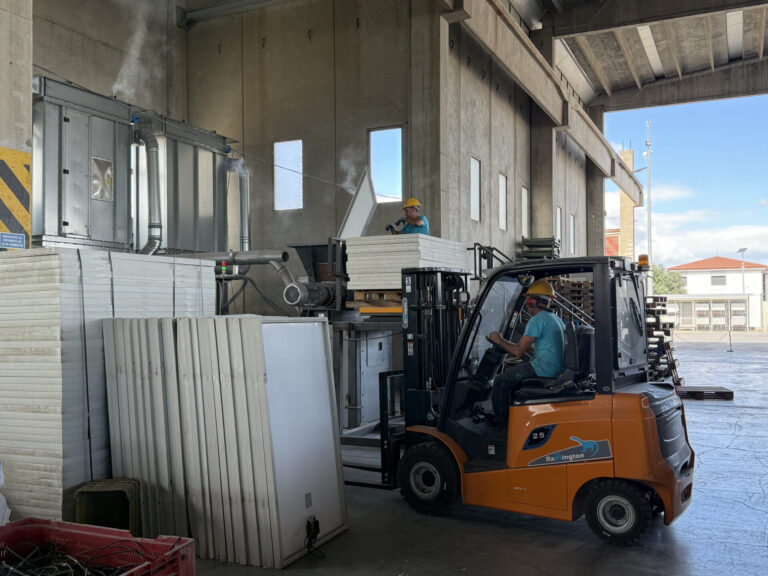
Most lines start with frame and junction-box removal, followed by delamination (mechanical, thermal or chemical) to separate the glass from the encapsulated cell layer, then further processing to recover the silicon, silver and copper that remain.
How does solar panel recycling differ from general e-waste recycling?
Standard e-waste shredders are built for circuit boards and casings, not for laminated glass-and-polymer panels — running PV modules through one mostly just breaks the glass without recovering the embedded silicon and silver. Dedicated delamination equipment is needed to recover those higher-value fractions.
What equipment is used to recycle solar panels at industrial scale?
A typical line starts with frame and junction-box removal, either manual or automated, followed by glass separation using delamination, hot-knife or blade technology, or mechanical crushing. The remaining laminate is shredded or milled and then run through sieving, air classification, eddy-current and optical sorting to split glass, polymer, silicon and metal fractions. Thermal or chemical stages are added where high-purity silicon and silver recovery is the goal.
How is the glass separated from a solar panel?
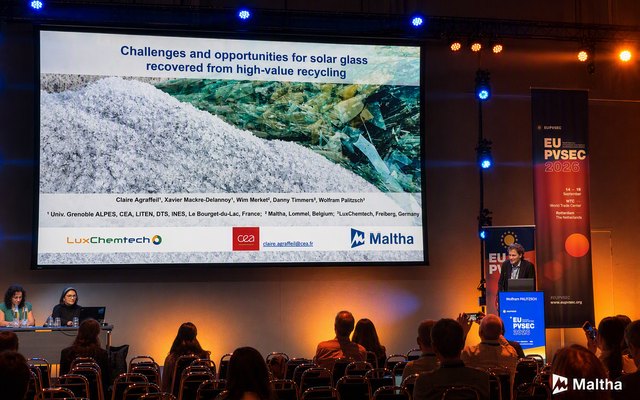
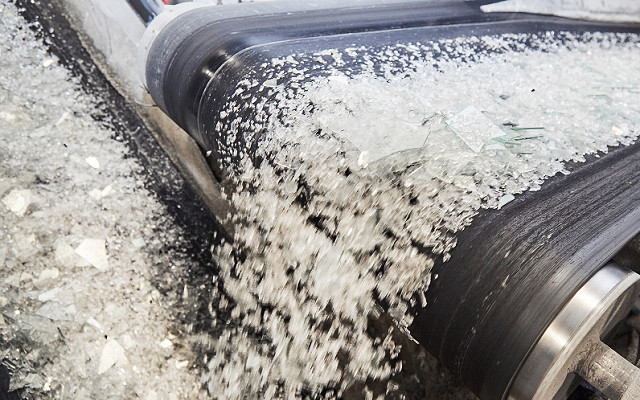
Glass makes up around three quarters of a module's weight and sits bonded to the cells by an EVA encapsulant. Hot-knife systems slice the glass away from the laminate in one piece, producing a clean cullet suitable for flat-glass or container-glass use. Mechanical routes crush the whole module and then separate glass by sieving and sorting, which is faster but yields a lower-grade glass fraction often used in insulation or foam glass.
What regulations apply to end-of-life solar panels?
In the EU, photovoltaic modules fall under the WEEE Directive, which makes producers responsible for financing collection and recycling and sets recovery and recycling targets. Several countries operate dedicated PV take-back schemes. In the United States regulation is state-led, with states such as Washington and California classifying or managing panels under specific rules, while other regions still treat them as general or hazardous waste depending on composition.
Is solar panel recycling economically viable?
Glass and aluminium are easy to recover but low in value, while the silver and high-purity silicon that carry most of the material value are present in small quantities and locked inside the laminate. The economics therefore depend on recovering those high-value fractions, on processing volumes and on gate fees or producer-responsibility funding. Automated, high-throughput lines and improved silver recovery are steadily closing the gap with disposal costs.
How large will the solar panel waste stream become?
Installed capacity has grown exponentially since the early 2010s, and with module lifetimes of 25 to 30 years the first large wave of decommissioned panels is arriving now. Early replacement due to repowering, damage and warranty claims adds to the volume. Industry estimates point to millions of tonnes of PV waste per year within the next two decades, making it one of the fastest-growing material streams for the recycling industry.
What trends and technologies are shaping solar panel recycling?
The focus is shifting from downcycling crushed modules to high-value recovery: automated delamination, silicon purification for reuse in new wafers or batteries, silver recovery through hydrometallurgy, and reuse or refurbishment of panels that still perform. Design-for-recycling, digital product passports and producer-responsibility schemes are pushing manufacturers to make modules easier to dismantle. Specialised recyclers are now building the first dedicated PV plants in Europe, Asia and North America.
How do I find an equipment manufacturer for solar panel recycling?
Use the Manufacturers Directory A–Z or the Equipment Guide. Partner profiles carry direct contact details; other listings link to the company website.
Can I ask a technical question before I buy?
Yes. Ask the Expert puts your question to a field expert active in Solar Panel Recycling. The answer comes back to you by e-mail; when we publish it, other readers benefit too.