



From waste management contractor to energy supplier
High biogas yields from a fully automated system
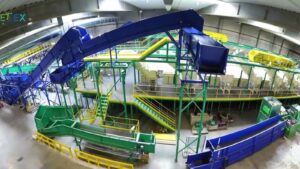
Nieheim is the first site to use the new digestion process of BEKON, based on the continuous plug-flow principle. “The plant is in normal operation,” explains Dr Rolf Liebeneiner, Managing Director of BEKON. “Its performance has exceeded our expectations.” The 56-metre-long digester, with its seven agitators, proved stable in operation even at 115 % capacity during peak-load testing. The plant is designed to process 56,000 tonnes of biowaste per year. The agitators were also subjected to peak-load tests with a dry matter content of 31 % in the digestate discharge. According to Liebeneiner, they were still “a long way” from their performance limit. He was also pleased with the high biogas production: “Over the four months of normal operation to date, we have seen an impressive biogas yield of 126 Nm³/t, particularly for biowaste from a rural area.” This is equivalent to 110 % of the biogas potential of the delivered biowaste, as determined by regular laboratory sampling.
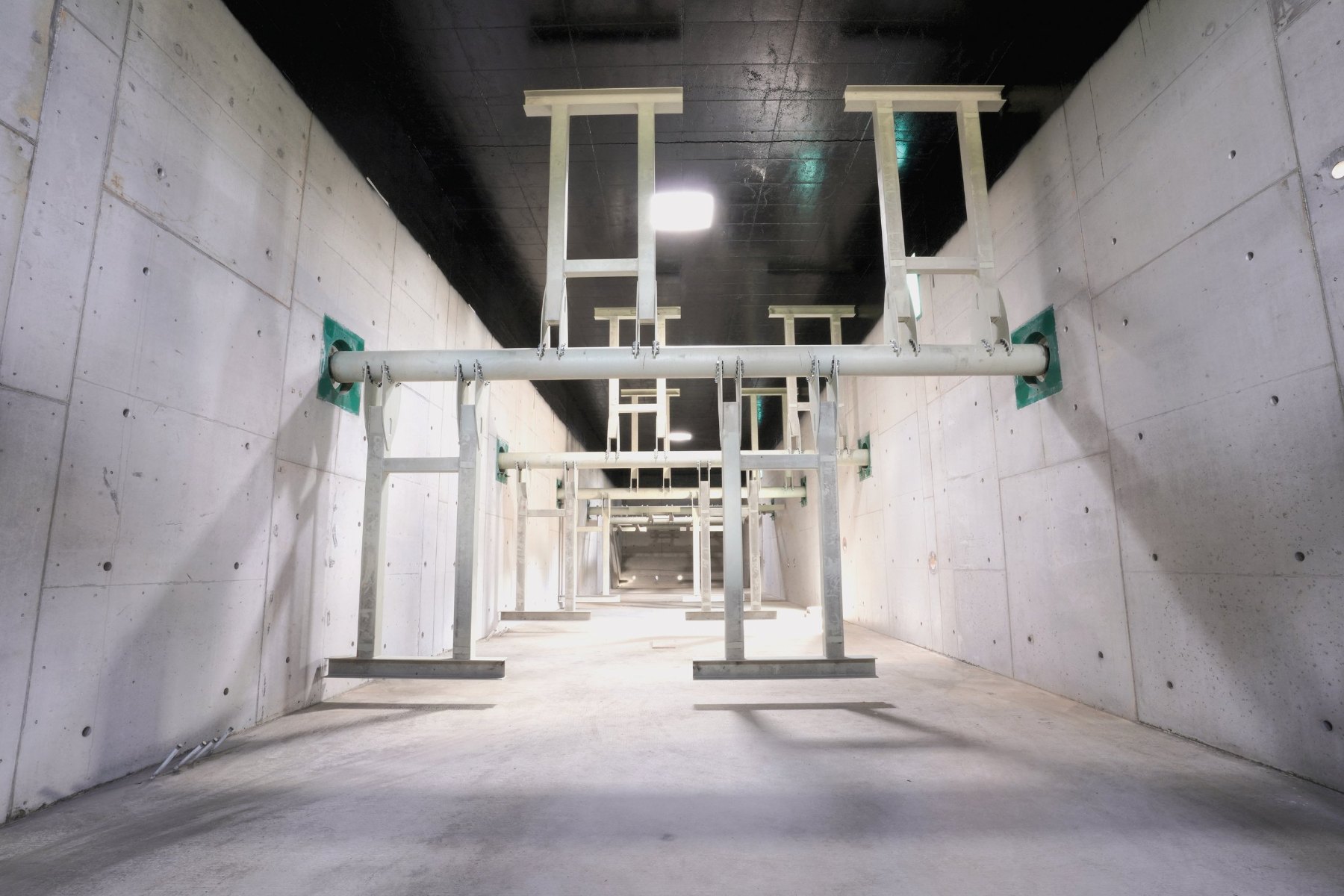
BEKON is one of the world’s leading experts in the anaerobic digestion of waste using dry fermentation. Until now, the company has been known for its discontinuous fermentation in digester tunnels as batch-process. The new process is designed not only to significantly increase biogas yield, but also to enable fully automated operations. From the moment material is fed into the pre-shredder, the entire process – including feeding material into the digester and composting – is fully automated.
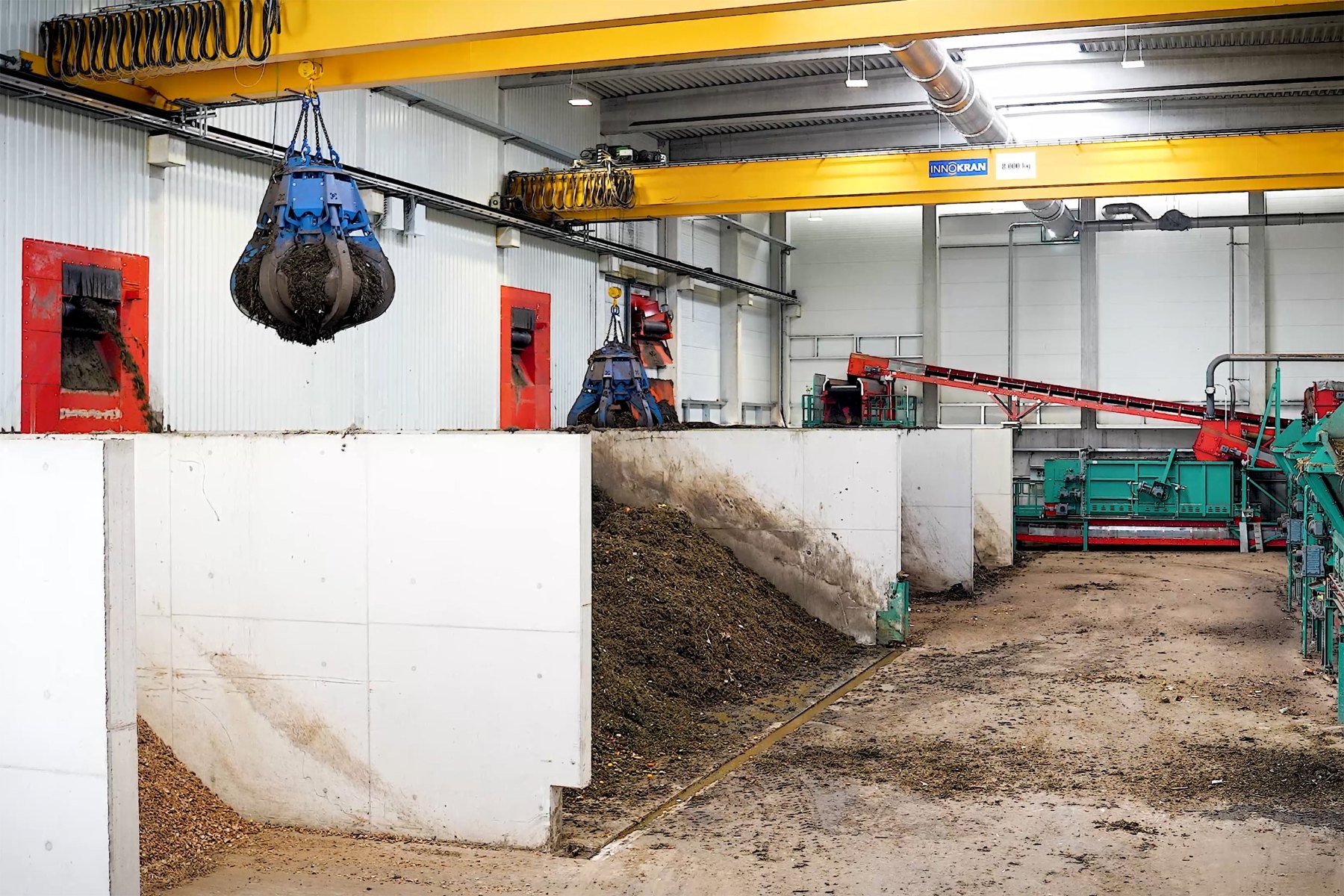
“The combination of a logistics hall with a fully automated crane system and a continuous digester meets the new requirements for biogas production on the largest possible scale,” Liebeneiner explains. “In the past, many composting plants wanted to cover only their own energy requirements by generating electricity. Today, biogas is increasingly being upgraded to natural-gas-quality biomethane for the public grid. The more biomethane produced, the more worthwhile the investment in upgrading and infrastructure becomes.”
A one-of-a-kind integrated concept
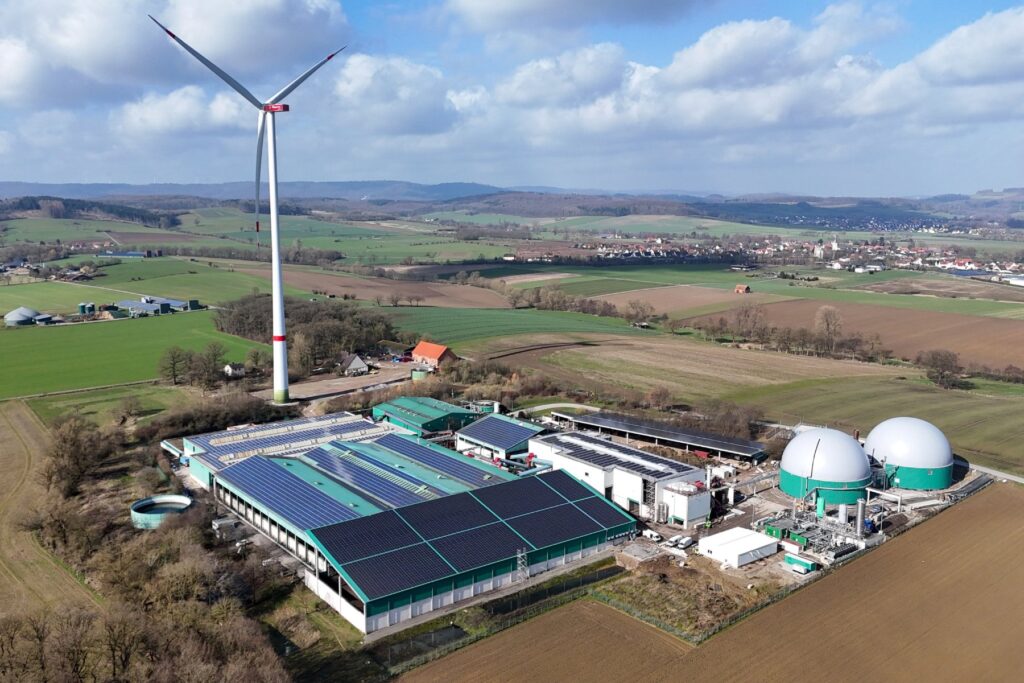
Nieheim now also produces biomethane for the public grid. To do so, a so far unique concept has been developed: the photovoltaic systems have been renewed and expanded across the entire site. Whereas the maximum output previously achievable was 0.794 MWp, the plant can now reach peak output of 3.4 MWp. The plant has also been equipped with its own wind turbine. With a hub height of 166 metres and a total diameter of 160 metres, it generates up to 5.56 MWh. The energy mix makes the plant almost self-sufficient. Biogas is preferably upgraded to biomethane when sufficient renewable electricity generated on site is available. If it is not, the biogas is stored temporarily. A planned battery storage system will complete the energy concept. Eggersmann has developed an AI-based energy management system specifically to ensure efficient operation.
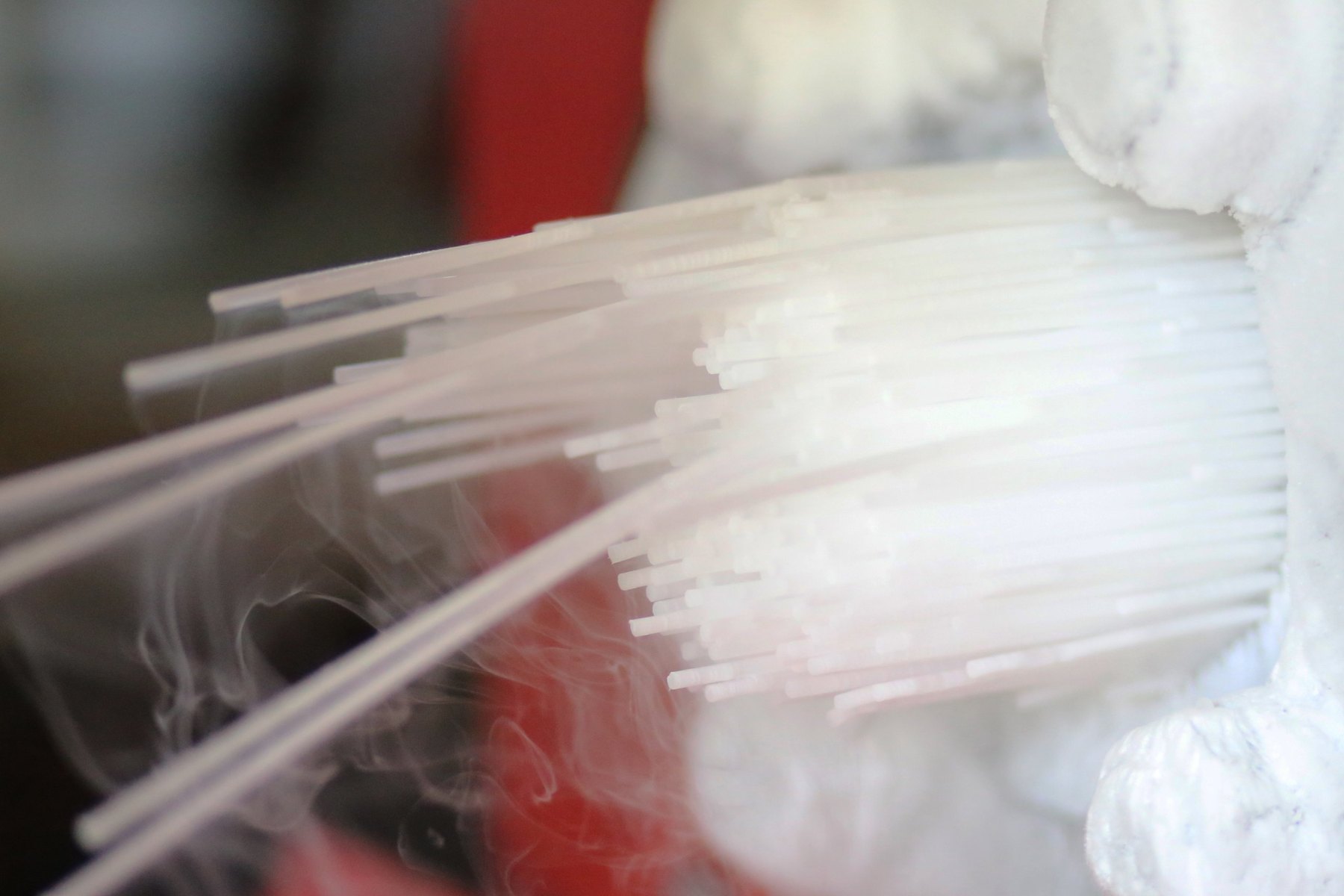
In addition, the biogenic CO₂ separated during upgrading is converted into high-purity dry ice on site. It can be used in a wide range of applications in industry and logistics, from cooling temperature-sensitive products to serving as a blasting medium for surface cleaning.
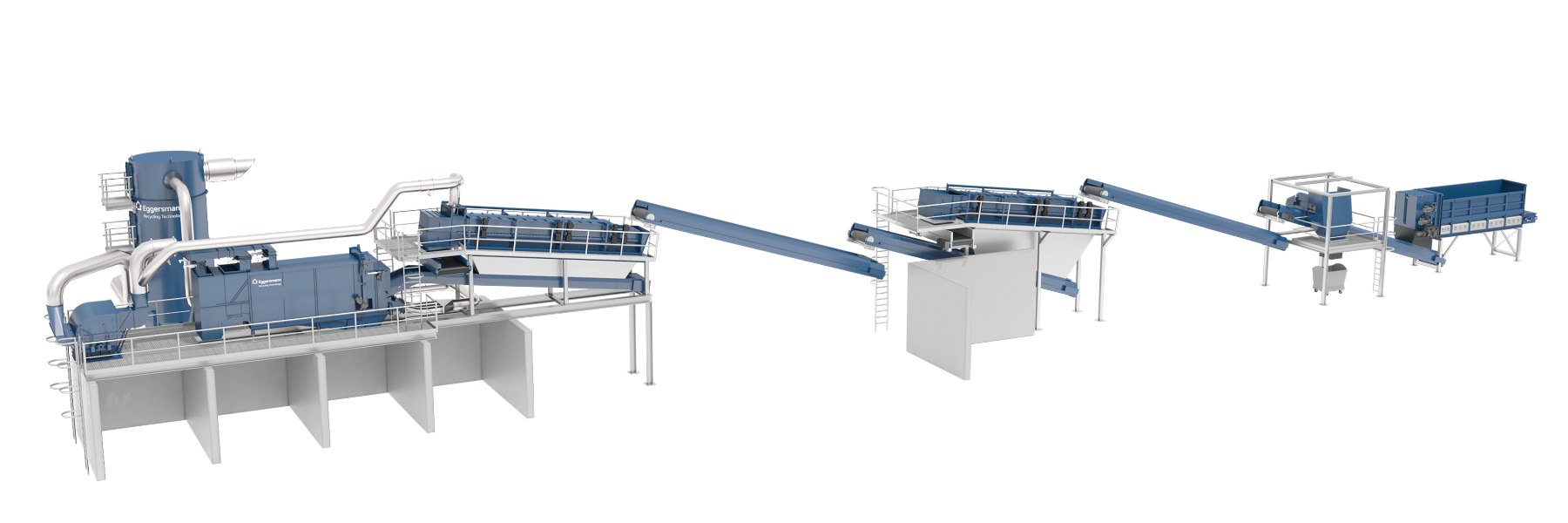
The digestate is separated into solid and liquid fractions. The solid fraction is processed into quality compost in composting tunnels, using intensive rotting followed by fine treatment. The finished compost is certified to RAL quality standards. The liquid digestate is used as a liquid fertiliser in agriculture, returning the biowaste to the natural cycle. “Nieheim’s concept is aimed at producing a renewable substitute for natural gas, which, under ideal conditions, is generated in a closed-loop system using renewable energy alone. At the same time, the economic potential has been developed to the greatest possible extent.” For example, woody material – which cannot be digested and is difficult to compost—is separated in advance and used to heat the digester in a biomass heating system.
An energy plant as a »showroom«
The energy plant in Nieheim is a flagship project for the Eggersmann Group. Alongside BEKON the machinery and plant manufacturers, the plant operator, the construction company, the precast concrete plant and even the responsible electrical engineering firm are all part of the Eggersmann Group. Eggersmann Anlagenbau GmbH therefore also acted as the general contractor.
Liebeneiner emphasises: “We are not only a full-service provider of recycling solutions, from individual mobile machines to entire plants; through KOMPOTEC Kompostierungsanlagen GmbH, we are also a regional plant operator in our own right, with more than 30 years of experience. With Nieheim, we want to take the next step ourselves as a waste management contractor. The future of our industry lies in renewable energy generation.”
The plant is therefore also deliberately intended to serve as a kind of »showroom« or »model site«. “There is considerable interest from industry professionals, so we regularly take visitors around the plant. This unique concept is not meant to remain unique – it is intended to become the new standard,” Liebeneiner concludes.
Further information
Would you like to find out more about the waste digestion process used? Visit our process page here: Continuous Digestion
About BEKON
BEKON GmbH is part of the internationally active Eggersmann Group, whose business divisions are »building«, »recycling« and »composting«. Within the group, BEKON specialises in producing biogas through anaerobic dry fermentation and offers both discontinuous and continuous processes. Founded in 1992, the company now has more than 50 references worldwide. The Eggersmann Group owns and operates three biogas and composting plants and also operates two others on behalf of public-sector organisations.
About Eggersmann Anlagenbau
Eggersmann Anlagenbau GmbH is a leader in the planning, construction and commissioning of waste treatment plants around the world. Machinery developed and manufactured in-house stands for innovation and high efficiency. By combining mechanical sorting with the biological processes of digestion, composting and drying, as well as digital plant management solutions, Eggersmann offers a complete solution for the waste management sector. The company is part of the Eggersmann Group, which owns and operates plants of its own. Through Eggersmann GmbH and BRT HARTNER, Eggersmann also manufactures and sells mobile and stationary recycling machinery.
About KOMPOTEC
KOMPOTEC Kompostieranlagen GmbH is a subsidiary of the internationally active Eggersmann Gruppe GmbH & Co. KG. In 1992, the construction company Fechtelkord & Eggersmann GmbH from Marienfeld built its first composting plant in Gütersloh and founded KOMPOTEC in the same year to operate it. The subsequent division into the ‘building’ and ‘composting’ business areas marked the emergence of the Eggersmann Group, which has since added an international recycling division.
Today, KOMPOTEC comprises three composting plants with biogas production (Enger, Gütersloh and Nieheim). Further composting and biogas plants in Walsrode and Dessau are operated through public-private partnerships. Since 1999, the company BIOTERRA has been responsible for sales of compost products from all sites. The Eggersmann Group has more than 1,300 employees and is led by Karlgünter Eggersmann and Thomas Hein.
About the Eggersmann Group
The Eggersmann Group GmbH & Co. KG traces its roots back to the construction company Fechtelkord & Eggersmann GmbH, founded in 1951 in Marienfeld (East Westphalia) and is therefore celebrating its 75th anniversary in 2026. Today, the Group operates in the business areas of »construction«, »recycling« and »composting«. Its construction division comprises Fechtelkord & Eggersmann GmbH, Walther Reichert (GmbH & Co.) KG and BIG Baugesellschaft für Ingenieurbau Glowienka mbH. The BETONT GmbH precast concrete plant also produces precast concrete components for modular construction. In-house engineers and architects provide planning services, while project management enables long-term collaboration with customers.
Eggersmann also offers a comprehensive range of services in the recycling sector. This extends from a broad portfolio of mobile and stationary recycling machinery (Eggersmann GmbH and BRT HARTNER GmbH) to the delivery of complete recycling plants (Eggersmann Anlagenbau Concept GmbH). The plant engineering division covers all key aspects, from initial designs through to the digital optimisation of processes at the completed facility. Eggersmann is also one of the leading providers in the field of biogas production from organic waste (BEKON GmbH). Through KOMPOTEC Kompostierungsanlagen GmbH, the Group operates its own composting and biogas plants. It is therefore also an active energy producer. Compost is marketed by BIOTERRA GmbH.
The international Group’s 1,300 employees are spread across 16 sites in Germany, a central production facility in Poland, four further production facilities in Germany and one site in Spain. Additional companies and brands — for example, those producing an abrasive blasting additive (PantaTec GmbH) or constructing steel tanks (farmatic) — round out the global Group’s broad portfolio. It is particularly through collaboration across its business areas that the Eggersmann Group achieves exceptional depth of value creation. The two managing directors of the Eggersmann Group are Karlgünter Eggersmann and Thomas Hein.