The Origin of Success: From a Bold Pioneer Step to Industrial Reality
When OSR introduced Cleansort’s laser-based sorting technology in 2022, it was a true pioneering step. At the time, the goal was not to purchase a pre-configured standard solution, but rather to transition a promising technology into industrial practice under harsh, real-world recycling conditions.
During a multi-year development phase funded by the Deutsche Bundesstiftung Umwelt (DBU), both companies combined their core competencies: Cleansort contributed optical spectroscopy and system physics, while OSR provided operational practice, material stream expertise, and process knowledge from daily recycling operations.
“We bet early on a technology that hardly anyone had tested in industrial shift operations at that time. This trust in Cleansort was a risk, but in retrospect, it was the right decision: the plant runs absolutely reliably today and has given us a clear lead as a pioneer in laser-based sorting.”
— Oliver Scholz, Managing Director of OSR GmbH & Co. KG
Patented Process: Pre-Cleaning Meets LIBS Analysis
Conventional optical color cameras, X-ray systems, or density-based methods reach their physical limits when separating chemically closely related aluminum alloys (such as 5000 and 6000 series wrought alloys). Furthermore, surface contaminants, paints, and lubricants frequently distort the results of superficial measurement methods.
The two-stage process patented by Cleansort overcomes this process-related limitation directly within the material stream:
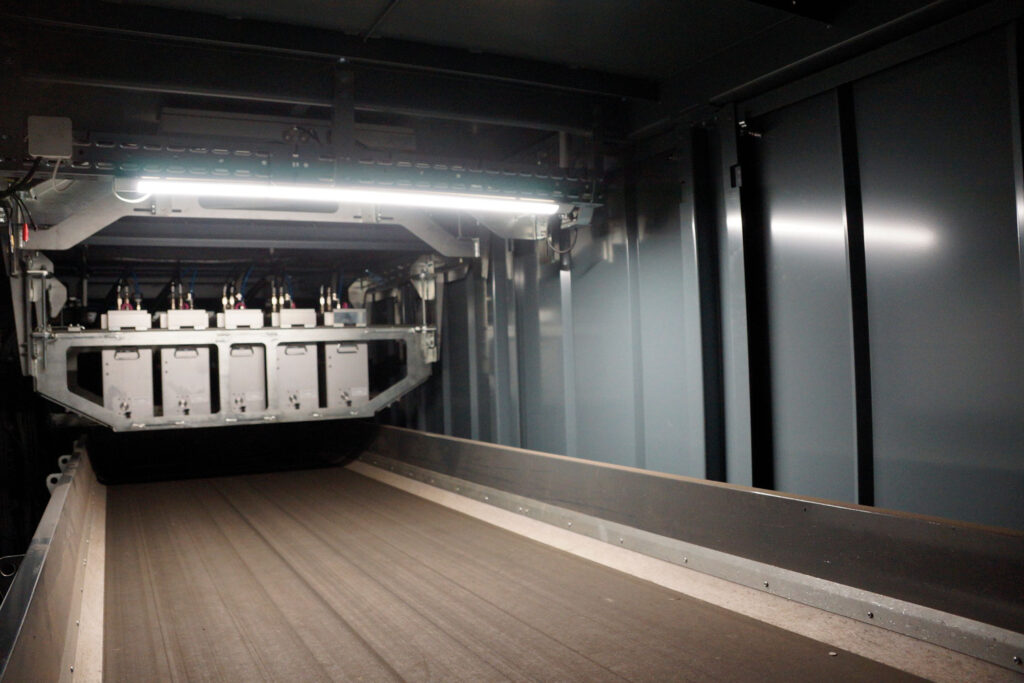
- Pre-ablation: By focusing the laser onto the material surface, it is reliably cleaned in the first step.
- LIBS (Laser-Induced Breakdown Spectroscopy): Through vaporization and plasma emission, the base material is analyzed with high precision in just a few thousandths of a second, completely independently of coatings or impurities.
- Precise Ejection: Based on high-resolution spectra, the exact chemical composition is decoded, and the material is accurately separated into its respective fraction.
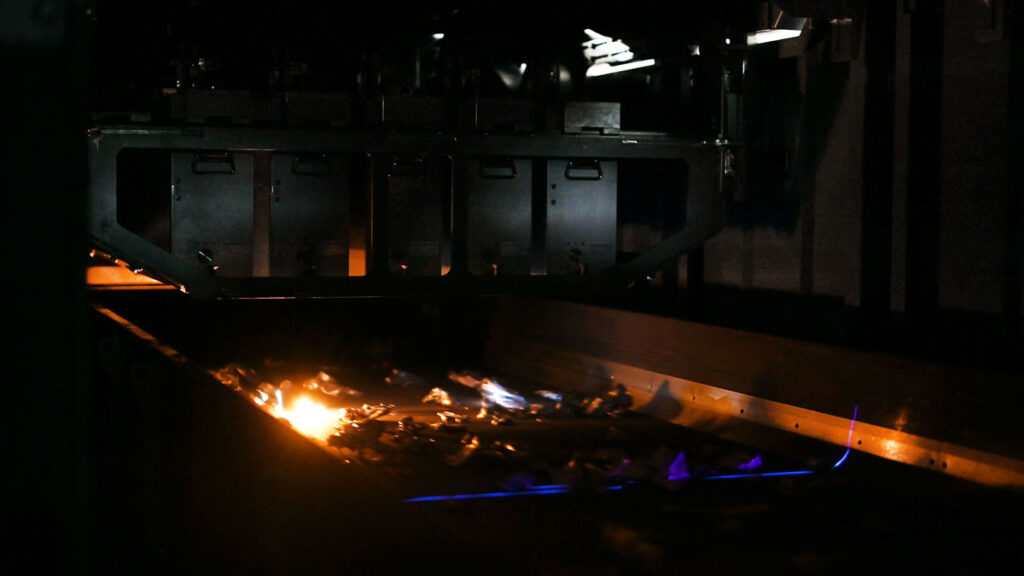
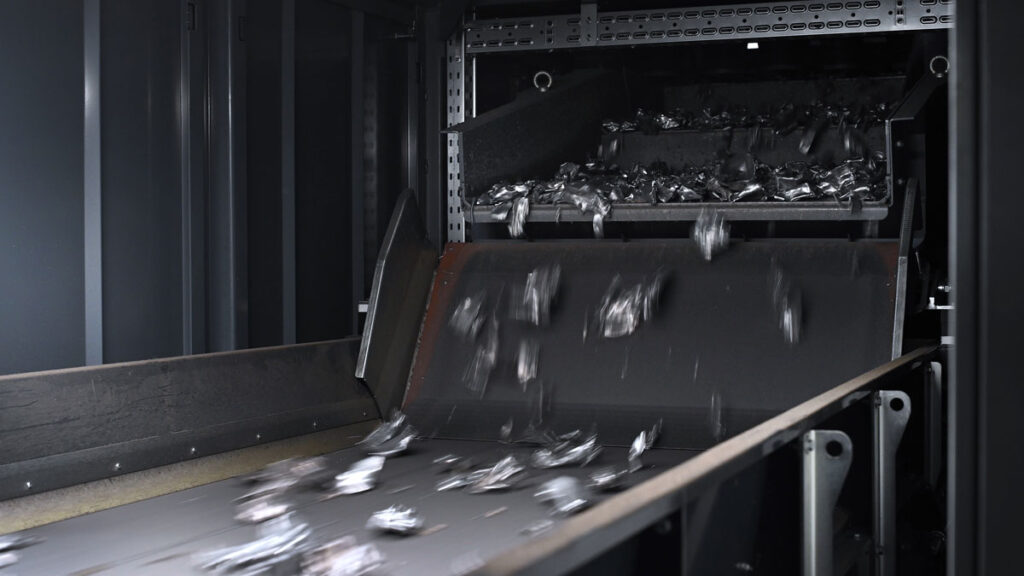
The quantitative analysis method goes far beyond simply identifying an alloy. The system determines the exact chemical composition of each individual material piece and, as a result, continuously tracks the average composition of the entire target fraction. On this basis, the sorting thresholds can be dynamically adjusted, and existing quality tolerances can be specifically exploited, enabling higher throughput without falling below the required quality of the target fraction. Through this combination, the system processes even heavily contaminated post-consumer automotive scrap precisely and with high reproducibility.
From Pioneering Testing to Established Series Production
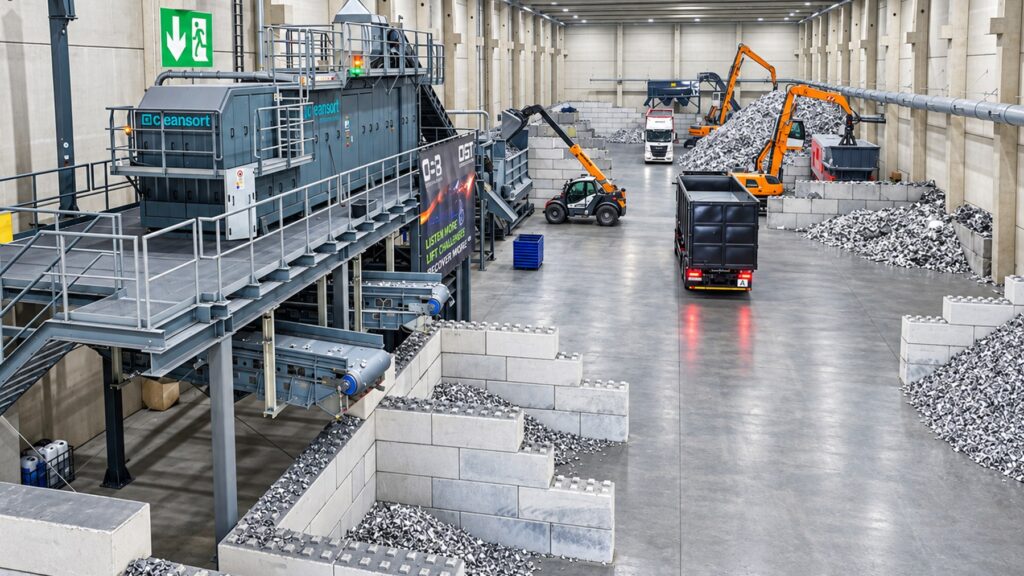
What began at the level of prototype development and field testing has long since transitioned into industrial scaling at OSR. The company has developed unique competence in parameter configuration, batch control, and quality assurance.
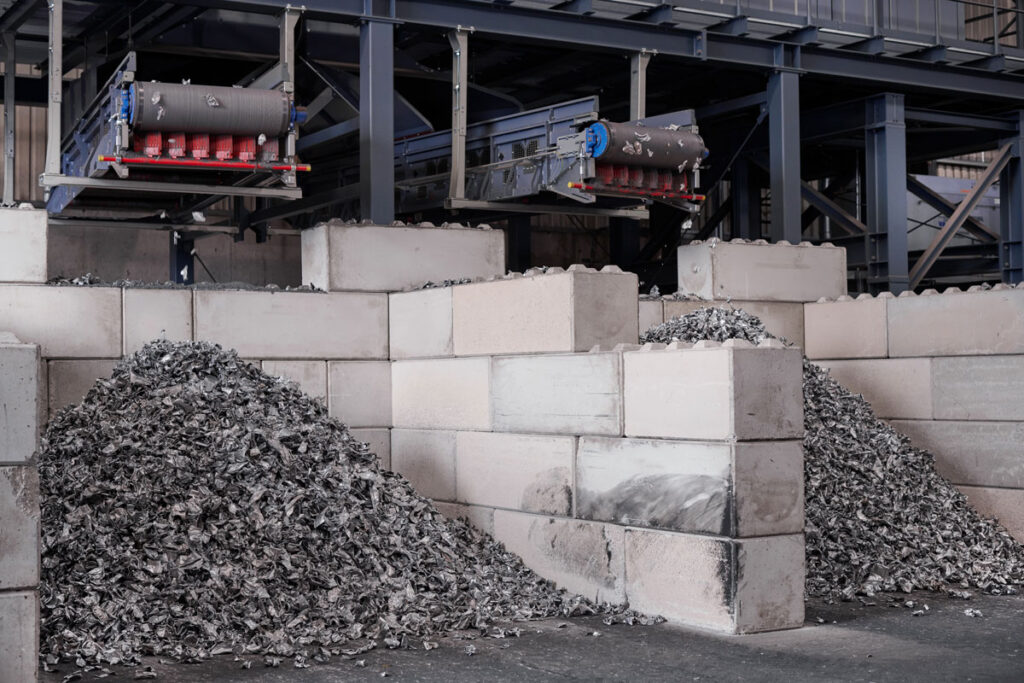
Since launching a large-scale commercial project for sorting automotive scrap, OSR has produced 20,000 tons of high-purity 5XXX and 6XXX fractions for the production of semi-finished aluminum products.
Industrial Performance at the Highest Level
- Industrial throughput performance: The LIBS plant validated at OSR reliably masters the demanding material streams of daily recycling operations. In intensive continuous operation, OSR impressively demonstrates that maximum sorting precision and high-volume throughput rates go hand in hand on an industrial scale.
- High-frequency analysis speed: The high pulse frequency of the laser enables seamless real-time analysis within the material stream. The system processes millions of measurement points per shift, guaranteeing reliable sorting decisions without slowing down the material flow.
- Reproducible quality: Even with heavily fluctuating input batches and varying grain sizes, OSR achieves exactly those target purities required for direct reuse in smelting operations, while maintaining a consistently high yield rate.
“After four years of continuous industrial use, we know exactly what matters. We not only know what LIBS sorting can achieve technically, but we also know the crucial levers in everyday operation to consistently deliver the highest quality.”
— Sebastian Alvensleben, Managing Director of OSR Metallrecycling GmbH & Co. KG
Maximum Plant Availability in Daily Practice
For a recycling operation, success depends not only on sorting precision, but above all on the technical availability of the plant. To ensure reliable continuous operation, Cleansort and OSR rely on a closely coordinated maintenance and service model.
Within the defined operating period, the system impresses with maximum technical availability. Aside from scheduled maintenance windows, the system runs with maximum process reliability in demanding everyday industrial environments. A decisive factor for this is efficient remote support. Thanks to the digital connection of the HMI dashboard, a majority of diagnostic cases can be analyzed and resolved directly from a distance. This ensures fast response times and prevents cost-intensive downtimes.
In addition, the dashboard provides continuous real-time data on purity levels and material streams. This comprehensive data transparency enables both preventive maintenance and the rapid adjustment of sorting parameters directly during ongoing operation.
“Our plant delivers the best results when the surrounding infrastructure is right. OSR brings outstanding operational experience here. The team knows precisely how to prepare the material optimally and adjust the plant to get the maximum out of our technology during continuous operation.”
— Philipp Soest, Managing Director of Cleansort GmbH
Decarbonization That Holds Up in Practice
Alloy-pure separation prevents traditional downcycling and keeps valuable materials in a true closed-loop system. An external evaluation demonstrates just how massive this leverage is.
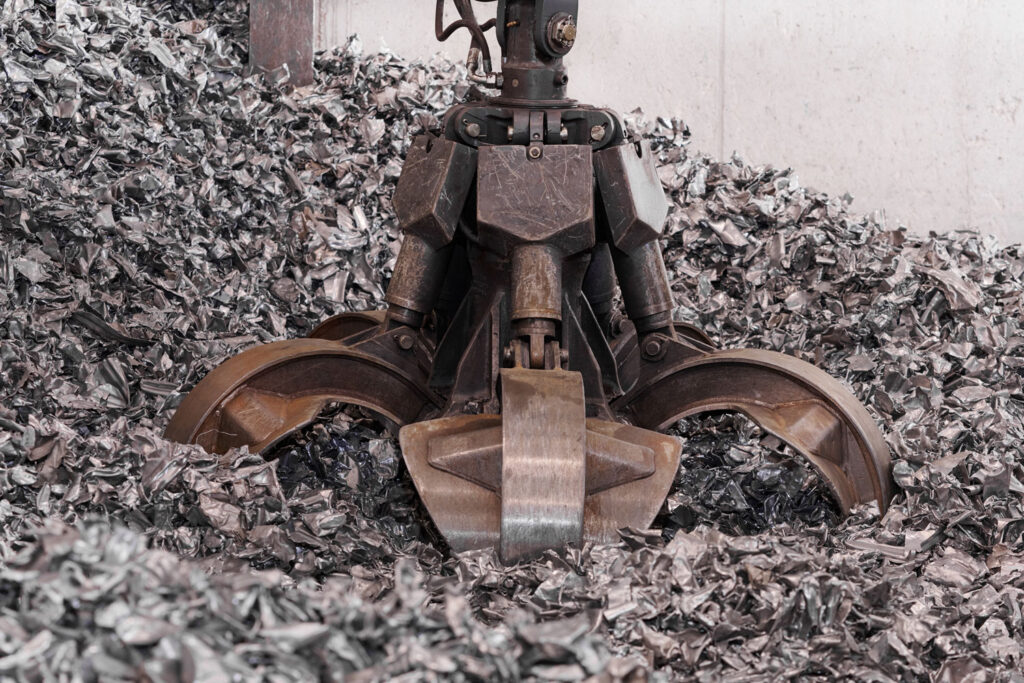
The decisive factor lies in the material itself: the automotive scrap processed at OSR is sorted so precisely that it matches primary raw materials. It flows back into the cycle as a full substitute, serving customers as a direct replacement for energy-intensively produced primary aluminum. The carbon footprint of LIBS-sorted aluminum is 229 kg CO₂ eq. per ton¹. Compared to using primary aluminum, the use of material separated at OSR results in significant CO₂ savings¹:
- 5000 series alloys: Savings amount to 7,463 kg CO₂e per ton, which equals 98%.
- 6000 series alloys: In this class, 6,763 kg CO₂e per ton is saved, accounting for 97%.
- Solar-powered operation: OSR supplies 100% renewable energy to its LIBS sorting production. This step has further increased the CO₂ savings rate for both alloy classes by one percentage point each, reaching the stated values.
In total, the use of 20,000 tons of LIBS-sorted material in the production of semi-finished aluminum products has avoided 142,000 tons of CO₂.
From a Former Pioneer Project to a Reliable Industry Standard
The development of the partnership between OSR and Cleansort illustrates the successful transition of a demanding technology into an established industrial process. What began as a joint pioneer project has evolved into a reliable standard in metal recycling. In a market environment where numerous players are newly introducing laser-based sorting, OSR possesses many years of experience and deep operational expertise.
As part of this mature, peer-to-peer partnership, operating data gained in industrial shift operations continuously fed back into the further development and optimization of Cleansort LIBS systems. In this way, the technological approach transformed into a proven application that OSR now deploys as standard to ensure closed and economical material loops in the aluminum sector with process reliability.
Download Case Study
Read the full report: You can download the complete Case Study as a PDF document here: https://www.cleansort.de/en/case-study-osr-x-cleansort-from-innovation-to-industry-standard/
The Partners at a Glance
OSR
Under the umbrella brand OSR, two independent companies bundle their competencies along the metal recycling value chain: OSR GmbH & Co. KG specializes in the direct marketing of ferrous, non-ferrous, and alloy scrap, while OSR Metallrecycling GmbH & Co. KG focuses on the acceptance, sorting, and processing of scrap and metals as secondary raw materials. Both companies are located in Aalen.
Headquarters: Aalen, Germany
Cleansort
Cleansort develops, manufactures, and distributes high-precision, laser-based sorting systems for industrial recycling. Cleansort stands for proven, low-maintenance technology with a high return on investment that prevents downcycling and enables closed-loop material cycles.
Headquarters: Rösrath, Germany
Deutsche Bundesstiftung Umwelt (DBU)
The DBU promotes innovative, model-based, and solution-oriented projects for environmental protection, with a special focus on small and medium-sized enterprises.
Headquarters: Osnabrück, Germany