Customer Case Study · Paper Recycling
Lifecycle cost · Durability · Reliability
- Facility type: Paper Recycling
- Location: Pacific Northwest (Seattle area)
- Application: Heavy-duty material handling
- Status: Active facility, operating continuously
Background
This recycling facility has operated continuously for multiple decades and processes heavy, abrasive, and inconsistent material streams typical of large urban recycling operations.
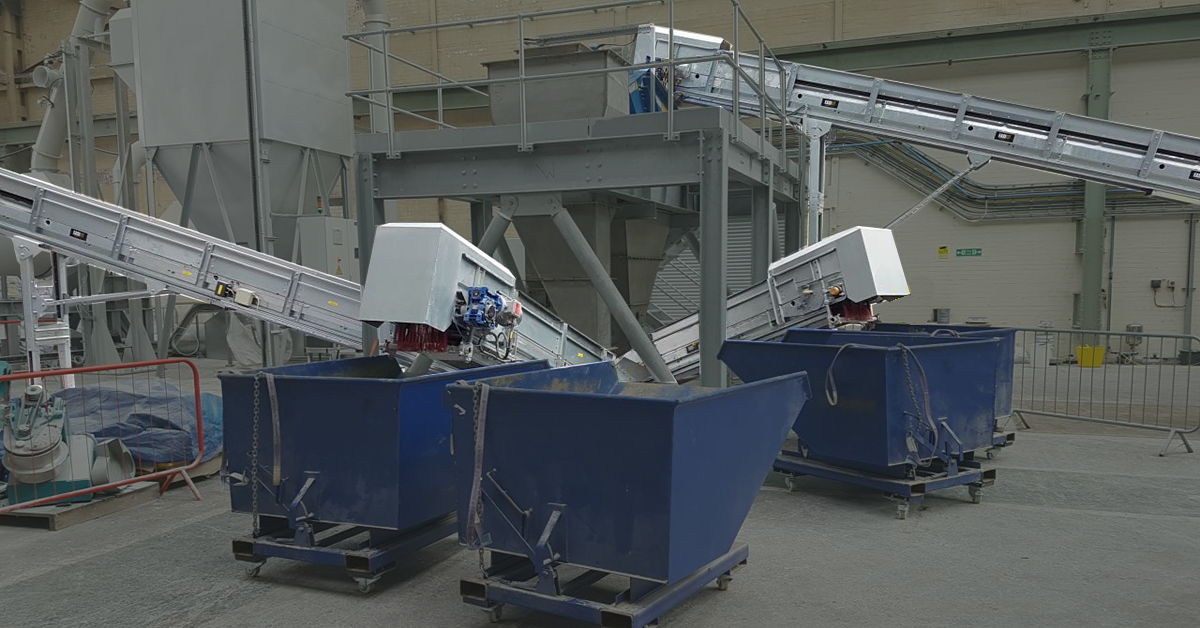
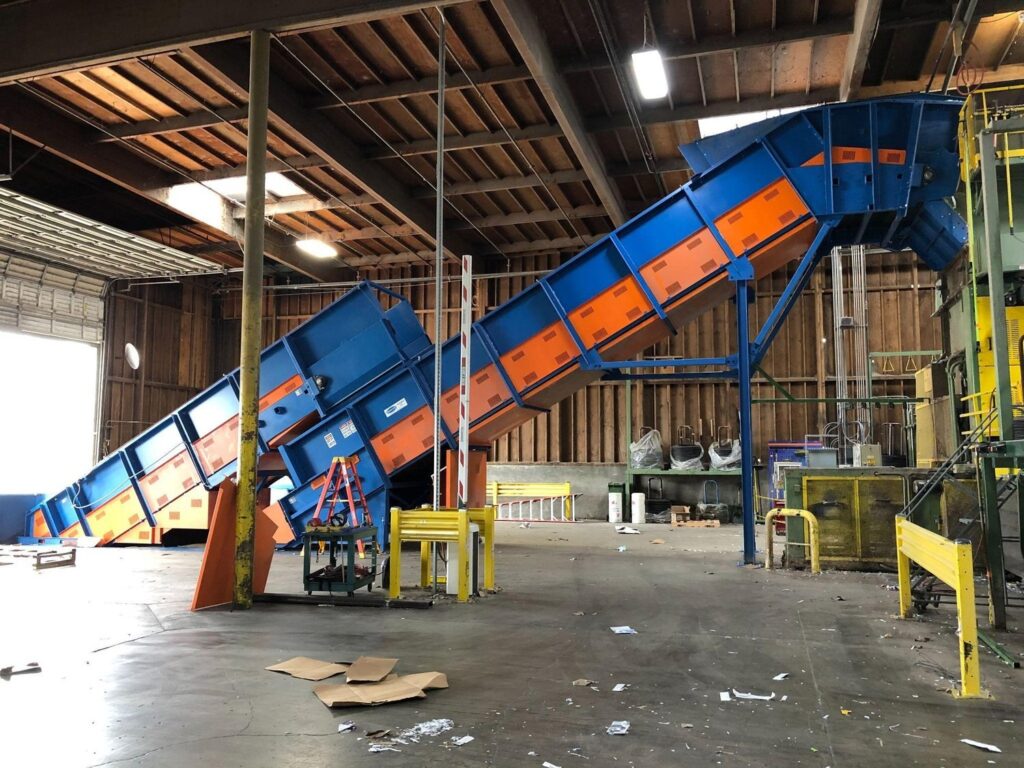
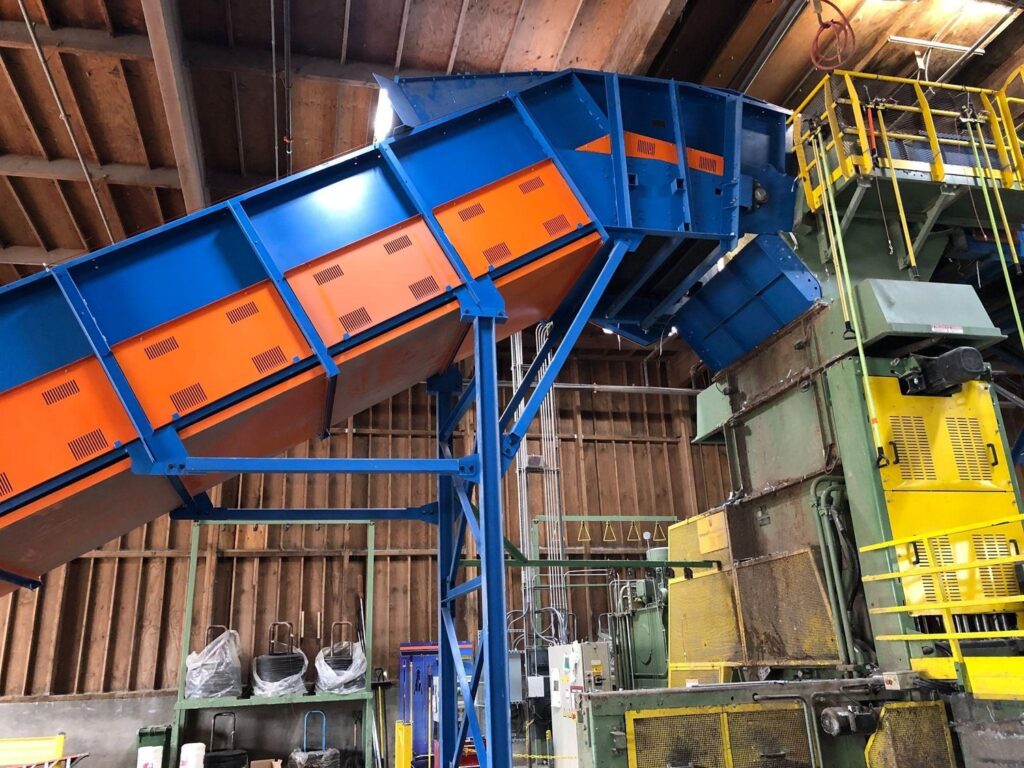
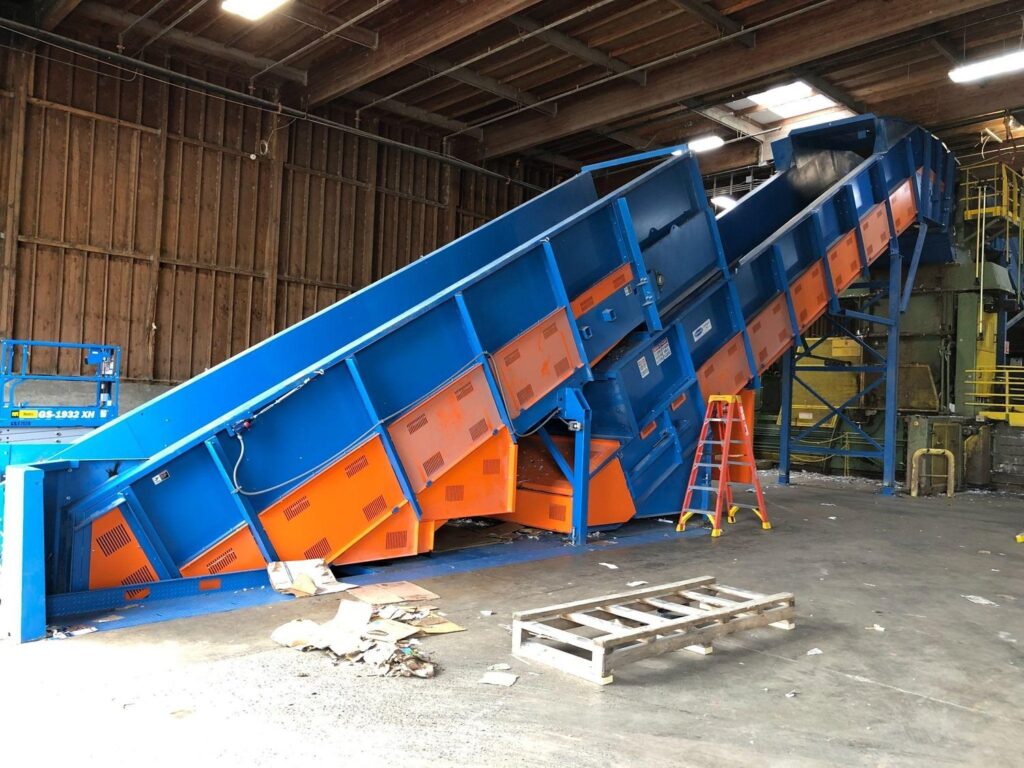
In the late 1990s, the facility installed multiple Remcon-designed conveyors as part of its core material handling system. These conveyors were designed conservatively, with heavy structural members, thick belting, and simple mechanical layouts intended for long-term reliability rather than minimal upfront cost.
For many years, these conveyors operated with minimal attention from maintenance staff.
The Change: A Move to “Modern Heavy-Duty” Conveyors
Years later, during an expansion and partial system upgrade, the facility elected to install heavy-duty conveyors from another supplier for certain process lines.
The decision was driven by:
- claims of improved efficiency
- modernized designs
- competitive capital cost
- assurances that the equipment was “heavy-duty” and appropriate for recycling
At the time, the older Remcon conveyors were still operating, but the newer supplier’s offering appeared technically compelling on paper.
The Result: Escalating Maintenance Costs
Within the first years of operation, the newly installed conveyors began to exhibit chronic issues:
- accelerated belt wear
- frequent belt replacements
- recurring mechanical repairs
- increased downtime
- higher maintenance labor demand
Over time, the facility documented approximately $100,000 per year in combined costs related to:
- belt replacements
- emergency repairs
- downtime-associated labor
- corrective maintenance
These costs were not driven by catastrophic failures, but by persistent wear-related problems that never fully stabilized.
Maintenance teams found themselves in a cycle of:
- replacing belts
- correcting alignment
- addressing debris-related wear
- reacting to problems instead of preventing them
The Comparison That Could Not Be Ignored
During this same period, the facility continued to operate its original Remcon conveyors, installed more than two decades earlier.
Notably:
- One Remcon conveyor, installed approximately 26 years ago, is still operating with its original belt
- That conveyor has never required major structural repair
- It has not experienced chronic belt-tracking issues
- Maintenance intervention has been limited to routine inspections and minor servicing
The contrast became increasingly difficult to ignore:
| Category | New supplier conveyors | Legacy Remcon conveyors |
|---|---|---|
| Belt life | Replaced frequently | Original belt after ~20 years |
| Annual maintenance cost | ~$100,000/year | Minimal |
| Downtime | Recurring | Rare |
| Maintenance burden | High | Low |
| Operational predictability | Poor | High |
From an operational standpoint, the older Remcon conveyors were outperforming newer equipment by a wide margin.
Root-Cause Analysis
After extended operation and internal review, the facility identified several reasons for the disparity:
The newer conveyors
- The newer conveyors relied on lighter structural designs that proved sensitive to real-world loading conditions
- Minor frame deflection led to chronic belt misalignment
- Debris accumulated in locations that were difficult to access or clean
- Belt systems were optimized for theoretical efficiency rather than abrasive, contaminated material streams
By contrast, the Remcon conveyors had been designed with:
- heavier steel construction
- conservative load assumptions
- stable geometry that resisted long-term deflection
- belt and component selections that tolerated contamination and abuse
In short, the Remcon equipment was designed for actual recycling facility conditions, not idealized ones.
The Decision: Returning to Remcon
Faced with ongoing maintenance costs and operational frustration, the facility made the decision to return to Remcon for subsequent conveyor needs.
The rationale was straightforward:
- lower lifecycle cost outweighed higher initial capital cost
- predictability mattered more than novelty
- reliability mattered more than optimization on paper
“The Remcon conveyors are the ones we don’t think about — because they don’t cause problems.”
As one facility representative summarized internally
Outcome
Since returning to Remcon-designed equipment:
- maintenance costs stabilized
- belt life expectations increased dramatically
- downtime events decreased
- maintenance planning became predictable rather than reactive
The facility continues to operate its original Remcon conveyors as proof of concept — living evidence of a design philosophy that prioritizes longevity over short-term savings.
Key Takeaway
This case demonstrates a reality that many recycling facilities eventually encounter:
In heavy-duty recycling applications, conservative mechanical design consistently outperforms modernized but fragile systems over the long term.
Remcon’s value was not proven in a brochure or a startup phase — it was proven over decades of continuous operation.
Why This Matters for You
For facilities evaluating conveyor systems today, this case highlights a critical question:
Do you want conveyors that look good at installation… or conveyors that still work 25 years later?
Remcon’s approach is intentionally conservative because the cost of failure in a MRF is cumulative, not immediate.
This customer’s experience shows that:
- lifecycle cost dominates capital cost
- durability beats optimization
- reliability builds trust that lasts decades