


By Avery, Strategic and Commercial Lead, Phantom Eco Tech
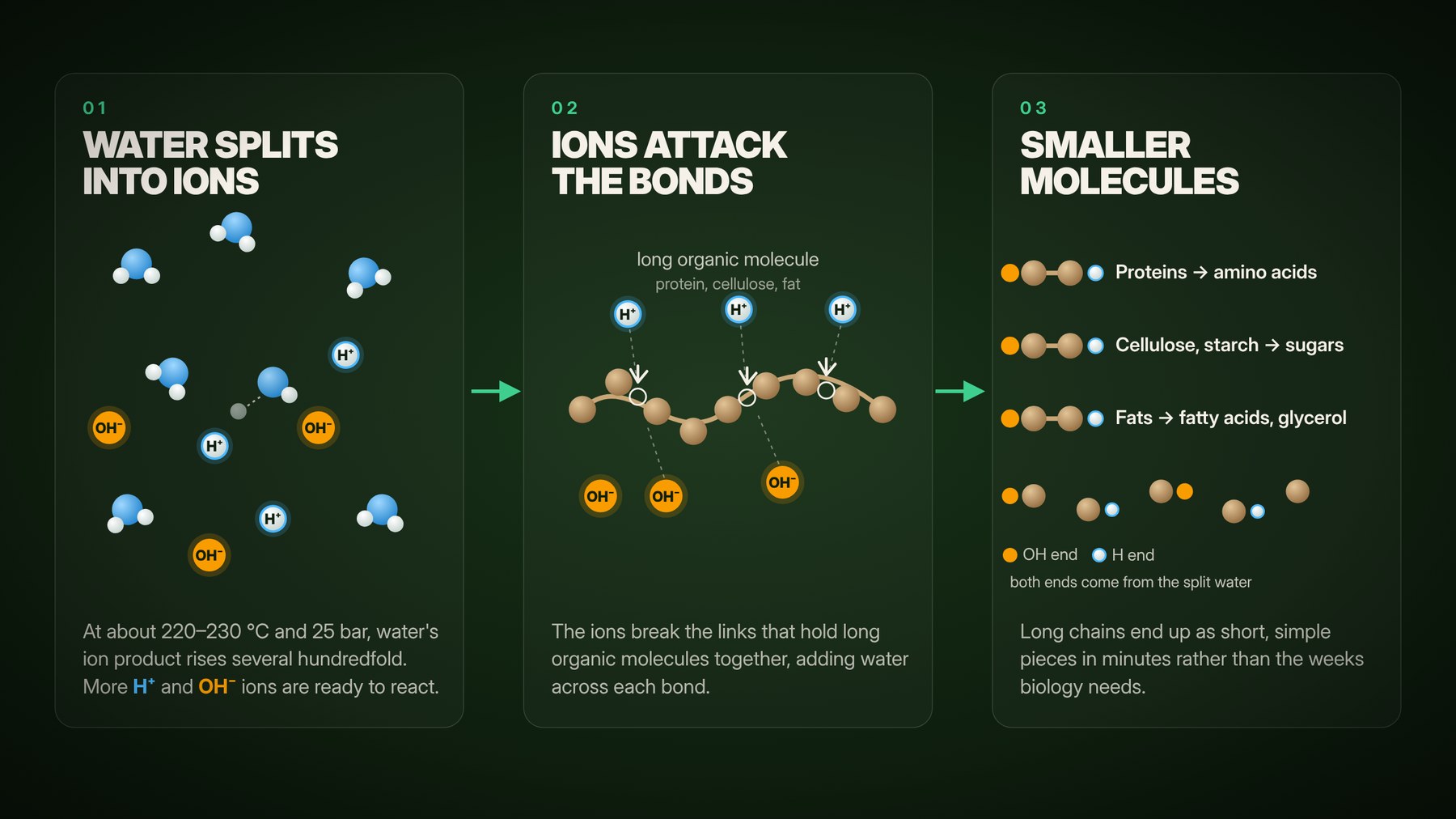
Water behaves differently when you heat it under pressure. Keep it liquid at around 200 to 300 °C and two things change. Its natural dissociation into H+ and OH- ions rises several hundredfold, and its dielectric constant drops from about 80 to around 30, so it starts to dissolve organic compounds it would normally leave alone.
Those ions attack the bonds that hold large organic molecules together. Proteins break into peptides and amino acids, starch and cellulose into sugars, fats into fatty acids and glycerol. That is hydrolysis. “Subcritical” means the water stays below its critical point of 374 °C and 22.1 MPa, where it would stop being a distinct liquid.
How a batch runs
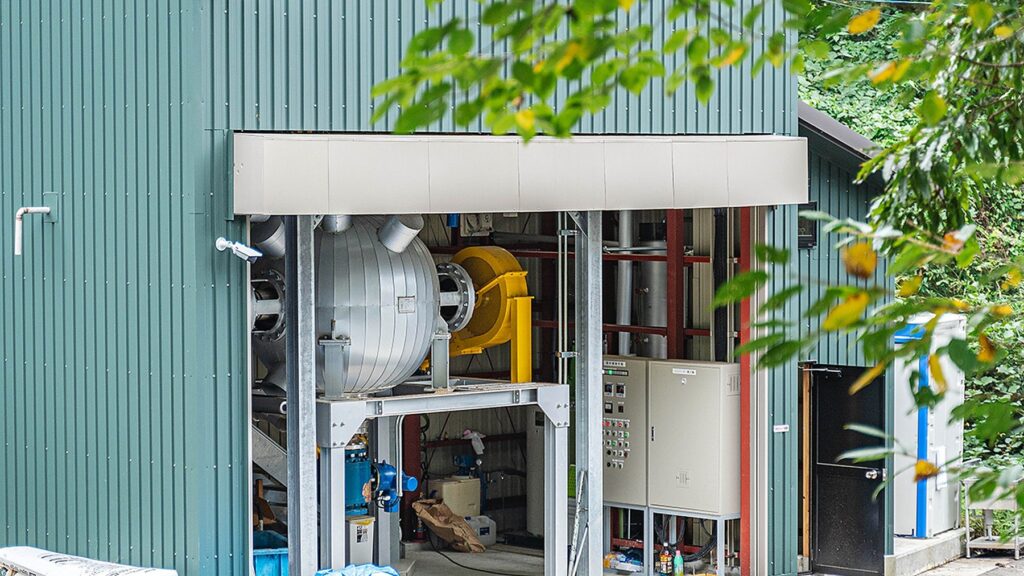
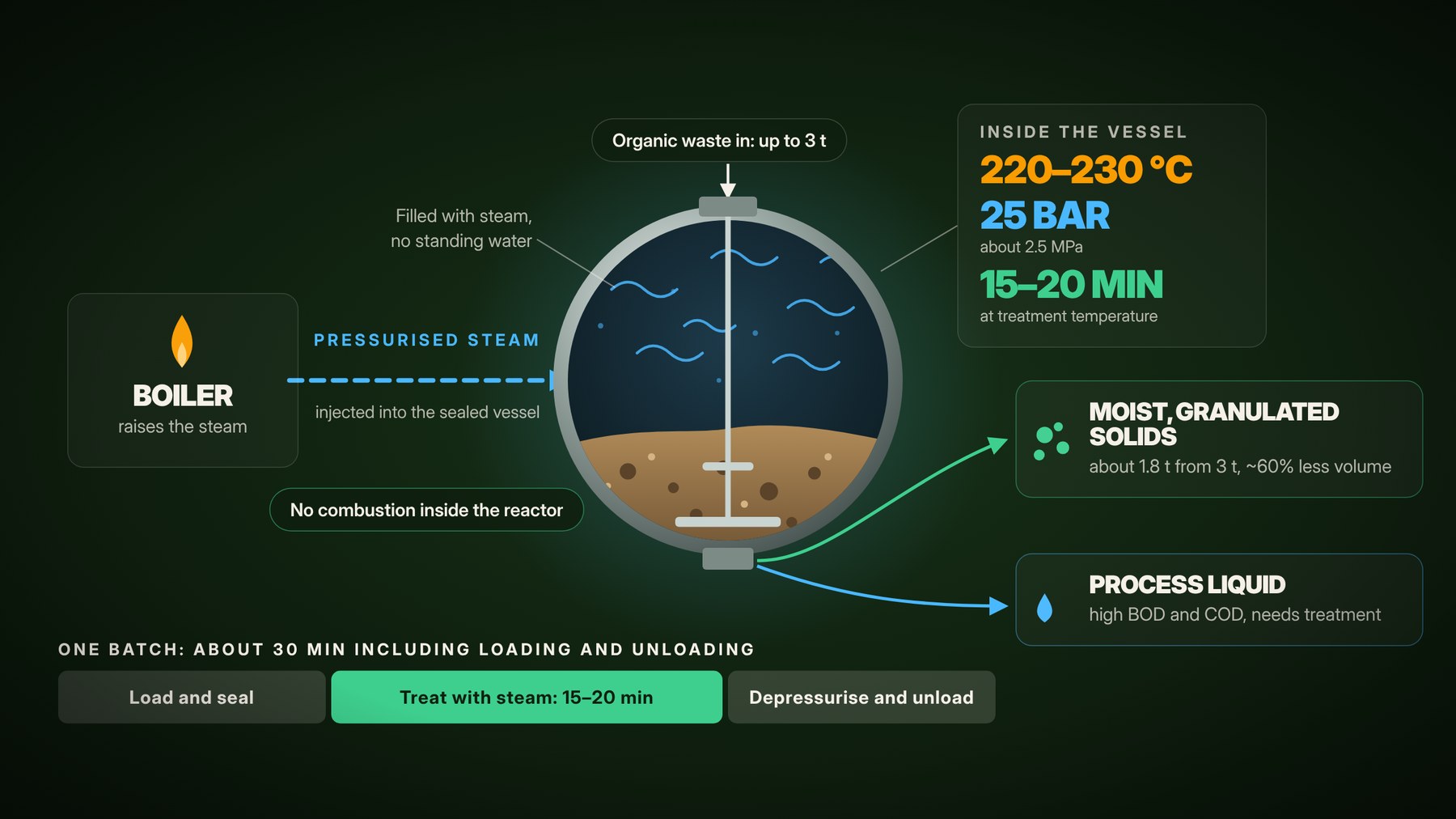
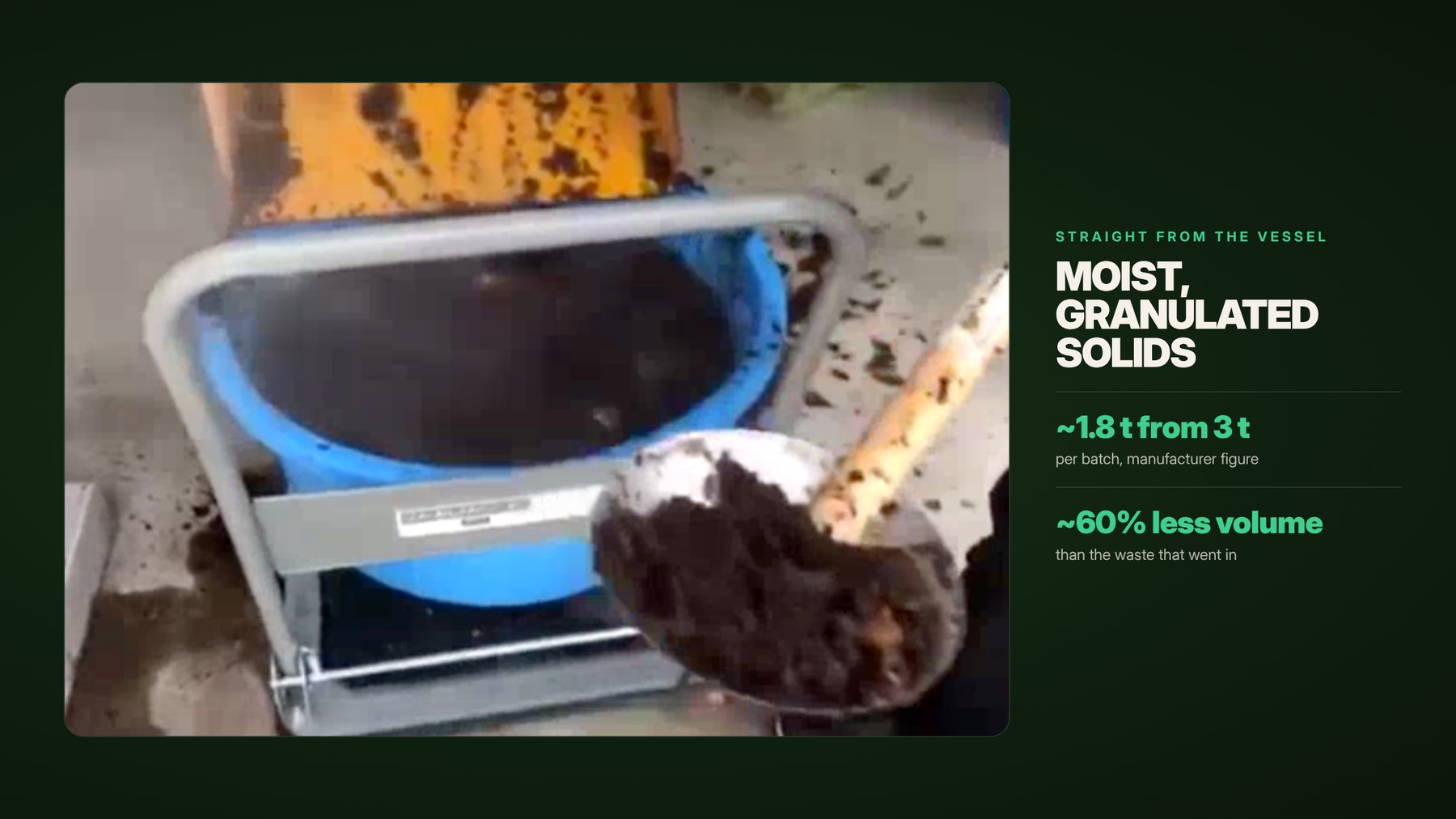
In our PHANTOM system, waste is loaded into a sealed stainless-steel vessel. There is no standing water inside. Pressurised steam from a boiler fills the vessel at about 220 to 230 °C and about 2.5 MPa (25 bar), condensing on the waste and heating the moisture it already holds. Each batch spends 15 to 20 minutes at treatment temperature, or about 30 minutes including loading and unloading. From a 3-tonne load, about 1.8 tonnes of moist, granulated solids come out, with roughly 60% less volume than went in. Run 20 to 22 hours a day, one unit handles about 120 to 140 tonnes in a footprint of about 5 × 7 m (manufacturer figures).
Nothing burns inside the reactor. There is no flue gas to clean and none of the conditions that form dioxins in incineration. The boiler that raises the steam is an ordinary combustion source and emits CO2 like any small boiler.
Which waste streams it suits
The chemistry works on organic polymers, so the natural candidates are food waste, livestock manure, fish processing residues, wood, paper and textiles. Glass, metal and stone must be screened out.
Thermal hydrolysis itself is not new: it has run ahead of anaerobic digestion at large sewage works for more than two decades, at lower temperatures of around 160 to 170 °C, to aid digestion and dewatering. Batch subcritical systems apply higher temperatures to a wider range of solid wastes on a single site.
Compared with today’s main routes:
- Composting costs less per tonne and has a lower carbon footprint, but needs space and weeks to months. Hydrolysis output intended for land use still goes through composting and certification: PAS 100 in the UK, the US Composting Council’s Seal of Testing Assurance in the US, the EU Fertilising Products Regulation in Europe and AS 4454 in Australia.
- Anaerobic digestion recovers energy, which hydrolysis alone does not. AD prefers a steady, pumpable feed, while a batch reactor copes better with solid, fibrous or variable material.
- Incineration handles almost anything combustible and recovers energy, but needs flue-gas treatment and a large plant. Hydrolysis has no process stack, works at site scale, and still leaves an output that needs a destination.
On carbon, the clear gain is against landfill; against composting or AD, the case for on-site hydrolysis rests on speed, footprint and control over awkward streams.
What the results show
In South Korea in 2018, compost made from a treated food waste and plastic stream was rated finished compost under Korea’s official test method. Arsenic, cadmium, mercury and lead were not detected, and neither were Salmonella or E. coli O157.
Residue from treated PET bottles in Japan went through the national landfill leaching test in 2021. All 25 substances in Japan’s leaching criteria, from heavy metals to benzene and 1,4-dioxane, were below quantification limits. Clean PET carries few contaminants, so this shows the process adds nothing harmful rather than removing toxins. Plastic residue is typically pelletised as fuel, which in most jurisdictions must still go to a permitted energy-recovery plant.
In a November 2022 trial analysed by Kumamoto University, sodium carboxymethyl cellulose, a soluble cellulose derivative, was treated at 224 °C and 25.4 atm for 20 minutes and broke down into compounds close to glucose. Native cellulose in wood and paper is slower to break down.
Limits worth planning for
Hydrolysis does not remove heavy metals. They end up in the solids or the liquid, so output from painted or treated timber must be tested before any use as fuel or soil input. The process liquid is strong: liquid samples from a 2022 slurry trial measured 3,100 to 5,100 mg/L BOD and 7,100 to 13,000 mg/L COD, so it usually needs trade-effluent consent or pre-treatment before it goes to sewer. A batch is limited by vessel volume as well as mass, so loose, low-density feedstock such as wood offcuts or demolition timber reaches the volume limit well before 3 tonnes. And in most jurisdictions the output stays legally a waste until a recognised standard or end-of-waste decision says otherwise.
The practical starting point: list the streams that are wet, odorous, mixed or costly to move, and decide where a smaller, stabilised output could go.