


Market
Food Waste Recycling
Food waste recycling plays a crucial role in tackling the global challenge of excessive food disposal. Each year, large volumes of food scraps and leftovers end up as waste, placing pressure on landfills and contributing to greenhouse gas emissions. Recycling it offers a practical and sustainable solution by turning organic waste into valuable resources.
All articles in this market
Food Waste Recycling — page 1 of 1






Ask the Expert
Ask a food waste recycling expert — free
Engineers and product specialists who answer technical questions from readers. The answer comes back to you by e-mail; when we publish it, other readers benefit too.
 Dan Fairest
M&J Recycling
Dan Fairest
M&J Recycling
At M&J Recycling, my role as the UK & ROI Sales Manager centres on providing top-tier shredding solutions tailored to the waste…
Ask a question Laetitia Paveau
Pellenc ST
Laetitia Paveau
Pellenc ST
Laetitia is the Marketing and Communications Director at Pellenc ST. An engineer by training, she has spent over 20 years driving innovation…
Ask a questionSubscribe to our E-newsletters
Recycling technology worth your time: new equipment, plant case studies and the numbers behind them. Free, twice a week.
Questions and answers
Frequently asked about food waste recycling
What happens to food waste once it's collected separately for recycling?
Source-separated food waste is typically hauled to either an industrial composting facility or an anaerobic digestion plant, where it's first depackaged and screened to remove any plastic bags, containers, or other non-organic material that made it into the bin. The cleaned organic material is then either broken down aerobically into compost or fed into sealed digesters where microorganisms convert it into biogas and a nutrient-rich digestate.
Why does food waste need to be separated at the source instead of just sorted out of the regular trash later?
Once food waste is mixed and compacted with other garbage in a collection truck or landfill, it becomes contaminated with glass, plastic, and other debris that's difficult and costly to remove, which limits it to lower-value uses or disposal. Source separation through a dedicated bin keeps the material clean enough to go directly into composting or anaerobic digestion, and it also keeps biodegradable material out of landfills, where it would otherwise generate methane as it decomposes anaerobically.
What is anaerobic digestion and how does it turn food waste into energy?
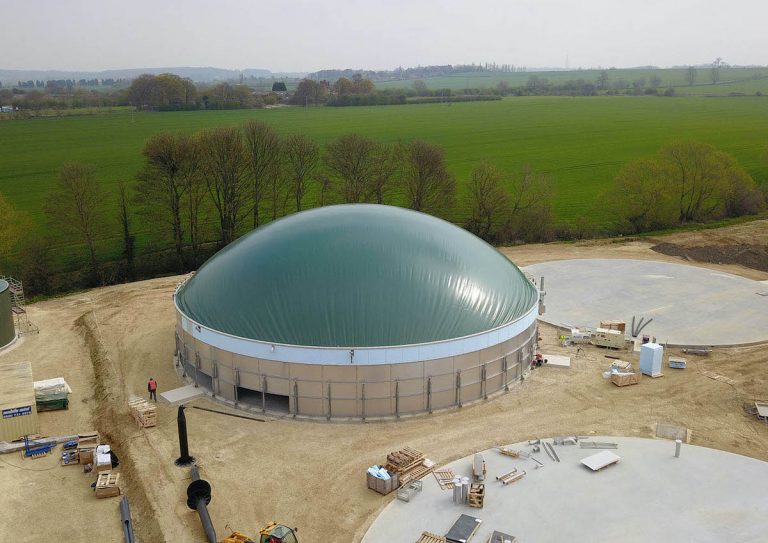
Anaerobic digestion breaks down organic material in sealed, oxygen-free tanks using bacteria that convert it into biogas, primarily methane and carbon dioxide, along with a liquid and solid digestate that can be used as fertilizer. The biogas can be burned to generate electricity and heat on-site, upgraded and injected into the natural gas grid, or compressed into renewable natural gas for vehicle fuel, making digestion one of the few waste processing methods that directly produces usable energy.
How does industrial composting differ from anaerobic digestion?
Composting is an aerobic process in which food waste is mixed with a carbon-rich bulking agent like wood chips or yard trimmings and kept oxygenated, either in open windrows that are periodically turned or in enclosed in-vessel systems, while naturally occurring microorganisms break it down into a stable soil amendment. Anaerobic digestion instead excludes oxygen and captures the resulting biogas for energy recovery, so composting produces a soil product as its primary output while digestion produces energy plus a digestate byproduct.
What contamination problems make food waste harder to process than other recyclables?
Plastic bags, produce stickers, and food packaging routinely end up mixed in with food scraps, and even bags labeled compostable or biodegradable often fail to break down fully within a composting facility's processing timeline, leaving visible plastic fragments in the finished product. Facilities typically run depackaging equipment ahead of composting or digestion to separate organic material from its packaging, but persistent plastic contamination can still degrade compost quality or cause a batch to be rejected by end buyers.
What equipment is used to process food waste at an industrial scale?
Depackaging systems use rotating drums, augers, or paddles to rupture plastic packaging and separate it from the organic material inside, often paired with screens and density separators to pull out remaining plastic fragments. Composting facilities use windrow turners or in-vessel composting systems to maintain aeration and temperature, while anaerobic digestion plants rely on grinders and slurry tanks to prepare feedstock before it enters sealed digester tanks.
What regulations or mandates require businesses and municipalities to divert food waste from landfill?
A growing number of US states and cities have adopted organic waste bans or diversion mandates requiring businesses, and in some cases residents, above a certain waste-generation threshold to separate food waste for composting or digestion rather than sending it to landfill, with California's SB 1383 among the most far-reaching examples. The EU's Waste Framework Directive similarly requires member states to collect biowaste separately, reflecting a broader policy push to cut the methane emissions associated with landfilling organic material.
Can all types of food waste, from meat and dairy to produce and packaged goods, be processed the same way?
Not always. Backyard and some municipal composting systems avoid meat, dairy, and fatty food waste because they attract pests and can create odor problems if the pile isn't managed carefully, while industrial in-vessel composting and anaerobic digestion facilities are generally built to handle those materials safely at higher, more controlled temperatures. Compostable packaging is another variable, since it often needs the longer processing times and higher temperatures of an industrial facility to break down fully and won't necessarily degrade in a lower-intensity composting system.
What are the environmental and economic benefits of diverting food waste from landfill?
Landfilled food waste decomposes anaerobically and generates methane, a greenhouse gas with a much higher short-term warming impact than CO2, so diverting it to composting or digestion significantly cuts those emissions. Composting returns organic matter and nutrients to soil, reducing the need for synthetic fertilizer, while anaerobic digestion generates renewable energy, and both pathways reduce the volume of waste municipalities have to landfill, extending disposal capacity and lowering long-term disposal costs.
What trends or technologies are shaping the food waste recycling market?
Adoption of anaerobic digestion is accelerating as more utilities and waste haulers invest in facilities that can convert food waste into renewable natural gas, supported in the US by state diversion mandates and in the EU by biowaste collection requirements. On the collection side, smart bins and route optimization software are helping haulers track contamination and volume, while improved depackaging technology is making it more economical to process food waste that arrives still inside its retail packaging.
How do I find an equipment manufacturer for food waste recycling?
Use the Manufacturers Directory A–Z or the Equipment Guide. Partner profiles carry direct contact details; other listings link to the company website.
Can I ask a technical question before I buy?
Yes. Ask the Expert puts your question to a field expert active in Food Waste Recycling. The answer comes back to you by e-mail; when we publish it, other readers benefit too.