


Key takeaways
- Mechanical recycling dominates current textile recycling capacity, but most output goes to applications outside clothing [1].
- Chemical recycling targets specific polymers: depolymerization suits polyester and nylon, dissolution suits cotton and other cellulose fibers [2].
- Fiber-to-fiber recycling — turning old textiles into new textile fiber — depends on clean, well-sorted feedstock.
- Blends (such as polyester-cotton), trims, coatings and dyes remain the main technical obstacles.
- EU rules on separate collection (from 2025) and extended producer responsibility (by 2028) are pushing volumes up [3].
How textile recycling works
Only a tiny share of the material used for clothing is recycled into new clothing today — under 1%, according to the Ellen MacArthur Foundation [4]. The rest is reused, downcycled, burned or landfilled. Turning that around requires a chain of steps, each with its own equipment:
- Collection of post-consumer textiles (used clothing, household linen) and post-industrial waste (cutting scraps, production rejects).
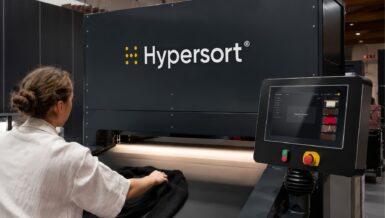
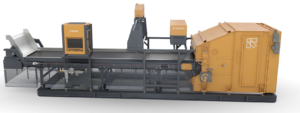
- Sorting for reuse first, then for recycling by fiber composition and color. Automated lines use near-infrared and hyperspectral imaging, increasingly combined with AI, as explained in our overview of the sorting challenge in textile recycling.
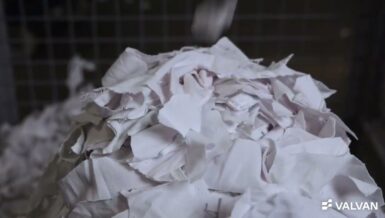
- Pre-processing: removing buttons, zippers, labels, and other hard parts, then cutting or shredding. New systems now remove trims automatically.
- Recycling by one of the routes below.
- Re-manufacturing into yarn, nonwovens, insulation or new polymer.
Sorting quality sets the ceiling for everything that follows. That is why most recent investment goes into Separation and Sorting Technology.
Key equipment by process step
| Process step | Typical equipment | What to look for |
|---|---|---|
| Receiving and storage | Bale openers, bale dewiring systems, conveyors | Throughput, operator safety, handling of compressed bales |
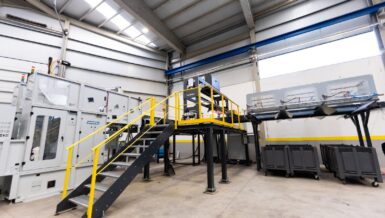
| Sorting | NIR/hyperspectral sorters, AI vision, robotic pickers, manual stations | Fiber and color accuracy, ability to detect blends and multilayer items |
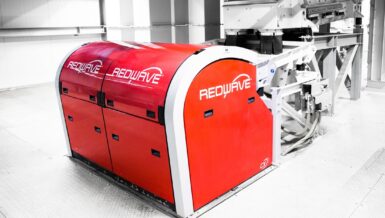
| Trim removal and cutting | Automated trim removal, guillotines, cutters | Removal rate of metal and plastic parts, fiber damage |
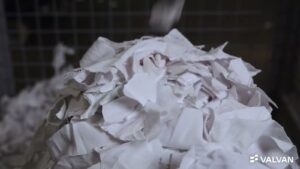
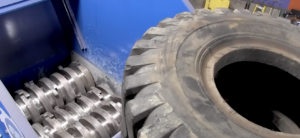
| Shredding and tearing | Pre-shredders, tearing (garnetting) lines, laboratory grinders | Fiber length retained, contamination, wear |
| Compaction and transport | Balers, compactors | Bale density, energy use — see Volume Reduction Technology |
| Chemical processing | Washing, dissolution and purification units | Solvent recovery, dye and finish removal, water use |
For shredding and tearing equipment, see our Size Reduction zone.
Recycling routes compared
| Route | How it works | Best suited for | Main limitations |
|---|---|---|---|
| Mechanical | Fabric is shredded, torn and carded back into fiber, then re-spun or used in nonwovens and fillers | Single-fiber textiles such as cotton and wool; wool can be re-spun into yarn | Shorter fibers and lower strength; often blended with virgin fiber; mixed textiles recycle poorly [2] |
| Thermo-mechanical | Synthetic textiles are melted and re-extruded into pellets or fiber | Clean polyester and nylon | Sensitive to blends, dyes and finishes |
| Chemical: depolymerization | Polymers are broken down into monomers or oligomers and repolymerized into new fiber-grade material | Polyester (PET) and nylon 6 | Energy and chemical use; some processes are slow or need catalysts [2] |
| Chemical: dissolution (solvent-based) | Fibers are dissolved, purified and spun into new fiber; cellulose can be regenerated into man-made cellulosic fiber | Cotton, viscose and other cellulose fibers | Solvent handling, dye removal, lower yield; synthetic contamination must be removed first [2] |
| Feedstock recycling | Pyrolysis or gasification converts mixed textiles into oil, gas or char | Unsortable, mixed or contaminated textiles | High energy use; output is a raw material, not a fiber [1][2] |
Mechanical recycling is the workhorse. A study by Öko-Institut for NABU puts its share of textile recycling at roughly two-thirds or more, and finds its environmental impact lower than chemical routes — but most of its output ends up outside the clothing industry, for example as insulation, wipers or filling [1].
Chemical recycling is what makes true fiber-to-fiber recycling possible at scale, because it can restore fiber quality. The same study describes it as still being in the development and scaling phase [1]. Partnerships such as CARBIOS and TOMRA on polyester textiles show how sorting and chemical recycling are being linked.
Main challenges in textile recycling
- Blends. Polyester-cotton and elastane blends are common and hard to separate. Each route handles only part of the blend.
- Trims and finishes. Zippers, buttons, coatings and dyes contaminate the feedstock or damage equipment.
- Fiber quality. Mechanical recycling shortens fibers, which limits the share of recycled content in new yarn.
- Sorting accuracy and data. Labels are often missing or wrong, so automated identification is needed. The industry is reaching a turning point as sorting capacity grows.
- Economics. Collection, sorting and chemical processing costs must compete with virgin fiber prices.
Trends and regulations
In the European Union, member states had to organize separate collection of textiles by January 1, 2025. A targeted revision of the Waste Framework Directive, in force since October 16, 2025, requires extended producer responsibility (EPR) schemes for textiles and footwear by April 17, 2028. Producers will pay fees based on the volume of products they place on the market, with links to eco-design requirements [3]. Together with eco-design rules, these measures aim to raise the volume and quality of feedstock for fiber-to-fiber recycling [1]. For background on the market, see Textile Recycling – A Promising Market.
How to choose technology and partners
- Start from the feedstock: post-industrial waste is cleaner and more uniform than post-consumer textiles.
- Match the route to the fiber: mechanical for single-fiber cotton or wool, depolymerization for polyester and nylon, dissolution for cellulose.
- Invest in sorting and pre-processing first; they decide the value of the output.
- Ask suppliers for test runs on your own material, including blends and trims.
- Check the end market for your output before choosing a route.
- Follow developments in the Textile recycling market and visit trade shows such as Ecomondo, which added a dedicated textile recycling hall.
FAQ
What is the difference between mechanical and chemical textile recycling?
Mechanical recycling shreds fabric back into fiber without changing the polymer. Chemical recycling breaks down or dissolves the polymer so it can be purified and turned into new fiber-grade material.
What is fiber-to-fiber recycling?
It means turning used textiles into new textile fiber, instead of downcycling them into products such as insulation or wipers.
Can polyester-cotton blends be recycled?
Partly. Separation processes are being developed, but blends remain one of the biggest technical challenges in textile recycling.
Why is sorting so important?
Every recycling route needs a known fiber composition. Automated sorting by fiber type and color raises the value of the feedstock.
What does EU EPR for textiles mean for recyclers?
Producers will fund collection and treatment through EPR schemes, which should increase the volume of collected textiles available for recycling [3].
Sources
- Öko-Institut e.V. for NABU, Textile recycling – status quo and current developments (2024).
- Damayanti, D. et al., “Possibility Routes for Textile Recycling Technology,” Polymers 13(21), 3834 (2021).
- Beveridge & Diamond, “EU Targets Textile Waste with Waste Framework Directive Amendments” (summary of the 2025 targeted revision of the Waste Framework Directive).
- Ellen MacArthur Foundation, A New Textiles Economy: Redesigning fashion’s future (2017).
Related: Textiles Recycling: The Sorting Challenge · Textile Recycling at a Turning Point · From Textile Waste to Spinning-Grade Fiber