
Technology Zone
Industrial Dust and Odor Control
Shredding, screening and composting release dust and odour that affect workers, neighbours and permits. This zone covers baghouse and cartridge collectors, cyclones, fog and mist suppression and odour treatment for recycling plants.
All articles in this zone
Industrial Dust and Odor Control — page 1 of 1



Promoted videos
Industrial Dust and Odor Control in action
What this zone covers
Industrial Dust and Odor Control: how it works, key numbers and troubleshooting
Fundamentals
Where dust and odour come from
Dust is released wherever material is broken, dropped or agitated: shredders, screens, transfer points, tipping floors, loading. Odour comes from organics — food waste, green waste, composting, sludge, anaerobic pockets in stored material — and from some chemical processes. Both are controlled first at the source (enclosure, capture, housekeeping, storage time) and only then by treatment; a plant that relies on treatment alone is always one breakdown away from a complaint.
Capture: hoods, enclosures and ventilation
Capturing dust needs a hood or enclosure close to the source with enough air velocity to overcome the material's own air movement — a shredder pushes air, a falling stream drags it. Enclosed transfers, sealed shredder housings and negative pressure in the hall keep dust inside; the exhaust goes to a collector. Whole-hall ventilation is the last resort and the most expensive.
Dust collection
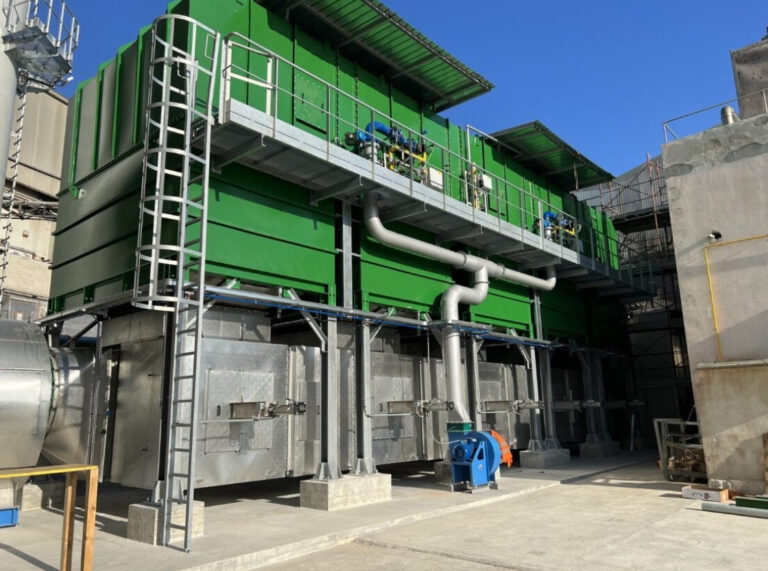
Fabric filters (baghouses, cartridge collectors) with pulse-jet cleaning are the standard for dry dust from shredders and sorting lines and reach emissions well below 5 mg/m³. Cyclones and settling chambers take out coarse particles and protect the filter; wet scrubbers handle sticky, hygroscopic or explosive dusts. In recycling the dust is often combustible (paper, plastics, wood, organics), so the collector needs explosion protection and spark detection on the duct.
Suppression: fog, mist and water
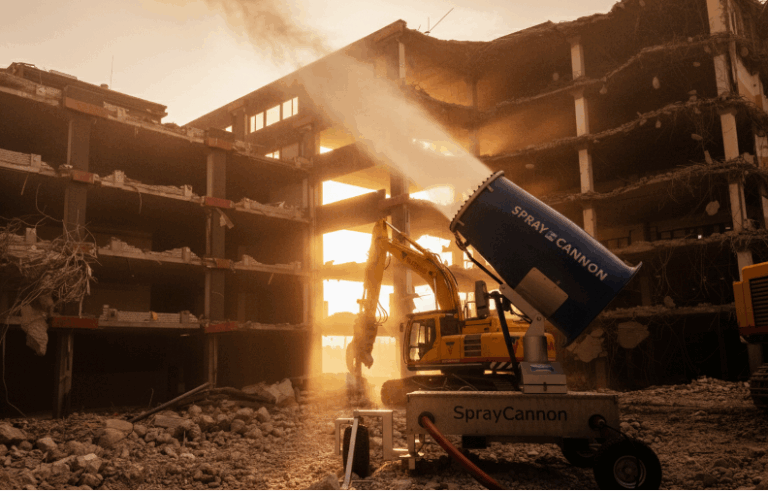
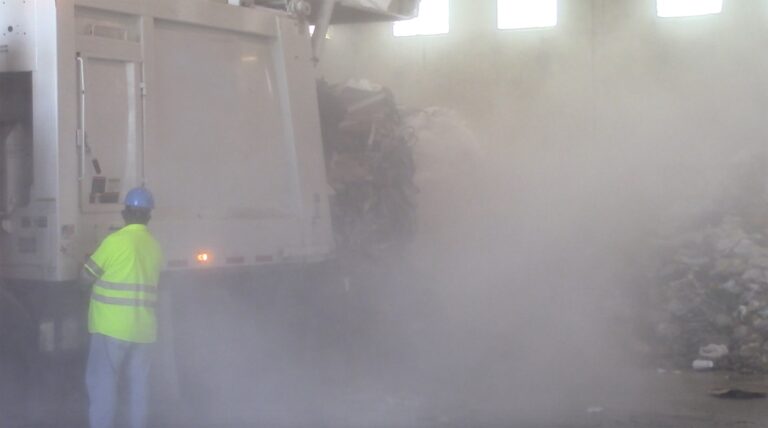
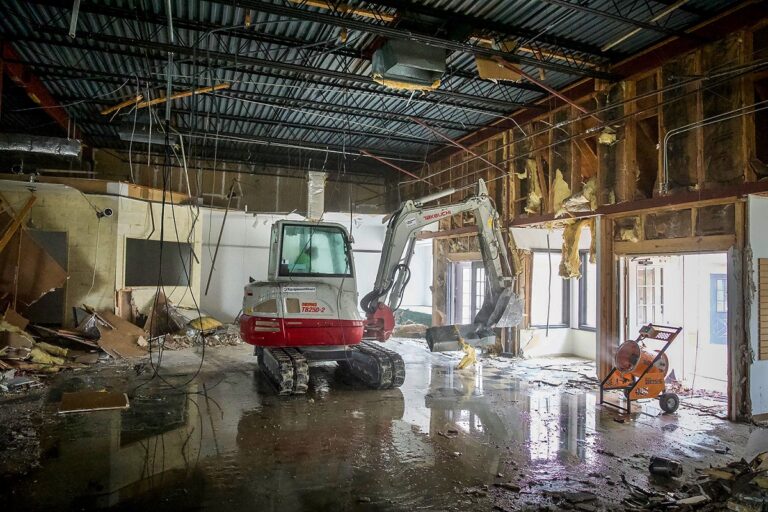
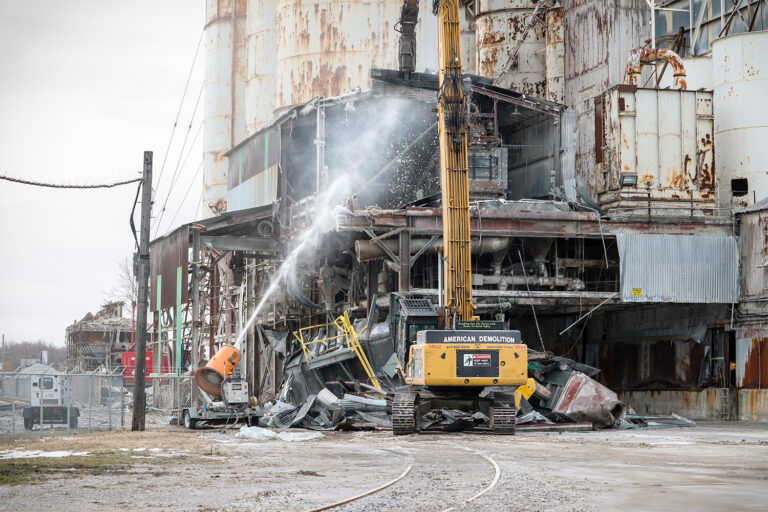
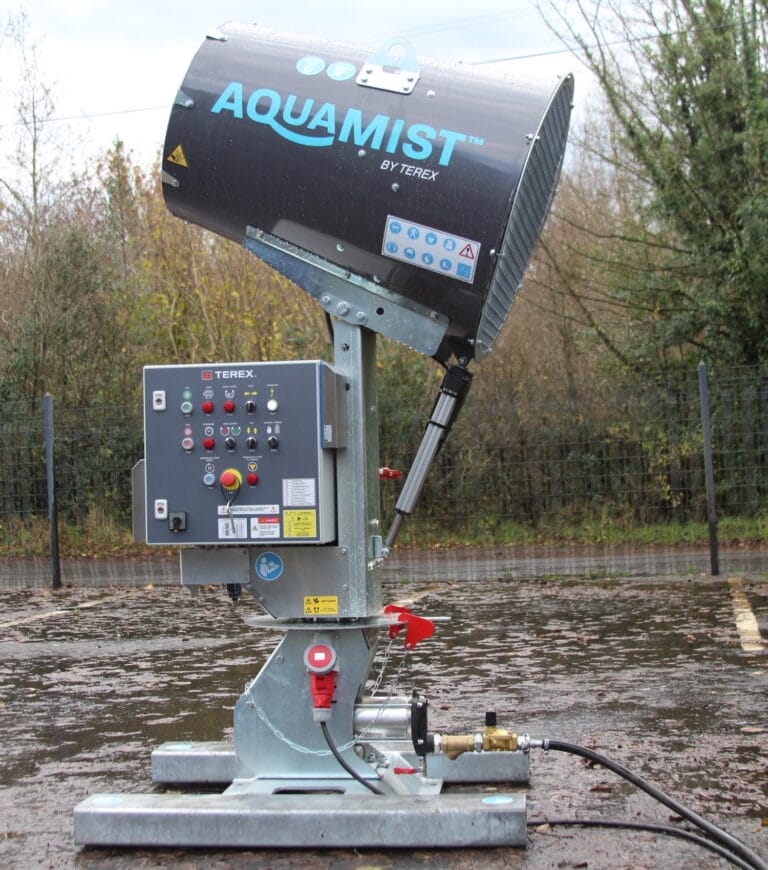
Dry-fog systems produce droplets small enough to bind airborne dust without wetting the material; misting cannons and spray bars knock down dust on tipping floors, in halls and at outdoor stockpiles. Suppression is cheap and flexible, works where capture is impossible, and is the standard on tipping floors and in demolition-waste and construction-waste plants; it does not replace extraction where people work close to the source.
Odour treatment
Biofilters (a bed of wood chips, compost or engineered media) and bioscrubbers degrade odorous compounds biologically and are the standard for composting and organic waste; chemical scrubbers handle ammonia and hydrogen sulphide; activated carbon and thermal oxidisers deal with high loads and solvents. Negative-pressure buildings, fast doors, short storage times and odour-neutralising misting at the fence line reduce what escapes. Odour is measured in odour units by panel; complaints are the real metric.
Key parameters
| Parameter | Typical range | Rule of thumb |
|---|---|---|
| Capture velocity at hoods | 0.5–1 m/s for low-energy release; 2.5–10 m/s at shredders and crushers | Halve the distance before doubling the air |
| Duct transport velocity | 18–22 m/s for mixed dust | Below that, ducts silt up and capture collapses |
| Fabric filter air-to-cloth ratio | 1–1.5 m/min for fine, fibrous recycling dust | Lower than for granular industrial dust — fibres blind fast |
| Filter emission | < 5 mg/m³; < 1 mg/m³ with membrane media | A sudden rise is a torn bag, not a cleaning issue |
| Dry-fog droplet size | 10–30 µm | Matched to the dust size; larger droplets wet the material |
| Hall pressure | −10 to −30 Pa relative to outside | Fast doors and airlocks or the negative pressure is lost |
| Biofilter | Surface load 50–150 m³/m²·h; residence 30–60 s; 90–99 % odour reduction | Keep media moist and pH neutral; replace every 2–4 years |
| Odour at the fence | Permit limits typically 1–5 odour units/m³ as 98-percentile | Dispersion modelling before the permit, panel measurement after |
Troubleshooting
| Symptom | Likely causes | What to do |
|---|---|---|
| Dust visible around the shredder | Housing not sealed; extraction too weak for the shredder's own air push; duct silted | Seal housing, size extraction for the shredder's displacement, clean ducts, dry fog inside the housing |
| Filter pressure drop climbs | Fibrous or sticky dust blinding; moisture; pulse air wet; ratio too high | Lower ratio or add area, pre-separator, dry pulse air, media change |
| Fire in the dust collector | Sparks from shredder or hot metal; smouldering dust in the hopper; static | Spark detection and extinguishing, spark trap, continuous hopper discharge, antistatic media, temperature sensors |
| Material too wet after suppression | Spray droplets too large; too much water; nozzles pointing at material | Dry-fog nozzles, control by dust sensor, aim at the dust cloud not the pile |
| Odour complaints despite biofilter | Media dry, compacted or acidified; channelling; untreated fugitive emissions (doors, stockpiles) | Media moisture and pH control, media replacement, negative pressure, fast doors, shorter storage |
| Ammonia or H2S breakthrough | Load beyond biofilter capacity; low pH | Chemical scrubber upstream of the biofilter, pH control |
| Hall never reaches negative pressure | Doors open; leaks; exhaust fan undersized; too many openings | Fast doors and door interlocks, seal leaks, fan sizing on the real air changes |
Go deeper: news and case studies · frequently asked questions
Equipment Guide
Industrial Dust and Odor Control in the Equipment Guide
5 equipment types
Recommended manufacturers
No recommended manufacturers in this zone yet. See all manufacturers via the link above.
Ask the Expert
Ask a industrial dust and odor control expert — free
Engineers and product specialists who answer technical questions from readers. The answer comes back to you by e-mail; when we publish it, other readers benefit too.
 Xu Xifeng
Jiangsu Keson Environment Technology Co., Ltd.
Xu Xifeng
Jiangsu Keson Environment Technology Co., Ltd.
Xu Xifeng, the founder of Keson and vice president of Jiangsu Low Carbon Environment Design Institute of China. He has been engaged…
Ask a questionMarket & Technology Focus
Industrial Dust and Odor Control, in depth in your inbox
Every Thursday edition takes one market or technology in depth. These are the editions on this zone — read them online or get the next one by e-mail.
Subscribe to our E-newsletters
Recycling technology worth your time: new equipment, plant case studies and the numbers behind them. Free, twice a week.
Questions and answers
Frequently asked about industrial dust and odor control
Extraction or fog suppression?
Extraction where people work close to the source, where the dust is fine and where an emission limit applies to the exhaust: shredders, screens, sorting cabins, transfer points. Fog and mist suppression where capture is impractical: tipping floors, halls, outdoor stockpiles, loading. Most plants need both, and suppression inside a shredder housing reduces the load on the extraction.
Does my dust collector need explosion protection?
If the dust is combustible — paper, cardboard, plastics, wood, textiles, organics, and most shredder dust is — yes. Explosion venting or suppression on the collector, isolation on inlet and outlet, antistatic filter media, earthing, and spark detection on the duct from the shredder are the standard package. Test the dust and document it in the dust hazard analysis.
How do I stop sparks from the shredder reaching the filter?
Spark detection with automatic water extinguishing in the duct is the standard measure, combined with a spark trap or a settling chamber before the filter, temperature sensors in the filter and continuous discharge of the filter hopper so no dust sits there to smoulder.
Which odour treatment for a composting or organics plant?
A biofilter, sized for the air volume and load, fed by a negative-pressure hall and preceded by a water or acid scrubber where ammonia is high. Keep the media moist, monitor pH and pressure drop, and replace the media on schedule. Fugitive emissions from open doors and stockpiles cause more complaints than the biofilter itself.
How is odour measured?
By olfactometry: a panel dilutes an air sample until half the panel can no longer smell it, giving odour units per cubic metre. Permits set limits at the fence or at receptors as a percentile of modelled concentrations. Electronic noses and marker gases (H2S, NH3) serve for continuous monitoring but do not replace the panel.
How much air does a shredder hood need?
Enough to overcome the air the rotor pushes out and the air dragged in by the falling material — often several thousand cubic metres per hour on a large shredder, more than a simple hood calculation suggests. Sealing the housing and adding dry fog inside reduce the requirement; measuring dust at the operator position tells you whether it is enough.
Why does my biofilter stop working after a year?
The media has dried, compacted, acidified or channelled. Biofilters need constant moisture (irrigation and humidified inlet air), a neutral pH (acid forms from sulphur and nitrogen compounds), an even air distribution and periodic media replacement. Monitor pressure drop, moisture and outlet odour, not only the fan.
What is the difference between this Technology Zone and the Equipment Guide?
The zone is the editorial side: news, case studies, videos, newsletter editions and field experts. The Equipment Guide is the directory side: equipment types and the manufacturers that build them. This page links to its Equipment Guide category and back.
How do I find a manufacturer of industrial dust and odor control equipment?
Open the Equipment Guide category for this zone, pick an equipment type and open a manufacturer profile. Partner profiles carry direct contact details; other listings link to the company website.
Can I ask a technical question before I buy?
Yes. Ask the Expert puts your question to a field expert in this zone. The answer comes back to you by e-mail; when we publish it, other readers benefit too.