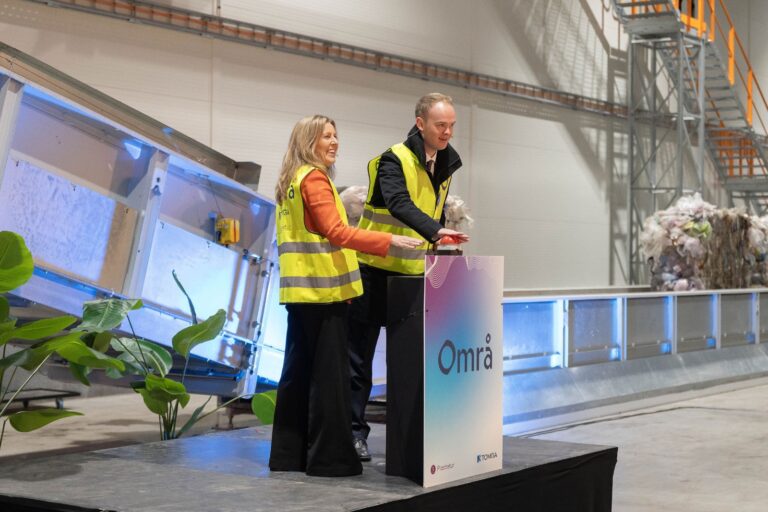
One Year of Områ: Norway’s National Plastic Sorting Facility Proves Its Model
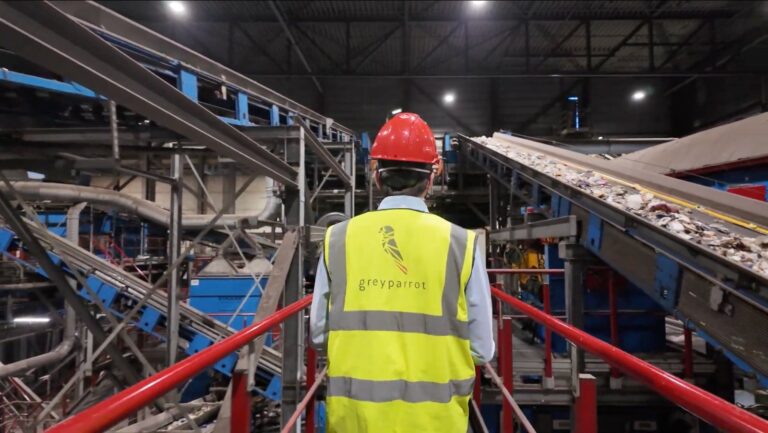
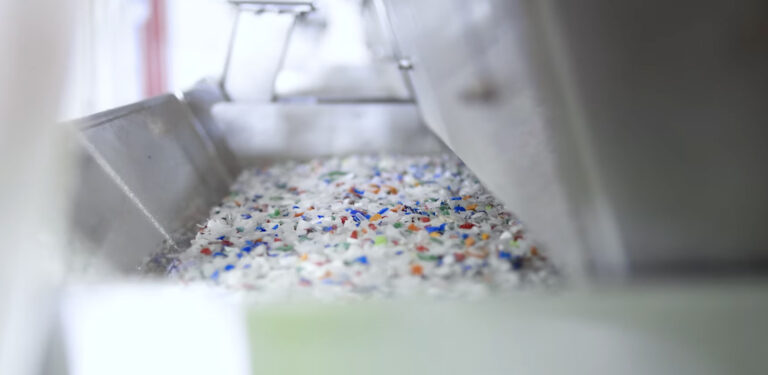
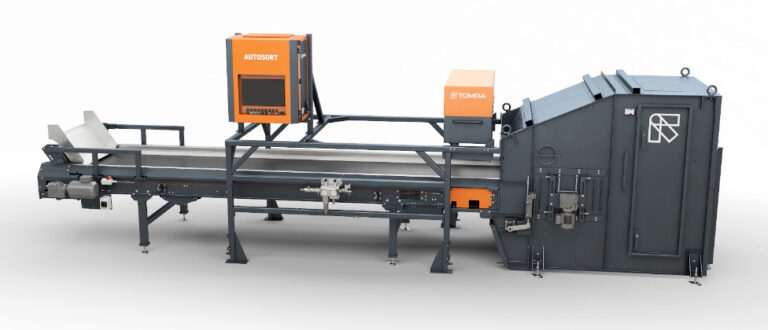
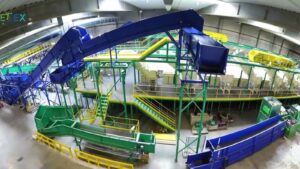
Opened in November 2025, Områ is Norway’s national sorting facility for plastic packaging and a joint venture between TOMRA and Norwegian PRO Plastretur.

Market
Plastic recycling is the process of recovering waste or scrap plastic and reprocessing these materials into other functional and practical products. Because almost all plastic is non-biodegradable, it must be recycled as part of the global efforts to reduce plastic and other solid waste in the environment.
Latest in this market
Opened in November 2025, Områ is Norway’s national sorting facility for plastic packaging and a joint venture between TOMRA and Norwegian PRO Plastretur.
Promoted videos
Asked by plant operators and engineers, answered by named experts.
No questions here yet. Ask the first one.
Ask the Expert
Engineers and product specialists who answer technical questions from readers. The answer comes back to you by e-mail; when we publish it, other readers benefit too.
 Laetitia Paveau
Pellenc ST
Laetitia is the Marketing and Communications Director at Pellenc ST. An engineer by training, she has spent over 20 years driving innovation…
Ask a question Xu Xifeng
Jiangsu Keson Environment Technology Co., Ltd.
Xu Xifeng, the founder of Keson and vice president of Jiangsu Low Carbon Environment Design Institute of China. He has been engaged…
Ask a question Angelo Minoldi
HSM GmbH + Co. KG
Angelo Minoldi is working in the environmental technology sector for almost 25 years, 20 years of that in the baling presses sector.…
Ask a question Tom Jansen
TOMRA Recycling
With more than 20 years of experience in sensor-based sorting technologies, Tom Jansen is VP, Head of Segments at TOMRA Recycling, where…
Ask a questionMarket & Technology Focus
Every Thursday edition takes one market or technology in depth. These are the editions on this market — read them online or get the next one by e-mail.
Recycling technology worth your time: new equipment, plant case studies and the numbers behind them. Free, twice a week.
Questions and answers
A typical plastic recycling line combines sorting (manual and automated, including NIR and AI-driven optical sorters), size reduction (shredders and granulators), washing and decontamination, and finally extrusion or pelletizing to turn clean flake into recycled resin such as rPET, rHDPE or rPP.
PET (#1) and HDPE (#2) are the most widely recycled resins, with growing markets for rPP (#5) and rLDPE (#4). PVC (#3), polystyrene (#6) and mixed or multilayer plastics (#7) are harder to recycle and usually need more specialised technology.
Mechanical recycling shreds, washes and re-melts plastic into new pellets — the most common and cost-effective route for clean, single-resin streams. Chemical recycling breaks plastic down into base monomers or feedstock, which can handle more contaminated or mixed plastics but typically needs a larger capital investment.
Odour, colour consistency, residual contamination (labels, adhesives, other polymers) and moisture are the most common quality issues. Investing in washing, decontamination and sorting accuracy has the biggest impact on the quality of the recycled output.
Use the Manufacturers Directory A–Z or the Equipment Guide. Partner profiles carry direct contact details; other listings link to the company website.
Yes. Ask the Expert puts your question to a field expert active in Plastic Recycling. The answer comes back to you by e-mail; when we publish it, other readers benefit too.
Our partners
Presona manufactures prepress balers, compactors and waste handling systems for recycling, waste management and packaging and graphic industries.
 Sweden · Volume Reduction Technology
Presona manufactures prepress balers, compactors and waste handling systems for recycling, waste management and packaging and graphic industries.
 Germany · Volume Reduction Technology
HSM develops and manufactures baling presses, shredders and compaction systems for recycling and industry, and document and data media shredders.
 China · Separation and Sorting Technology
KESON develops and manufactures intelligent equipment and complete solutions for solid waste sorting, resource recovery and low-carbon treatment.
 Germany · Separation and Sorting Technology
Cleansort develops LIBS (laser-induced breakdown spectroscopy) sorting solutions that separate scrap metals by alloy content.
 Spain · Separation and Sorting Technology
Sense2Sort – Toratècnica develops and builds sensor-based sorting machines for recycling, including XRF, LIBS, induction and robotic sorting.
 United States · Size Reduction
CM Shredders manufactures tire shredders, industrial shredders and complete turnkey tire recycling systems with patented knife technology.
 United Kingdom · Separation and Sorting Technology
Eriez designs and manufactures magnetic separation, metal detection, vibratory and metals recycling equipment for the processing and recycling industries.
 Germany · Separation and Sorting Technology
TOMRA Recycling develops and manufactures sensor-based sorting systems with NIR, LIBS and deep learning AI for waste and metal recycling.
 United States · Size Reduction
SSI Shredding Systems engineers and manufactures 1-, 2-, 3- and 4-shaft industrial shredders, primary reducers and transfer station compactors.
 Netherlands · Separation and Sorting Technology
Bollegraaf Group designs, engineers and builds turnkey recycling and waste sorting plants, balers and sorting equipment, with its brands Bollegraaf and Lubo.
Your company here?