12 Technology Zones for recycling and waste processing, from shredding and sorting to balers, conveying and thermal treatment. Each zone brings together the latest news, product videos and the manufacturers active in it.
18 recycling markets, from plastics, paper and metals to e-waste, end-of-life vehicles and construction waste. Per market: the latest news and the manufacturers that serve it.
Sensors, analyzers and software turn a recycling line into a measured process. This zone covers material identification, mass-flow and moisture measurement, radiation detection and the control software that ties them together.
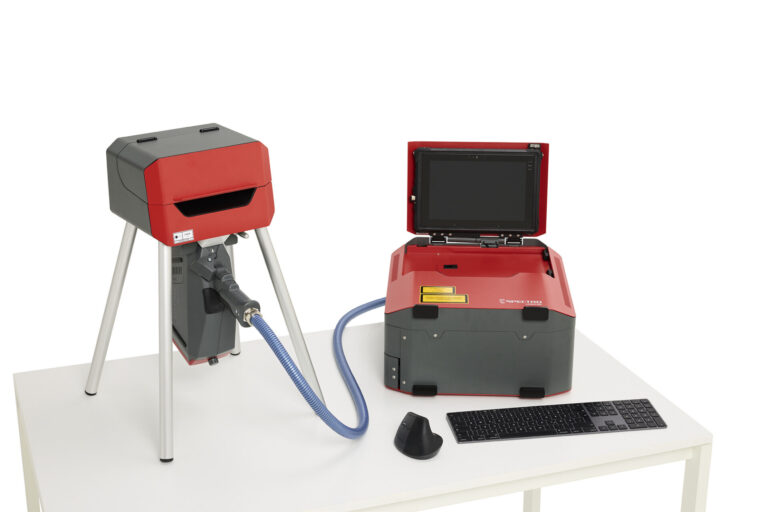
Specim, a Konica Minolta company and a global leader in hyperspectral imaging solutions, introduces Specim RETEX, a complete hyperspectral and AI-based solution for textile material identification and automated…
Instrumentation and Control: how it works, key numbers and troubleshooting
Fundamentals
Turning a sorting plant into a measured process
Most recycling plants run on operator experience: the loader driver sees the pile, the line manager hears the shredder. Instrumentation makes that knowledge measurable — mass flow per stream, composition, moisture, machine load, purity — and control uses it to keep the line at its design point. The gains are in throughput stability, purity, energy and the ability to prove quality to a buyer.
Measuring flow and level
Belt scales on every major conveyor give mass balance across the plant; radar level sensors in bunkers and hoppers keep feeders supplied; speed monitors, motor current and vibration sensors watch every drive. A mass balance that closes to within a few per cent is the foundation for every other measurement; without it, purity and recovery numbers are guesses.
Measuring composition and quality
Sensor-based sorters already carry NIR, VIS, X-ray and AI cameras; the same sensors mounted over a belt as monitors report the composition of the input and the product continuously. Moisture sensors on organics and RDF, metal detectors on product streams, and camera-based counting of contaminants (batteries, PVC, glass) turn manual sampling into a live signal. Laboratory sampling stays as the reference.
Control and automation
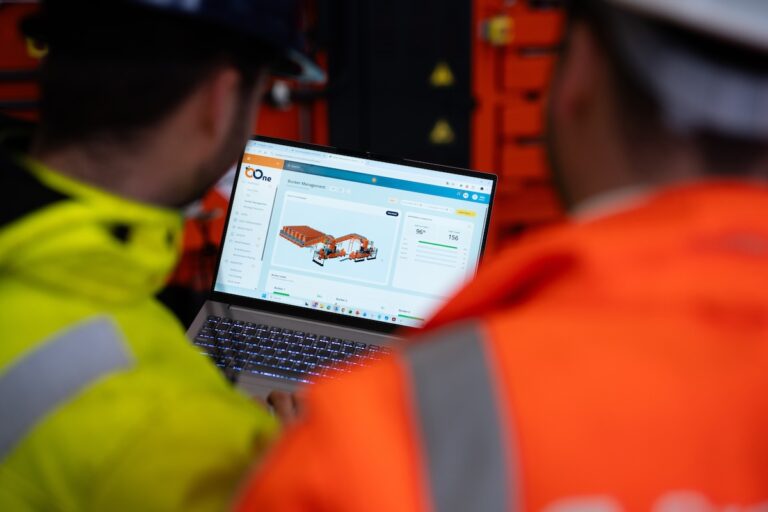
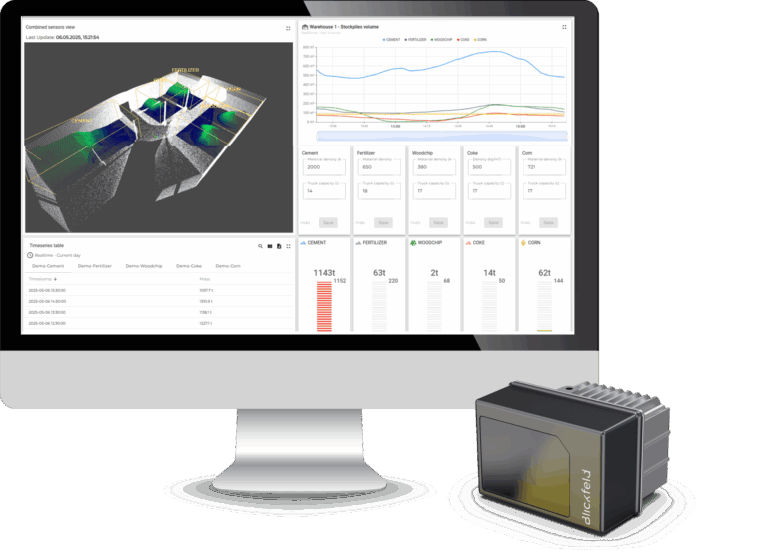
PLC and SCADA systems sequence the plant: interlocks (a conveyor runs only if the next one runs), metering control on the feed bunker, load-dependent speed on shredders, automatic reversing on jams, and recipe control on sorters. Data historians record every signal; dashboards show purity, throughput and downtime per shift; alarm management stops the operator drowning in nuisance alarms.
Radiation, batteries and safety instrumentation
Scrap yards and incinerators screen incoming loads for radioactive sources with portal monitors; X-ray and AI cameras find lithium batteries at reception; gas detectors watch organic storage and landfill gas; thermal cameras and spark detectors feed the fire system. Safety functions run on dedicated safety controllers, separate from the process PLC.
Key parameters
Parameter
Typical range
Rule of thumb
Belt scale accuracy
±0.5–1 % with weekly zero check
Idler alignment and belt tension decide more than the electronics
Plant mass balance closure
Within 2–5 % over a shift
If it does not close, find the unmeasured stream
Radar level in bunkers
80 GHz; ±5–10 mm; dust-tolerant
Aim away from the fill stream and the loader
Online moisture (organics, RDF)
NIR or microwave; ±1–2 % after calibration
Calibrate per material; heterogeneous waste scatters
Composition monitor
NIR/VIS camera over belt; results per minute
Trend, not absolute; verify with manual samples
Radiation portal
Alarm threshold a few % above background; vehicle speed ≤ 8 km/h
Every load, both directions of travel
Speed and rotation monitoring
Alarm below 80 % of nominal within seconds
Standard on every conveyor and elevator
Data logging
1 s resolution for drives; 1 min for flows and levels
Keep at least a year for trend analysis
Troubleshooting
Symptom
Likely causes
What to do
Mass balance does not close
Unmeasured streams (fines, reject, rework); belt scale drift; double counting
Map every stream, calibrate scales, define measurement points
Level sensor in bunker gives wrong level
Sensor sees the loader or the fill stream; build-up; heap shape
Reposition, use two sensors, camera as backup
Nuisance alarms
Thresholds set at commissioning; sensors on unstable signals; no alarm management
Alarm review, deadbands and delays, prioritisation
Composition monitor disagrees with lab
Monitor sees surface only; burden depth; calibration set
Use as trend; calibrate against lab samples from the same time window
Shredder trips on overload
No load-dependent feed control; feed surges
Feed metering on motor current, automatic reversing, buffer bunker
Radiation alarms with no source found
Naturally occurring radioactive material (fertiliser, ceramics, some scrap); medical isotopes
Spectroscopic identification, procedure for isolation and re-check
Data collected but not used
No dashboards; no KPIs; nobody owns the data
Shift dashboards with purity, throughput, downtime, energy; weekly review
Engineers and product specialists who answer technical questions from readers. The answer comes back to you by e-mail; when we publish it, other readers benefit too.
Frequently asked about instrumentation and control
Where do I start with instrumentation in a recycling plant?
With a mass balance: belt scales on the input, the main products and the residue, plus level sensors on the feed bunkers. Once the tonnes are known per stream and per shift, purity, recovery, energy per tonne and downtime become meaningful numbers, and every later sensor has something to be compared with.
Can I measure the composition of my input continuously?
Approximately: NIR and camera monitors above the input belt report the share of the main material classes in the surface layer every minute. Use them as trends and for detecting a change in the input, and keep manual sampling as the reference — the monitor sees the top of the burden, not the whole stream.
How accurate are belt scales in recycling?
±0.5–1 % on a well-installed scale with aligned idlers, constant belt tension, a weekly zero check and a periodic span check with test weights or a material test. Sticky, wet material on the belt and misaligned idlers are the usual causes of drift; the electronics rarely are.
Should the safety systems run on the process PLC?
No. Emergency stops, guard interlocks, spark extinguishing, fire suppression and explosion protection belong on a certified safety controller with its own wiring and diagnostics; the process PLC receives their status. That separation is required by the machinery and ATEX rules and expected by insurers.
What should a shift dashboard show?
Throughput per stream, purity and recovery of the main products, downtime by cause, energy per tonne, filter and shredder condition indicators, and open alarms. Fewer numbers looked at every shift beat a hundred numbers nobody reads. Owning the data — one person responsible for each KPI — matters more than the software.
How do I detect batteries and radioactive sources at reception?
Radiation: portal monitors at the weighbridge that every load passes at low speed, with a procedure for isolating and identifying alarms. Batteries: visual inspection on the tipping floor supported by X-ray or AI camera systems on the reception conveyor, with a KPI on batteries found. Both are cheaper than the fire or the contaminated load they prevent.
Is a level sensor enough to control feeding?
A level sensor tells the operator when to load and lets the PLC hold the bunker in a band; the actual feed rate to the line comes from the metered discharge (floor or drum speed) and, ideally, a belt scale directly after the bunker that closes the loop. Level alone does not keep the burden depth constant.
What is the difference between this Technology Zone and the Equipment Guide?
The zone is the editorial side: news, case studies, videos, newsletter editions and field experts. The Equipment Guide is the directory side: equipment types and the manufacturers that build them. This page links to its Equipment Guide category and back.
How do I find a manufacturer of instrumentation and control equipment?
Open the Equipment Guide category for this zone, pick an equipment type and open a manufacturer profile. Partner profiles carry direct contact details; other listings link to the company website.
Can I ask a technical question before I buy?
Yes. Ask the Expert puts your question to a field expert in this zone. The answer comes back to you by e-mail; when we publish it, other readers benefit too.
Your company in this zone?
A basic listing in the Equipment Guide is free. Enhanced and Partner listings add products, videos, an expert profile and a place in the Weekly E-Update.
To provide the best experiences, we use technologies like cookies to store and/or access device information. Consenting to these technologies will allow us to process data such as browsing behavior or unique IDs on this site. Not consenting or withdrawing consent, may adversely affect certain features and functions.
Functional
Always active
The technical storage or access is strictly necessary for the legitimate purpose of enabling the use of a specific service explicitly requested by the subscriber or user, or for the sole purpose of carrying out the transmission of a communication over an electronic communications network.
Preferences
The technical storage or access is necessary for the legitimate purpose of storing preferences that are not requested by the subscriber or user.
Statistics
The technical storage or access that is used exclusively for statistical purposes.The technical storage or access that is used exclusively for anonymous statistical purposes. Without a subpoena, voluntary compliance on the part of your Internet Service Provider, or additional records from a third party, information stored or retrieved for this purpose alone cannot usually be used to identify you.
Marketing
The technical storage or access is required to create user profiles to send advertising, or to track the user on a website or across several websites for similar marketing purposes.
Get compact market and technology updates twice a week — with editorial insights and key industry news delivered straight to your inbox. No spam, only practical insights for recycling professionals.
Tuesday: Weekly E-Update (5-minute summary)
Thursday: Market/Technology Focus (in-depth case)
Independent editorial selection — no sales pitches