


Technology Zone
Washing and Drying
Washing and drying equipment turns sorted plastic, paper and other recyclables into clean, dry material ready for reprocessing. This zone covers wash lines, friction washers, hot-wash systems, sink-float and hydrocyclone separation, dewatering, thermal and mechanical dryers and the water treatment behind them.
All articles in this zone
Washing and Drying — page 1 of 4
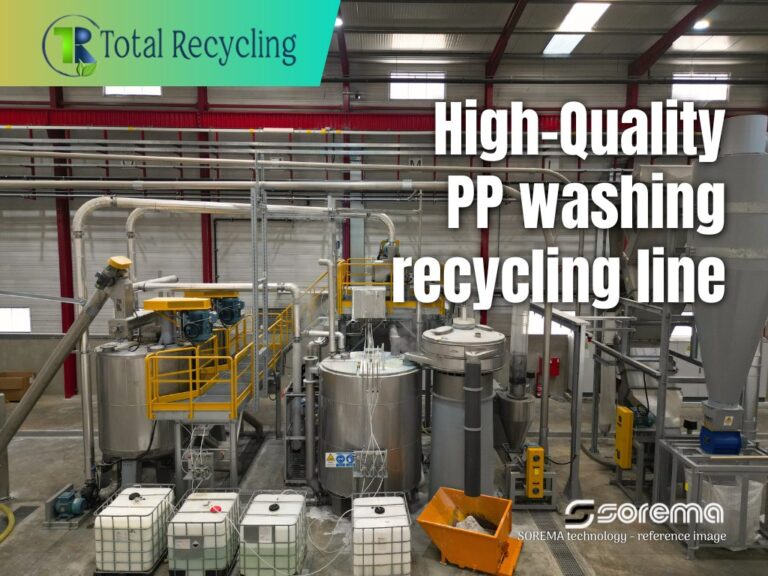
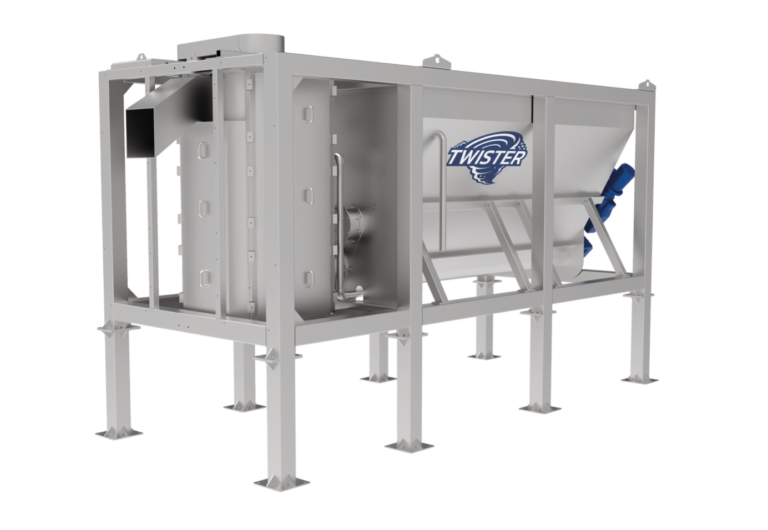




Promoted videos
Washing and Drying in action
What this zone covers
Washing and Drying: how it works, key numbers and troubleshooting
Fundamentals
What a washing line removes
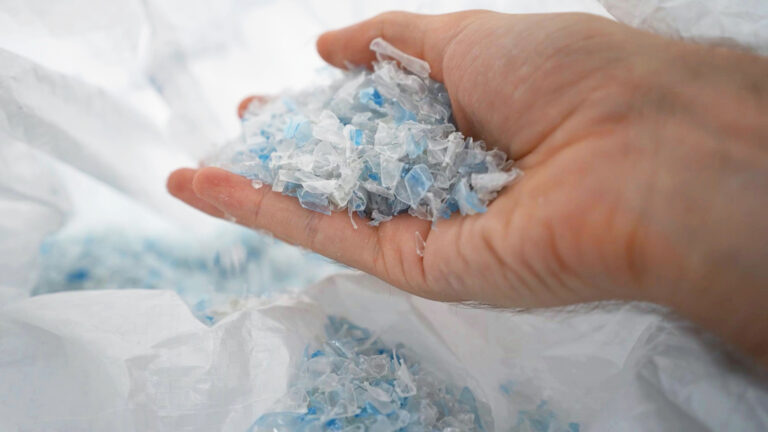
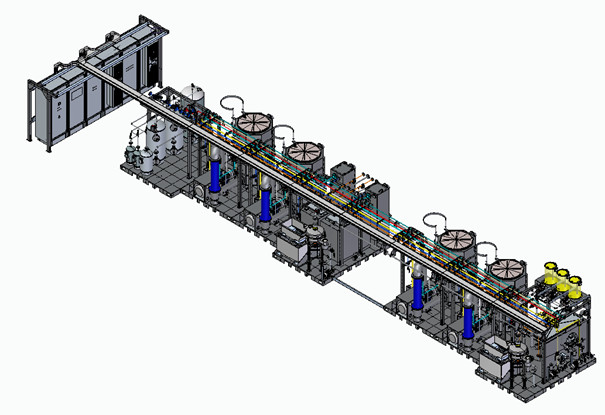
Post-consumer plastics carry labels, glue, food residue, sand, paper fibre, oil and other polymers. A washing line removes them in stages: pre-washing and de-labelling on whole bottles or coarse flakes, wet grinding, friction washing at high shear, hot washing with caustic for glue and fats, sink-float or hydrocyclone separation of polymers by density, rinsing, and drying. The sequence and the water regime decide the purity of the flake and the cost per tonne.
Friction washers and hot wash
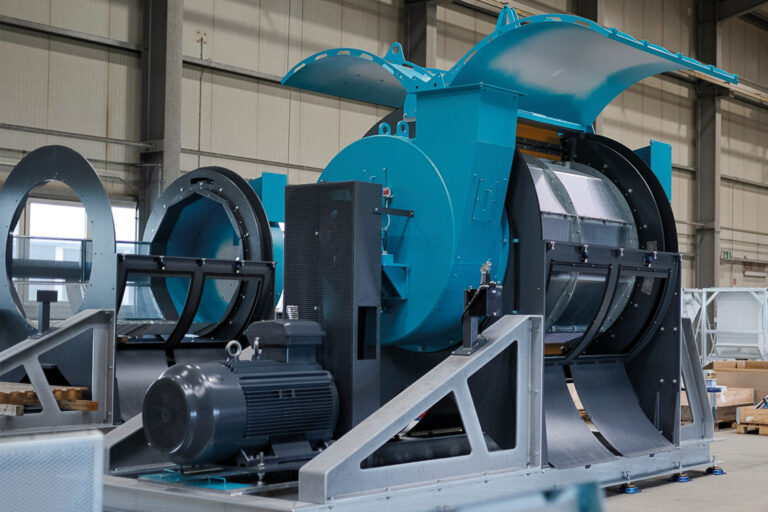
A friction washer spins flakes at high speed against a screen with water spray; the rubbing between flakes strips paper fibre, dirt and sand in seconds. Hot washing in a stirred tank at 60–90 °C with caustic soda and detergent dissolves glue, fats and label residue — essential for food-grade PET and for greasy PE film. Residence time, temperature, chemical dose and the fresh-water share are the parameters that set both the purity and the operating cost.
Density separation
Sink-float tanks separate polymers lighter than water (PE, PP) from heavier ones (PET, PVC, PS) — the classic step for removing PET caps and labels from a PE stream, or PO caps from PET flakes. Hydrocyclones do the same job faster and with better separation of near-density material; salt or additive solutions shift the cut point. The step also removes sand, glass and metal that survived the dry sorting.
Drying
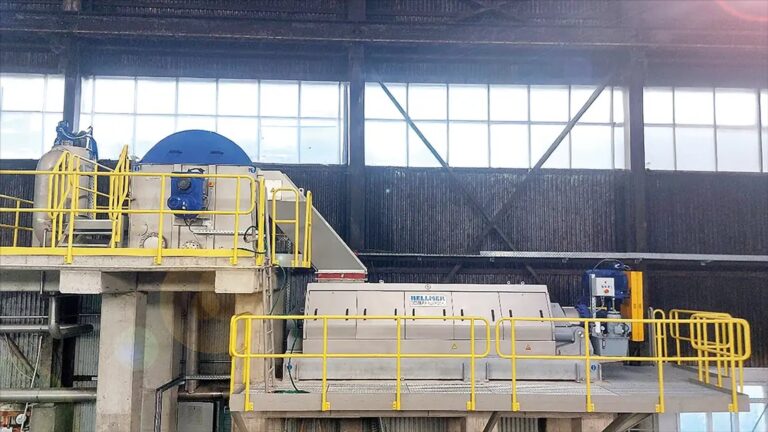
Mechanical dryers (centrifugal, screw press for film) remove most of the water cheaply; thermal dryers (hot-air, fluid-bed, infrared) take flakes to the moisture the extruder needs. Film is the hard case: it holds water in folds and needs a squeezing press and a hot-air loop. Over-drying costs energy; under-drying gives extruder problems and lower pellet quality.
Water treatment and the water balance
A washing line uses 1–3 m³ of water per tonne of plastic; most of it is recirculated through screening, settling, flotation and sometimes biological treatment before the fraction that must be discharged goes to the sewer within permit limits. Water quality feeds straight back into flake quality: dirty process water re-deposits fines and grease on the flakes. The water treatment plant is not an add-on but the part of the line that decides whether the purity holds over a shift.
Key parameters
| Parameter | Typical range | Rule of thumb |
|---|---|---|
| Water consumption | 1–3 m³ fresh water per tonne; 10–20 m³ recirculated | Fresh-water share sets both cost and flake purity |
| Hot wash | 60–90 °C; 1–3 % NaOH; 5–15 min residence | Higher temperature for glue and fat; PET tolerates 85–90 °C, PE needs less |
| Friction washer | Rotor 800–1,200 rpm; 1–5 t/h | Short residence, high shear; screens wear fast on sandy input |
| Sink-float cut | Water at 1.00 g/cm³; salt solutions to 1.2 | Separates PO from PET/PVC/PS; hydrocyclones for near-density |
| Flake moisture after mechanical drying | 1–3 % rigid flakes; 5–10 % film after squeezing | Thermal drying then takes it below 1 % for extrusion |
| Flake moisture into extruder | < 0.5–1 % PO; < 0.1 % PET (crystallised) | Moisture causes bubbles, degradation and pressure swings |
| Contamination in washed flake | < 50–100 ppm foreign polymer for high-grade; < 20 ppm for food-contact PET | Measured by flake sorter or lab; the buyer sets the number |
| Energy | 150–350 kWh/t electrical plus heat for hot wash and drying | Heat recovery from the dryer exhaust to the hot wash pays off |
Troubleshooting
| Symptom | Likely causes | What to do |
|---|---|---|
| Flakes still carry paper fibre and dirt | Friction washer residence too short or screen worn; dirty process water; label removal poor | Check screen and rotor, improve water treatment, pre-wash or de-labeller upstream |
| Glue and grease remain (PET) | Hot wash too cold, too short or too little caustic; detergent exhausted | Temperature and dosing control, residence time, fresh caustic makeup |
| Wrong polymer in the product | Near-density material (PP vs PE, PVC in PET); sink-float overloaded; flakes carrying air bubbles | Hydrocyclone or second stage, flake sorter after washing, de-aeration before the tank |
| Film clogs the line or wraps | Long film strips; wet film clumps; no squeezing before thermal drying | Wet grinder to smaller flake size, squeezing press, screw dryer designed for film |
| Extruder problems after the line | Flake too wet; fines; sand | Thermal dryer control on outlet moisture, fines screening, better sink-float |
| Water treatment overloaded | Fines and organics beyond design; no primary screening; detergents foaming | Screening and settling before flotation, sludge removal schedule, chemical dosing control |
| Odour and hygiene issues | Warm process water with organics; stagnant tanks | Water exchange rate, biocide or pH control, tank cleaning, ventilation |
Go deeper: news and case studies · frequently asked questions
Equipment Guide
Washing and Drying in the Equipment Guide
8 equipment types
Recommended manufacturers

Ask the Expert
Ask a washing and drying expert — free
Engineers and product specialists who answer technical questions from readers. The answer comes back to you by e-mail; when we publish it, other readers benefit too.
No field expert for this zone yet — your question still reaches our editors.
Subscribe to our E-newsletters
Recycling technology worth your time: new equipment, plant case studies and the numbers behind them. Free, twice a week.
Questions and answers
Frequently asked about washing and drying
Do I need a hot wash?
For food-grade PET, greasy PE film and anything with hot-melt labels and glue: yes — cold washing removes dirt and paper but not fat and adhesive. For clean industrial scrap and many rigid PO streams a cold friction wash is enough. The hot wash is the most expensive step in energy and chemicals, so size it for the fraction that needs it.
How much water does a washing line use?
Roughly 1–3 m³ of fresh water per tonne, with ten times that recirculated through the water treatment. The fresh-water share is a trade-off: less fresh water saves money and discharge fees but lets fines and grease build up in the circuit and end up on the flakes. Good water treatment lets you run a low fresh-water share without losing purity.
Why does my product still contain PVC or PET after sink-float?
Because sink-float separates only by density, and flakes carrying air bubbles, hollow pieces, or polymers close to the cut point (filled PP, some PET grades) end up in the wrong fraction. De-aerate the flakes before the tank, use a hydrocyclone for a sharper cut, and add a flake sorter (NIR or colour) on the product for the last percent.
How dry must flakes be for extrusion?
Below 0.5–1 % for polyolefins, below 0.1 % for PET (which also needs crystallisation and often a drying step at the extruder). Mechanical drying gets rigid flakes to 1–3 %; a thermal dryer takes them the rest of the way. Film needs a squeezing press first because it holds water in its folds.
What makes film washing different?
Film has a huge surface per kilogram, traps water and dirt in folds, wraps around anything rotating and floats. Lines for film use wet grinders to make small flakes, friction washers with anti-wrap design, screw presses for dewatering, and hot-air loops for thermal drying; throughput per line is lower and energy per tonne higher than for rigid flakes.
How do I keep flake quality constant over a shift?
Watch the water: turbidity, oil and fines in the process water rise during the shift as the treatment falls behind, and flake purity follows. Measure water quality, keep the sludge removal and flotation running, control the fresh-water makeup, and check flake contamination at fixed intervals rather than at the start of the day only.
Where does the energy go in a washing line?
Into the hot wash and the thermal dryer, mostly; pumps and friction washers take the electrical share. Heat recovery from the dryer exhaust into the hot-wash water, insulation of the tanks and control of drying on outlet moisture rather than time are the main savings.
What is the difference between this Technology Zone and the Equipment Guide?
The zone is the editorial side: news, case studies, videos, newsletter editions and field experts. The Equipment Guide is the directory side: equipment types and the manufacturers that build them. This page links to its Equipment Guide category and back.
How do I find a manufacturer of washing and drying equipment?
Open the Equipment Guide category for this zone, pick an equipment type and open a manufacturer profile. Partner profiles carry direct contact details; other listings link to the company website.
Can I ask a technical question before I buy?
Yes. Ask the Expert puts your question to a field expert in this zone. The answer comes back to you by e-mail; when we publish it, other readers benefit too.